High-EPA Fish Oil ranked on form, dose, third-party testing and value per unit of active ingredient.
Updated August 5, 20265 rankedNo paid placements
We may earn a commission when you buy through our links. Prices and availability shown are accurate as of Aug 5, 2026 and are subject to change; the merchant's price at purchase applies.
It has the strongest combination of product-specific IFOS verification, disclosed rTG form, 690 mg EPA, one-softgel dosing and certified sourcing. Its 10,000-plus recent sales also break the quality tie decisively.
Delivers 1,000 mg combined EPA and DHA in one softgel, including 690 mg EPA.Label specifies TG as rTG, and the current product is listed in Nutrasource's IFOS database.Friend of the Sea certification and fish-gelatin capsule are disclosed on the iHerb page.The iHerb label does not identify an enteric coating or burpless delivery system.The $54.97 bottle price is the highest upfront cost in this list despite the low per-serving cost.
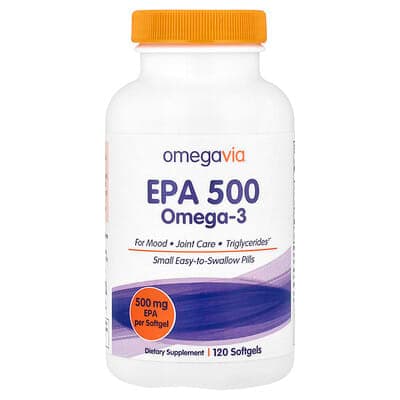
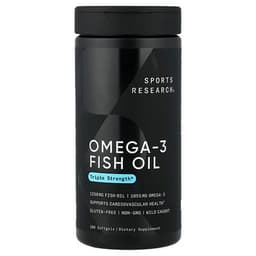
It matches the winner on IFOS verification and rTG form but supplies half as much declared EPA plus DHA per serving and costs more per gram of declared active ingredient.
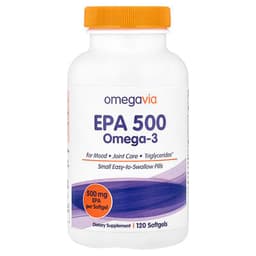
Provides 500 mg EPA per small, one-softgel Supplement Facts serving.The iHerb label specifies rTG form and IFOS 5-Star certification.Vegetable enteric coating is explicitly disclosed as a burp-free feature.The Supplement Facts panel does not disclose DHA or total fish-oil mass.Suggested use is two to four softgels, so the labeled daily routine costs two to four times the reported per-serving price.
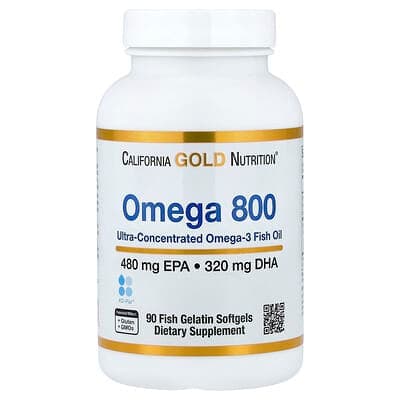
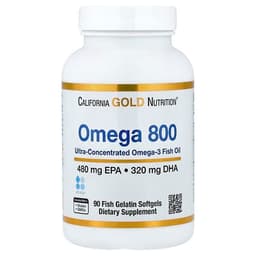
Its disclosed TG form, transparent 480/320 mg label and strong active-dollar value outweigh Life Extension's testing advantage under the fixed weights. Its much larger recent buyer volume is a supporting tiebreaker, not the reason for the rank.
Discloses 480 mg EPA and 320 mg DHA as TG in one softgel.Public product-specific iTested documentation covers active potency, microbes and heavy metals.The label declares 840 mg total omega-3 from 1,000 mg fish oil, preventing front-label fish-oil confusion.The published iTested report does not include peroxide, anisidine or TOTOX measurements.Contains soy and fish, and the standard fish-gelatin capsule is not enteric coated.
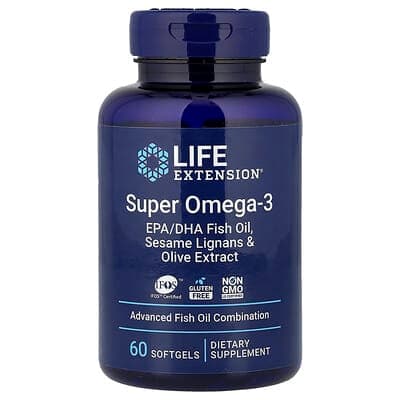
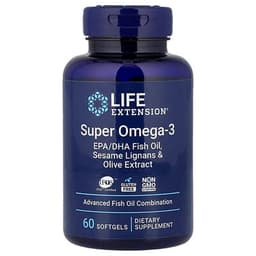
Its IFOS evidence and 1,200 mg active dose are strong, but the undisclosed molecular form directly weakens the second-heaviest criterion. The two-servings-per-day suggested use also reduces convenience and practical bottle value.
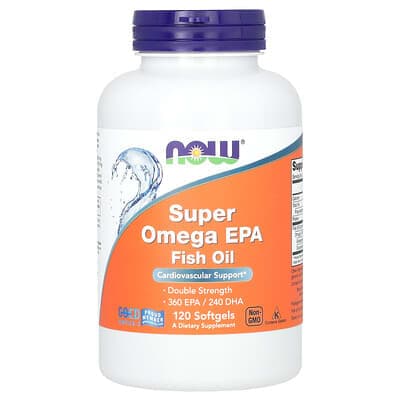
Provides 1,200 mg combined EPA and DHA per two-softgel serving.Current IFOS product listing is available; an accessible historical lot report recorded TOTOX 6.3.Discloses 300 mg olive extract and 10 mg sesame lignan extract rather than hiding them in a blend.The iHerb label does not disclose TG, rTG or ethyl-ester form, and this SKU is not enteric coated.Contains sesame, and the suggested use of two servings daily makes the 60-softgel bottle a 15-day supply.
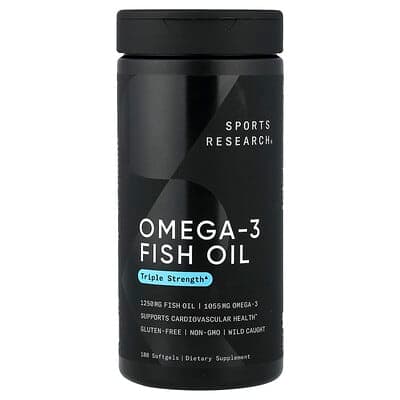
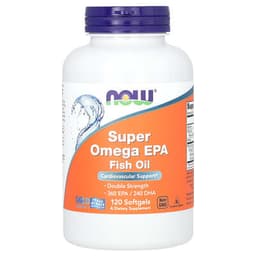
It wins on active-ingredient value and supplies the highest EPA dose by a narrow margin, but the undisclosed form and absence of product-specific public testing penalize the two heaviest criteria.
Delivers 720 mg EPA and 480 mg DHA per two-softgel serving.Costs about $0.26 per serving and approximately $0.21 per gram of EPA plus DHA.Fully discloses fish-oil mass, EPA, DHA, fish species and bovine-gelatin capsule.No public product-specific USP, NSF, IFOS or COA evidence and no published TOTOX value were found.Molecular form is not stated, and the bovine-gelatin softgels are not enteric coated.
Compare high-EPA fish oils by the milligrams of EPA and DHA in the Supplement Facts serving, not the large fish-oil number on the front. A 2,000 mg fish-oil serving may provide only 1,200 mg of EPA plus DHA; the remainder is not the active amount used for this comparison. Also distinguish EPA from total omega-3. High-EPA products deliberately emphasize EPA, whereas balanced formulas provide proportionally more DHA. There is no established US Daily Value for EPA or DHA. Molecular form matters, but only credit what the label actually identifies. Natural triglyceride, triglyceride and re-esterified triglyceride forms are usually abbreviated TG or rTG. In a 2010 human bioavailability study using about 3.3 g/day of EPA plus DHA, rTG produced greater measured exposure than natural fish oil, while ethyl esters produced less under that study's conditions. That does not guarantee an identical difference for every product, meal or user. If a concentrated oil does not disclose its form, do not assume it is TG. Taking the product with food is consistent with these labels and can also improve tolerance. Treat certifications precisely. IFOS is a product-specific program covering potency, contaminants and oxidation, with reports tied to individual lots. TOTOX combines primary and secondary oxidation measurements, so a published result describes the tested batch rather than every bottle ever made. Match the report's lot to the bottle whenever possible. A public product-specific certificate of analysis is useful, but a certificate covering only potency, microbes and heavy metals is narrower than IFOS because it may omit oxidation. GOED membership and GMP manufacturing are not finished-product certifications. Likewise, wording such as IFOS-quality raw material is not the same as a searchable finished-product IFOS listing. Friend of the Sea and MSC address sourcing and chain-of-custody issues, not potency or freshness. Research dose must be interpreted cautiously. Human trials involving prescription omega-3 preparations have used 2 or 4 g/day, while REDUCE-IT used 4 g/day of prescription icosapent ethyl in a defined, medically managed population. Those interventions are not interchangeable with over-the-counter fish oil and are not instructions to multiply supplement capsules. The products here declare 500 to 1,200 mg of EPA plus DHA per Supplement Facts serving; some labels suggest more than one serving daily. Check both serving size and suggested use, especially because OmegaVia defines one capsule as a serving but suggests multiple capsules, while Life Extension suggests two of its two-softgel servings daily. Finally, calculate value per gram of declared EPA plus DHA, or per gram of EPA for an EPA-only product. Consider capsule count, fish versus bovine gelatin, soy or sesame allergens, and whether enteric coating is important to you. Burpless or lemon-flavored wording concerns delivery or taste; it does not establish purity, oxidation or absorption. Prices below are US iHerb one-time prices observed on August 5, 2026, before coupons or subscription discounts.
We rank on third-party testing (30%), form and bioavailability (25%), dose versus published human research (20%), label transparency (15%) and value per unit of active ingredient (10%). Specifications are taken from each product's supplement facts panel on its iHerb listing, and certification claims are checked against the certifying body's directory where one is published. We do not test products ourselves, and nothing here is medical advice.
Third-Party Testing
Independent certification or a published certificate of analysis
30%
Form & Bioavailability
Whether the chemical form is the well-absorbed one
25%
Dose vs Research
Per-serving dose versus doses used in published human trials
20%
Label Transparency
Full per-ingredient disclosure and minimal fillers
Is triglyceride-form fish oil absorbed better than ethyl-ester fish oil?
In one controlled human study using approximately 3.3 g/day EPA plus DHA for two weeks, re-esterified triglycerides produced greater measured bioavailability than natural fish oil, while ethyl esters produced less. That result supports preferring a clearly labeled TG or rTG product, but it does not justify assuming the form when a label is silent or guarantee the same difference under every meal and dosing condition.
How much EPA should a high-EPA fish oil provide?
There is no universal EPA dose for every buyer. The products here provide 480 to 720 mg EPA per Supplement Facts serving, while human trials involving prescription preparations have commonly used 2 or 4 g/day of omega-3 and REDUCE-IT used 4 g/day of prescription icosapent ethyl. Those prescription doses and formulations are not interchangeable with these supplements, so research figures should not be treated as instructions to increase capsule count.
Why rank EPA and DHA instead of total fish oil?
Total fish oil includes fatty acids other than EPA and DHA. NOW Super Omega EPA, for example, lists 2,000 mg fish oil but 1,200 mg combined EPA and DHA, while California Gold lists 1,000 mg fish oil and 800 mg combined EPA and DHA. Comparing the declared active amounts prevents a larger carrier-oil number from looking more potent than it is.
Do IFOS, sustainability certification and burpless coating mean the same thing?
No. IFOS evaluates product lots for areas such as potency, contaminants and oxidation; Friend of the Sea or MSC concerns sourcing and chain of custody; and burpless or enteric-coated wording describes capsule release or taste. None substitutes for the others, and GOED membership or GMP manufacturing alone is not product-specific certification.