Sports Research, Collagen Peptides, Unflavored, 16 oz (454 g)
Its Informed Choice listing, transparent 11 g dose and lowest cost per gram among the full-dose powders produce the strongest weighted score. It ranks above BUBS because its dose is closer to the 10 g trial benchmark and its active-ingredient value is better.
Informed Choice lists Collagen Peptides Powder as a certified Sports Research product.One scoop supplies 11 g of hydrolyzed bovine collagen peptides, close to the 10 g trial dose.The label declares a single ingredient and no proprietary blend.The label identifies types I and III, not undenatured type II or UC-II.No vitamin C or joint-specific branded peptide such as FORTIGEL is listed.
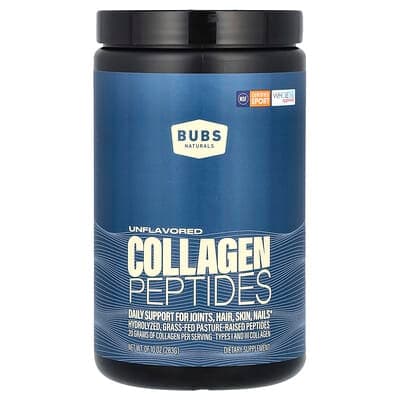
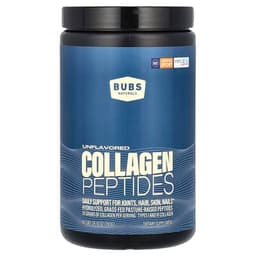
BUBS Naturals, Collagen Peptides, Unflavored, 10 oz (283 g)
The current NSF Certified for Sport listing and exceptionally clear label justify second place. Sports Research ranks higher because it delivers a trial-aligned 11 g serving at a lower cost per gram.
NSF Certified for Sport lists the 283 g package and 20 g serving.The Supplement Facts panel discloses 20 g of bovine collagen peptides per scoop.The ingredient list contains collagen peptides only, with no proprietary active blend.The 283 g container provides only about 14 servings at the labeled 20 g dose.The label lists types I and III rather than type II, UC-II or a joint-specific branded peptide.
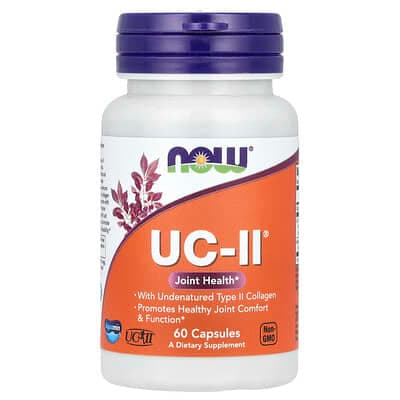
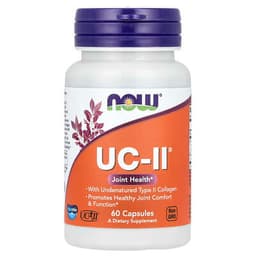
NOW Foods, UC-II Joint Health with Undenatured Type II Collagen, 60 Capsules
The joint-specific undenatured type II form and exact 40 mg UC-II trial dose outweigh its weak certification evidence. It remains below the two independently certified powders because third-party testing carries the heaviest category weight.
The 40 mg UC-II serving matches the daily UC-II amount used in published human trials.The label identifies undenatured type II collagen from standardized chicken cartilage.The bottle provides 60 one-capsule servings at $0.36 per serving.No USP, NSF Certified for Sport, Informed Choice, IFOS or public product-specific certificate of analysis was found.The formula includes microcrystalline cellulose, corn starch, potassium chloride, stearic acid and silicon dioxide in addition to the capsule.
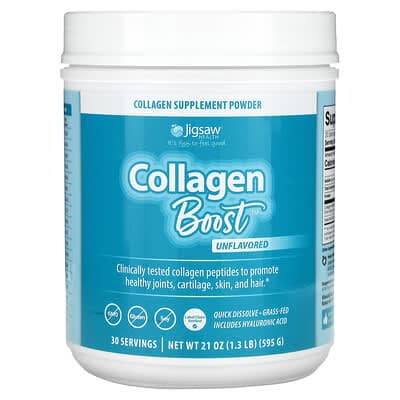
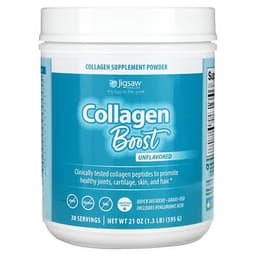
Jigsaw Health, Collagen Boost, Unflavored, 21 oz (595 g)
The branded, joint-specific peptide format earns a high form score, but the hidden split among three branded ingredients prevents a clean FORTIGEL trial-dose comparison. Weak certification evidence and the highest serving price keep it fourth.
The label names the joint-specific FORTIGEL peptide alongside FORTIBONE and VERISOL.A full serving discloses 17.5 g of hydrolyzed bovine collagen peptide complex.Hyaluronic acid is separately disclosed at 80 mg per serving.The label does not disclose the individual amount of FORTIGEL, FORTIBONE or VERISOL.No recognized product certification or public product-specific certificate of analysis was found, and the price is $2.33 per serving.
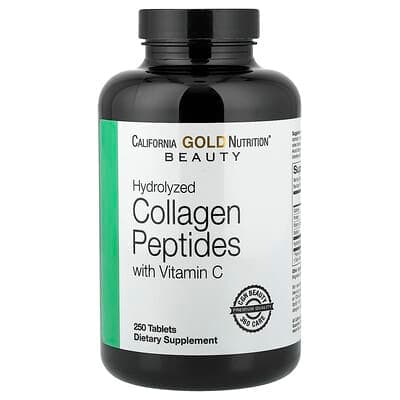
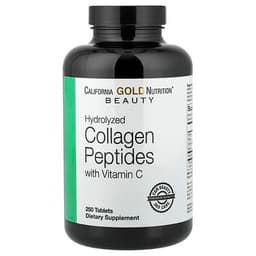
The 12 g dose and added vitamin C are clear strengths, but the label does not state collagen type, hides the hyaluronic-acid and MSM amounts, and provides no recognized certification evidence. Those weaknesses on heavier-weighted criteria place it fifth.
The label provides 12 g of fish-derived marine collagen peptides per serving.Vitamin C is separately disclosed at 15 mg per serving.The ingredient source is identified as tilapia and carp.Hyaluronic acid and MSM amounts are hidden inside a 3 g blend with undisclosed proportions.The label lists no recognized product-specific certification and warns that it contains fish and may contain trace sulfite residue.
40 mg UC-II cartilage, providing 10 mg total collagen including undenatured type II
17.5 g
12 g
Branded Ingredient
None stated
None stated
UC-II
FORTIGEL, FORTIBONE and VERISOL; individual amounts undisclosed
Marine NeoCell Collagen Peptides
Vitamin C
None listed
None listed
None listed
None listed
15 mg as ascorbic acid
Third-Party Certification
Informed Choice; NSF Certified Gluten-Free
NSF Certified for Sport
None listed on the iHerb label
No recognized certification listed on the iHerb label
None listed on the iHerb label
Other Label Actives
None
None
Aquamin 250 mg; calcium 80 mg
Hyaluronic acid 80 mg
3 g blend of resistant maltodextrin, hyaluronic acid and MSM; individual amounts undisclosed
Price
—
$27
$21.42
$69.97
—
How we ranked them
Start by choosing the collagen form, because milligram quantities are not comparable across forms. Undenatured type II collagen, including the branded UC-II ingredient, preserves its native structure and is usually sourced from chicken sternum cartilage. Published human trials commonly dosed 40 mg of UC-II material per day; some labels clarify that this 40 mg cartilage ingredient provides a smaller amount of actual undenatured type II collagen. Hydrolyzed collagen is different: it has been broken into smaller peptides and is normally sold by the gram. Human joint trials of general collagen hydrolysate used 10 g daily, while trials of the joint-specific FORTIGEL peptide used 5 g daily. These studies evaluated particular ingredients or formulations, not every retail powder containing collagen. Source and type matter. Bovine peptides generally supply types I and III, which are broader connective-tissue collagens. Marine collagen is fish-derived and is commonly type I, although buyers should rely on the label when a type is not stated. Type II is the collagen most directly associated with cartilage, but undenatured type II and hydrolyzed type II are not interchangeable. Choose bovine, marine or chicken-derived products according to dietary preference and allergy constraints; marine is not automatically better absorbed merely because it comes from fish. For a branded ingredient such as UC-II or FORTIGEL, confirm both the trademark and amount. A label that lists a 17.5 g blend of FORTIGEL, FORTIBONE and VERISOL but hides each component cannot prove that its FORTIGEL portion matches the 5 g trial dose. Vitamin C is a required cofactor in normal collagen synthesis, but an added amount is not evidence that the finished product was studied, and adequate dietary vitamin C may already cover this role. Treat third-party certification narrowly. NSF Certified for Sport and Informed Choice provide independent verification within their program scopes, including prohibited-substance controls; they do not prove a joint outcome. USP or NSF dietary-supplement certification and a current, product-specific certificate of analysis can provide additional identity, label-claim or contaminant evidence. GMP language alone is manufacturing information, not product-specific certification. Avoid proprietary blends that hide active doses, multi-collagen products that advertise many types without meaningful quantities, and gummies or capsules that cannot practically deliver gram-level peptide doses unless the serving is unusually large. Compare value per active unit: dollars per 10 g of hydrolyzed collagen or dollars per 40 mg UC-II serving. Do not compare bottle price alone, and check whether the serving requires one scoop, two scoops or several capsules. Finally, collagen is animal-derived and is not a complete protein; check fish, bovine and chicken sources, facility allergen statements, and consult an appropriate clinician when pregnancy, medication use, allergy or a diagnosed condition makes supplement choice individualized.
We rank on third-party testing (30%), form and bioavailability (25%), dose versus published human research (20%), label transparency (15%) and value per unit of active ingredient (10%). Specifications are taken from each product's supplement facts panel on its iHerb listing, and certification claims are checked against the certifying body's directory where one is published. We do not test products ourselves, and nothing here is medical advice.
Third-Party Testing
Independent certification or a published certificate of analysis
30%
Form & Bioavailability
Whether the chemical form is the well-absorbed one
25%
Dose vs Research
Per-serving dose versus doses used in published human trials
20%
Label Transparency
Full per-ingredient disclosure and minimal fillers
Is UC-II the same as hydrolyzed collagen peptides?
No. UC-II is an undenatured native type II collagen ingredient, usually derived from chicken sternum cartilage and dosed in milligrams. Hydrolyzed collagen has been broken into smaller peptides and is usually dosed in grams; bovine powders commonly list types I and III. Their label amounts should not be compared directly.
How much collagen did published human joint trials use?
The dose depends on form. UC-II trials commonly used 40 mg of UC-II material daily; general collagen-hydrolysate trials used 10 g daily; and trials of the specific FORTIGEL peptide used 5 g daily. A retail product only matches a branded-ingredient study when the label discloses that ingredient at the studied amount.
Is marine collagen better absorbed than bovine collagen?
A fish source alone does not establish superior absorption. Both marine and bovine products can be hydrolyzed into peptides; the more useful checks are the stated form, collagen amount, disclosed type, allergen source and whether a relevant branded ingredient is present. Marine products suit some source preferences but are unsuitable for fish allergy.
What does third-party certification prove?
It proves only the scope of the named program. NSF Certified for Sport and Informed Choice add independent controls that include prohibited-substance testing, while USP or NSF dietary-supplement programs and current product-specific certificates may address identity, label claims or contaminants. Certification does not show that a finished product produced a joint outcome in a human trial.