The Pixel 9a's successor keeps everything reviewers loved (the 48MP camera, 7 years of updates) and adds a 3,000-nit display and 5,100mAh battery that lasted 16.5 hours in Tom's Guide testing. Android Authority calls it 'the best $500 you can spend on a new phone,' and with Pixel 9a stock winding down it's the clear budget pick.
3,000-nit display brightest in class7 years updates through 2033Proven 48MP camera with Camera Coach and Magic EditorSame Tensor G4 as Pixel 9a, not the newer G5No telephoto lens
The most premium hardware under $500: Gorilla Glass Victus+ on both sides, aluminum frame, IP67, and 45W charging that no other phone here matches. It beats the A36 below on build, chipset (Exynos 1580 vs 1380), and charging speed, but the Pixel 10a's camera and update window keep it out of first place.
45W charging fastest in Samsung's mid-range (65% in 30 min)6 years OS and security updatesGorilla Glass Victus+ front and back with aluminum frameExynos 1580 trails flagship chipsNo telephoto lens
Samsung reliability with 6 years updates, 120Hz AMOLED, Galaxy AI features subset, and IP67 at $349-399. About $150 less than the A56 buys a slower chip, plastic-backed build, and 25W charging, a worthwhile trade-off for lighter users.
6 years OS updates120Hz AMOLED displayGalaxy AI featuresSlower processor than Pixel 9aBasic telephoto
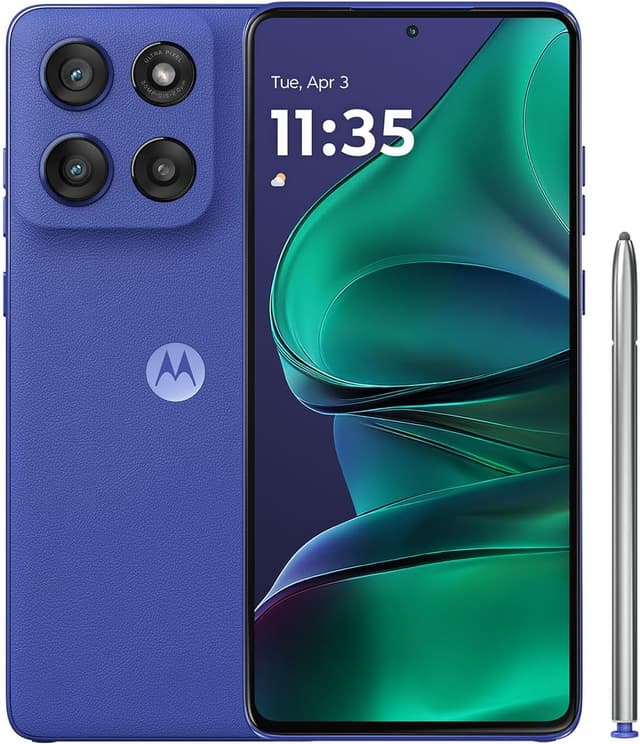
Built-in stylus rare at any price, 256GB storage (double everything else here), IP68 + MIL-STD-810H durability, and 68W fast charging at $349.99 on Amazon. The 2026 model exists but costs $499 and hasn't reached Amazon; this one remains the value play.
Built-in stylus rare at price256GB storageIP68 + military durabilitySlower processorBasic cameras
Software update policy is the single biggest cost-of-ownership factor at this price, and it varies more than the sticker price suggests: Google commits to 7 years of OS and security updates on the Pixel 10a, Samsung promises 6 years on its Galaxy A-series, and several budget Android phones from other brands stop at 2-3 years. A phone that loses security patches in year three is a worse long-term buy than a slightly pricier one still receiving updates in year six, so check the manufacturer's published support window before comparing price tags alone. Next, match the chipset to how you'll actually use the phone: entry-level processors (common under $250) handle calls, texting, and social media fine but struggle with demanding apps or heavy multitasking, while the mid-tier chips in $400-500 phones run modern apps smoothly and hold resale value longer. Charging speed is an underrated daily factor and a common blind spot: a phone that charges at 45W or faster tops up in well under an hour, while a 15W charger, still common at the low end, can take two-plus hours for a full charge, a real difference if you regularly leave home with a half-full battery. Build quality separates the tiers too: look for Gorilla Glass rather than a plastic screen, and an IP67/IP68 water-resistance rating if you will use the phone near water or in bad weather; cheaper models often drop one or both to hit a price point. Storage is worth sizing deliberately, since very few budget phones support storage upgrades after purchase: 128GB is the realistic minimum for anyone who shoots photos or video regularly, and 256GB avoids having to delete old files just to install an update. The most common mistake buyers make in this category is judging a camera by its megapixel count alone; a high number means little without the computational-photography processing behind it, so weigh published camera comparisons and owner feedback over the spec sheet. Finally, confirm 5G band compatibility with your specific carrier before buying an unlocked phone, especially on carriers using less common frequency bands, since a technically 5G-capable phone can still fall back to a slower connection on the wrong network.
Budget rankings prioritize value proposition (features per dollar spent) while ensuring adequate camera quality, performance, and software support longevity. We score published specifications, independent expert reviews, and verified owner feedback, and re-verify prices against live Amazon listings.
Yes, if camera quality and software support matter most. The Pixel 10a delivers flagship-grade computational photography and 7 years of updates vs Samsung's 6, at the same $499 price. Pick the A56 for its tougher glass-and-aluminum build and much faster 45W charging.
Which budget phone has the best camera?
Google Pixel 10a. Its 48MP main camera carries over the proven Pixel 9a system with full computational photography (Magic Editor, Camera Coach, Best Take), delivering results that compete with $1,000+ flagships.
Should Pixel 9a owners upgrade to the 10a?
No. The 10a uses the same Tensor G4 chip and the same camera hardware as the 9a; reviewers describe it as a light refresh with a brighter display and marginally bigger battery. It's the right buy for new budget shoppers, not an upgrade path.