The best dash cams with parking mode, ranked on the type and effectiveness of their parked-car protection (radar, buffered, and motion detection), plus video quality, coverage, power design, and value.
Updated September 9, 20265 rankedNo paid placements
We may earn a commission when you buy through our links. Prices and availability shown are accurate as of Sep 9, 2026 and are subject to change; the merchant's price at purchase applies.
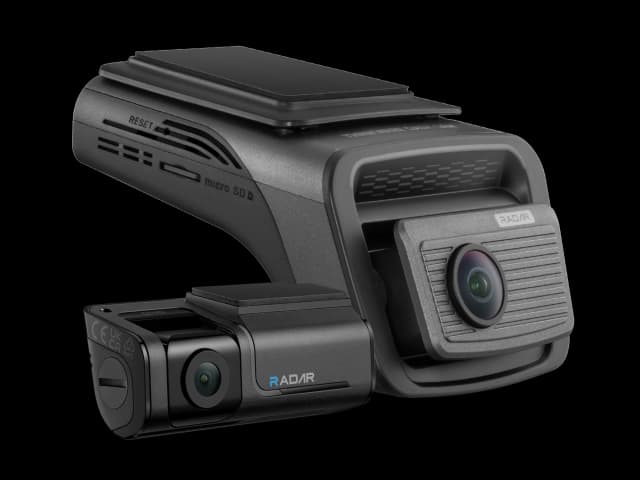
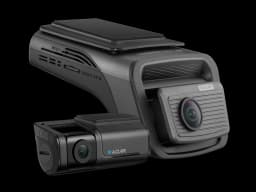
The best parking protection here comes down to one feature, and the current U3000 Pro now offers it on both ends of the car: built-in radar on the front AND rear units watches for motion and impacts without keeping the image sensor recording, which lets it guard a parked car far longer on the same amount of power than any sensor-based motion mode. When it detects an event it saves a buffered clip captured before and after the moment, and both channels now share a matched Sony STARVIS 2 sensor with HDR (the outgoing U3000's rear camera used an older, non-STARVIS-2 sensor), plus thermal-protection engineering for hot windshields. It ships with the hardwire/OBD cable, so parking mode works out of the box. Its only real drawback is the price (around $580), which is the sole reason most drivers will look further down this list.
Dual radar (front AND rear) for low-power parked-car monitoring on both ends of the car, not just the frontBoth channels now use Sony STARVIS 2 sensors (the outgoing U3000's rear camera used an older, non-STARVIS-2 sensor)HDR processing on both the front and rear channels for more balanced day/night exposureThe most expensive camera on this list at around $580Rear resolution is still capped at 2K rather than 4K
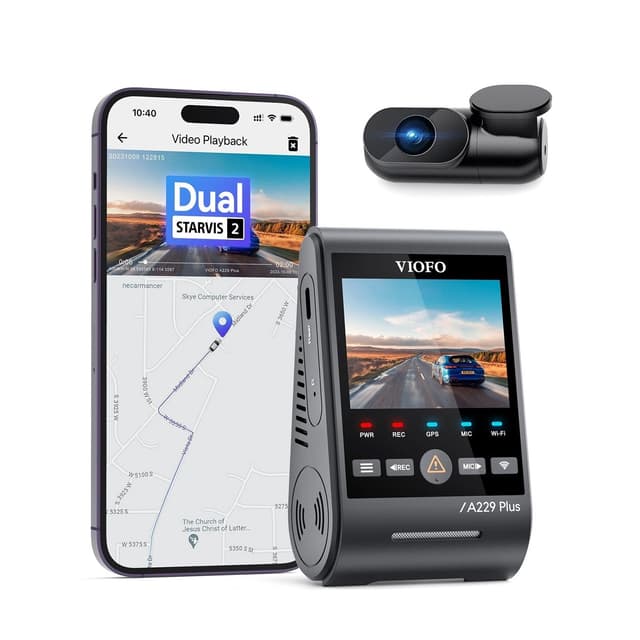
The smartest money for parking protection: dual Sony STARVIS 2 sensors cover the front and rear in 2K each, a supercapacitor rides out the heat of a parked car far better than a battery, and with the hardwire kit it offers three parking modes (buffered, time-lapse, and low-bitrate) so drivers can trade storage against continuous coverage. It ranks below the Thinkware only because it lacks that camera's low-power radar and tops out at 2K rather than 4K, but at roughly a third of the price with front-and-rear coverage, it is the value benchmark of this list.
Supercapacitor withstands the heat of a parked car far better than a lithium batteryThree parking modes with the hardwire kit: buffered auto-event, time-lapse, and low-bitrateDual Sony STARVIS 2 sensors record 2K front and 2K rear with HDRParking mode requires the HK4 hardwire kit, sold separately (about $20)2K resolution rather than the 4K of the pricier picks
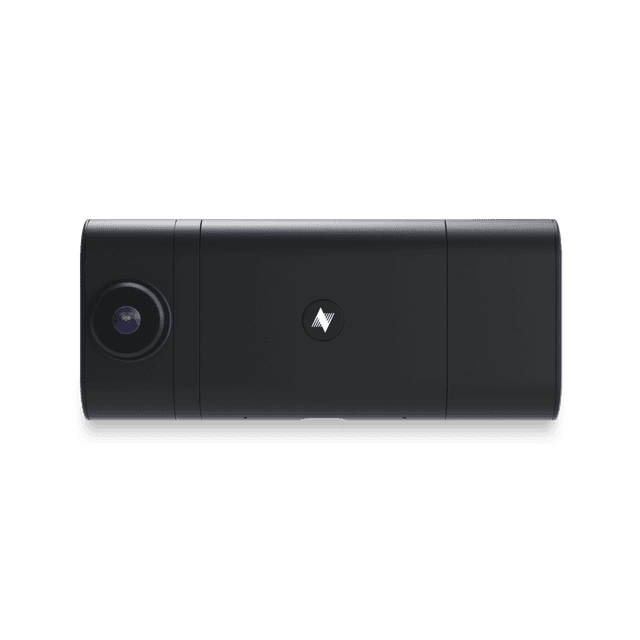
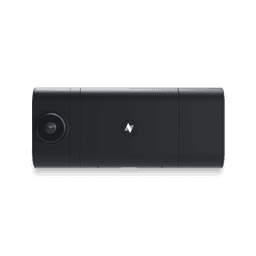
The pick for drivers who want to know the instant their parked car is hit, not just find out later: an always-on LTE connection fires a real-time alert and a live stream to your phone the moment its parking mode detects an impact, and every clip backs up to unlimited cloud storage that survives even if the camera itself is stolen. A 4K front lens and a cabin lens cover the essentials. It sits behind the value picks because its most useful parking features are gated behind a monthly subscription, it has no rear camera, and reviewers flag the app as a weak point. Still, for peace of mind while the car is out of sight, nothing else here matches it.
Always-on LTE sends a real-time alert and live stream the moment your parked car is hitUnlimited cloud backup keeps footage safe even if the camera or card is stolen or smashed4K front lens plus an interior cabin lens in a compact magnetic-mount bodyLive parking alerts and cloud backup require the Nexar Connect / LTE plan (about $9.99/month after a free trial)No rear camera, a gap for catching parking hits from behind
The most discreet way to protect a parked car: barely larger than a coin, the E1 Pro hides behind the mirror yet records true 4K on a Sony STARVIS 2 sensor with PlatePix to keep plates legible, and its supercapacitor keeps the 24/7 buffered parking mode reliable through prolonged heat. It ranks below the front-and-rear picks because it is a single front-facing lens, blind to hits from behind, and parking mode needs a hardwire kit or battery pack bought separately. For a small car or a stealthy install, though, it packs the most parking capability into the smallest body here.
Supercapacitor withstands extreme heat, so parked recording stays reliable in a hot carTrue 4K on a Sony STARVIS 2 (IMX678) sensor with PlatePix keeps plates legible day and nightDollar-coin-sized body mounts discreetly behind the mirrorFront-only, no rear coverage for parking hits from behindParking mode needs a hardwire kit (about $20 extra) or a battery pack
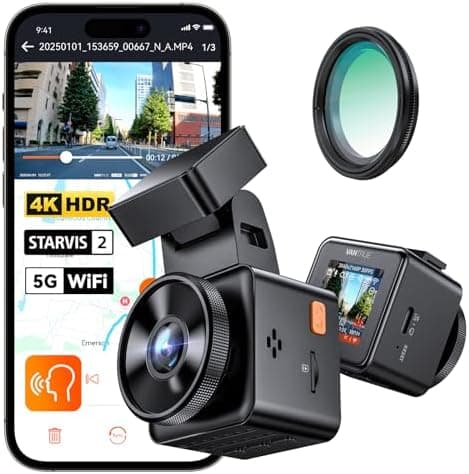
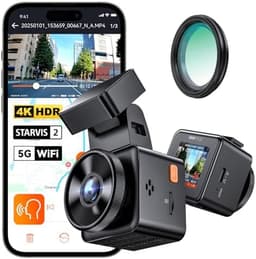
Proof that real parking protection does not have to cost much: for around $110 the VS1 Mini pairs a supercapacitor with three parking modes (features usually reserved for pricier cameras) on a current-generation Sony STARVIS 2 sensor, a genuine upgrade over the discontinued VIOFO WM1 it replaces on this list. It ranks last because it is a single front-facing channel and, like most cameras here, needs a separate hardwire kit for parking power. But as an entry-level parking camera that still holds up to heat and captures events reliably, nothing else here comes close on price.
Sony STARVIS 2 (IMX675) sensor, a meaningful low-light upgrade over the discontinued WM1's older, non-STARVIS-2 sensorSupercapacitor and three parking modes (buffered, time-lapse, low-bitrate) for around $110Almost the smallest dash cam on the market, easy to mount discreetlyFront-only, single channel: no rear or cabin coverage2K resolution rather than 4K
Parking mode is the feature that turns a dash cam from a driving recorder into round-the-clock protection for a parked car, and the specifics matter far more than the checkbox on the box. Start by understanding the types of parking mode. Buffered recording keeps a rolling few seconds in memory and saves a clip from just before an impact or motion event through a few seconds after, so the moment itself is never lost. Time-lapse records continuously at a low frame rate to conserve storage. Low-bitrate mode records normally but compresses harder. And the most efficient approach, found on the Thinkware U3000 Pro, is dual radar: a low-power sensor on both the front and rear units watches for motion and impacts without keeping the image sensor running, which dramatically extends how long the camera can guard the car on a given amount of power. If you park on the street overnight, that power efficiency is the single most important factor. Next, think about how the camera is powered when the engine is off. Parking mode needs constant power, which almost always means a hardwire kit wired to the fuse box or an OBD-II adapter: the bundled cigarette-lighter plug only works while the car runs. A good hardwire kit includes a voltage cutoff so the camera stops before it drains your starter battery. Some cameras, like the Vantrue E1 Pro, also accept an external battery pack for drivers who can't hardwire. Just as important is the camera's own power design: a supercapacitor tolerates the heat of a parked car in direct sun far better than a lithium battery, which can swell or fail, so supercapacitor models are the safer choice for parked duty. Then weigh coverage. A front-and-rear camera catches hit-and-runs from both directions, while a front-only unit is smaller and cheaper but blind to rear impacts. If you want to know the instant your car is hit rather than discovering the damage later, a connected camera such as the Nexar One adds LTE alerts and cloud backup (footage that survives even if the camera is stolen). Finally, size your storage to the parking mode you'll use, since continuous modes fill a card far faster than buffered ones. Match the parking-mode type, power design, and coverage to how and where you actually park, and the resolution race matters less than it first appears.
Rankings reflect published manufacturer specifications and aggregated independent reviews from outlets including PCWorld, TechRadar, The Drive, and specialist dash-cam sites, cross-checked against current retailer listings for pricing, ASIN, and availability. We score and compare these dash cams based on published specifications, independent expert reviews, and verified owner feedback; we do not independently bench-test hardware.
Parking Protection
Type and effectiveness of parking mode (radar, buffered, or motion) and power efficiency
30%
Video Quality
Resolution, sensor, and night clarity of captured footage
25%
Coverage
Front, rear, and cabin channels the camera protects
15%
Power & Reliability
Supercapacitor vs battery, heat tolerance, and how parking power is supplied
What is the difference between buffered, radar, and motion parking modes?
Motion (or impact) detection wakes the camera to record when its sensor sees movement or feels a bump, which works but keeps the image sensor powered and drains a battery faster. Buffered recording continuously holds a few seconds in memory and, when an event triggers, saves a clip from just before the event through just after, so the actual moment of impact is captured, not just the aftermath. Radar, on the Thinkware U3000, uses a separate low-power sensor to detect motion and impacts without running the camera, which extends parked surveillance dramatically. Radar is the most power-efficient; buffered is the most important feature to have regardless of type.
Do I need a hardwire kit for parking mode?
Almost always, yes. Parking mode needs constant power with the engine off, and the cigarette-lighter adapter in the box only powers the camera while the car is running. A hardwire kit taps the fuse box (or an OBD-II adapter plugs into the diagnostic port) to supply power full-time, and a good kit includes a voltage cutoff so the camera shuts off before it can drain your starter battery. The Thinkware U3000 Pro includes a hardwire/OBD cable in the box; the VIOFO and Vantrue picks need the kit purchased separately, usually around $20. The Vantrue E1 Pro can also run from an external battery pack if you prefer not to hardwire.
Will parking mode drain my car battery?
It can if the camera is wired without a cutoff, which is exactly what the voltage-monitoring in a proper hardwire kit prevents: it stops drawing power once the battery drops to a set threshold, leaving enough charge to start the car. Low-power modes reduce the risk further: radar parking (Thinkware) and buffered or low-bitrate modes draw far less than continuous recording. If you park for days at a time, favor a radar or low-power buffered mode and consider a dedicated dash-cam battery pack so the car's own battery is never touched.
Should the camera use a supercapacitor or a battery for parking mode?
For a camera that sits in a parked car, a supercapacitor is the safer choice. Lithium batteries degrade and can swell or fail in the extreme heat a car reaches in direct sun, which is precisely when a parked camera needs to keep working. Supercapacitors tolerate those temperatures far better, so the VIOFO A229 Plus, Vantrue E1 Pro, and VIOFO VS1 Mini, all supercapacitor-based, are well suited to hot-climate parking. This is one reason to weigh the power design, not just the resolution, when buying a camera specifically for parking protection.