The best dash cams for semi trucks and fleets, ranked on multi-channel coverage, 4K and Sony STARVIS 2 image quality, infrared cab night vision, durability, and long-haul storage.
Updated July 27, 20265 rankedNo paid placements
We may earn a commission when you buy through our links.
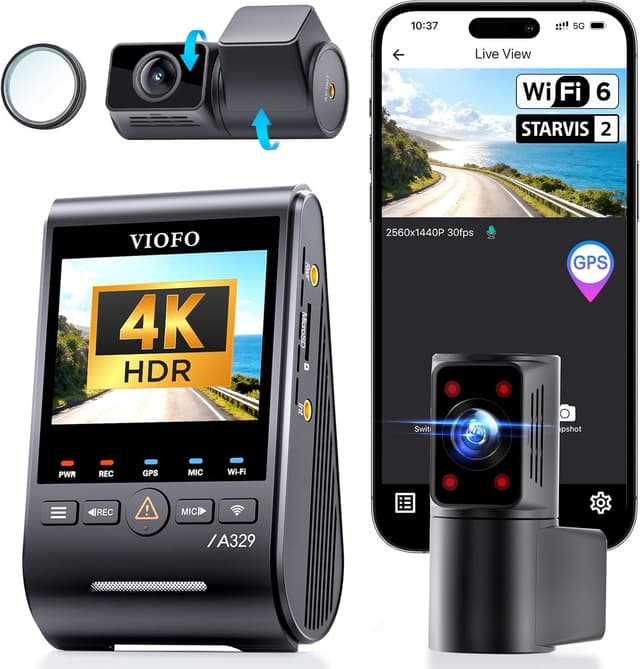
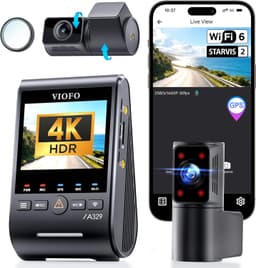
The most complete three-channel setup here: every channel (4K front, 2K cabin, and 2K rear) uses a Sony STARVIS 2 sensor, so plates, faces, and the cab are all captured sharply rather than trading resolution between lenses. Wi-Fi 6 and support for an external SSD up to 4TB let it record weeks of continuous three-channel footage before overwriting, which matters on long hauls. It edges the Vantrue N4 Pro S on cabin and rear resolution and on storage headroom; its price is the only real reason to look elsewhere.
All three channels use Sony STARVIS 2 sensors: 4K front, 2K cabin, and 2K rear210-degree interior view captures the full cab for owner-operators and fleetsWi-Fi 6 (5GHz) transfers 4K clips to the app quicklyThe most expensive option on this listSSD and a hardwire kit for full parking mode are added costs
The pick built specifically for trucking: the camera hardware carries an IP67 dust and water rating, the interior lens has infrared LEDs for a dark cab, and it pairs 4K front and 2.5K rear video with up to 1TB of local storage. It ranks just behind the A329S because its interior channel is 1080p rather than 2K and it has no external SSD option, but its ruggedization and infrared cab view make it the more purpose-built choice for a working truck.
Marketed and built for trucks, with an IP67 dust and water rating on the camera hardwareTriple Sony STARVIS 2 sensors: 4K front, 2.5K rear, 1080p interiorInfrared interior lens keeps the cab visible at nightInterior channel is 1080p, lower than the A329S's 2K cabinmicroSD storage only, no external SSD option
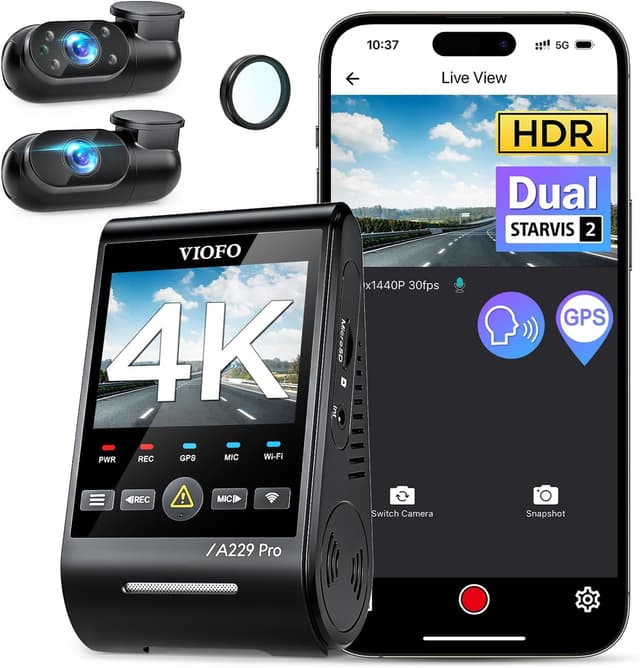
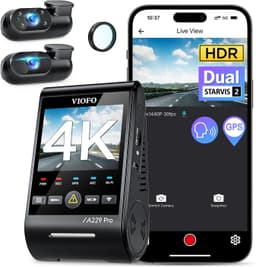
Delivers the same three-way front/interior/rear coverage as the picks above, true 4K front, 2K rear, 1080p interior on Sony STARVIS 2 sensors, for around $310, roughly $70 to $160 less. It is widely praised by outlets including The Drive and Android Police as a well-rounded three-channel recorder. It sits below the N4 Pro S because it lacks that unit's IP67 sealing and infrared-optimized cabin lens, but for most drivers it is the smartest money on this list.
Full 4K front, 2K rear, and 1080p interior three-channel coverage for around $310Sony STARVIS 2 sensors (IMX678 + IMX675) for strong low-light footagePraised by outlets including The Drive and Android Police as an all-round three-channel pickInterior camera is 1080pmicroSD storage only (up to 512GB), no SSD
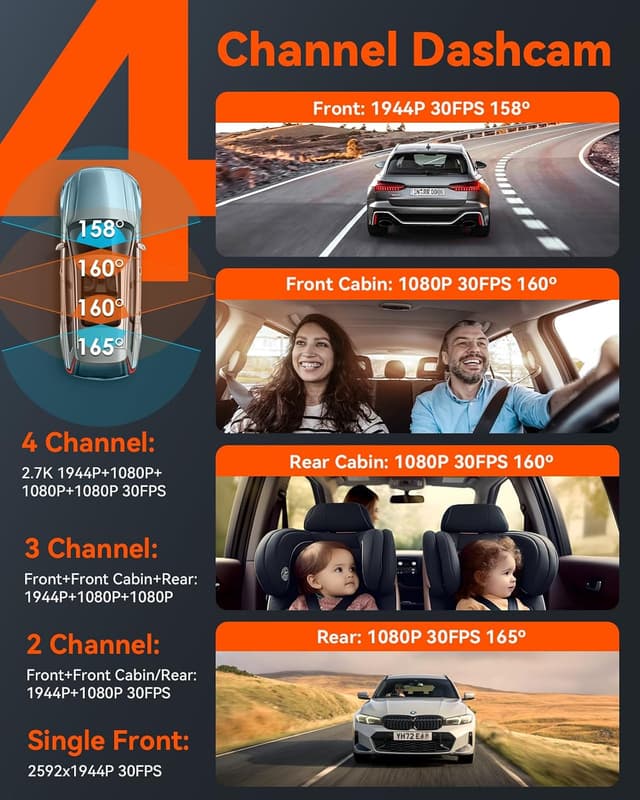
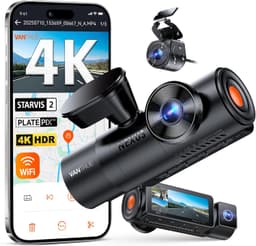
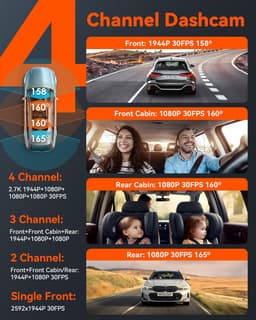
The only four-channel option here, adding a second interior lens so it records the front, the cab, the sleeper/rear cabin, and the road behind at once: genuine 360-degree coverage no three-channel rival matches. It drops below the A229 Pro because its front camera tops out at 2.7K rather than 4K and its other three channels are 1080p, so per-channel sharpness is lower even though total coverage is higher. Choose it when seeing everything matters more than maximum front resolution.
Four channels (front, front-cabin, rear-cabin, and rear) for genuine 360-degree coverageTwo infrared interior lenses record the cab and sleeper in the darkSony STARVIS 2 front sensor and 24-hour buffered parking modeFront camera tops out at 2.7K (1944p), below the 4K front cameras hereThe other three channels are 1080p
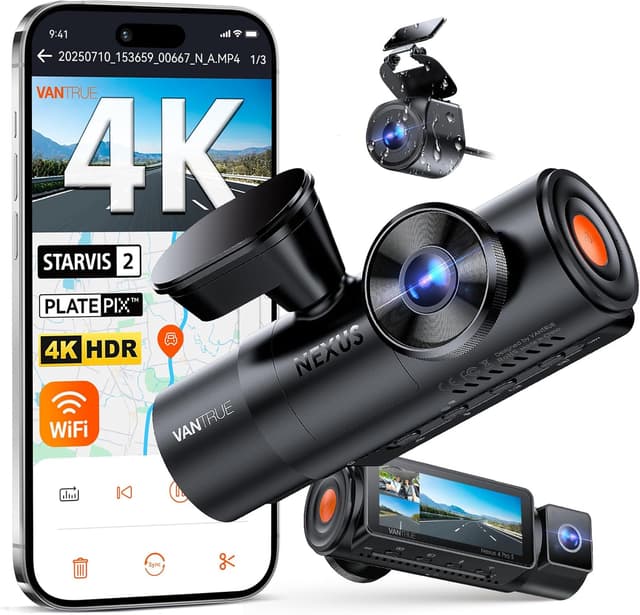
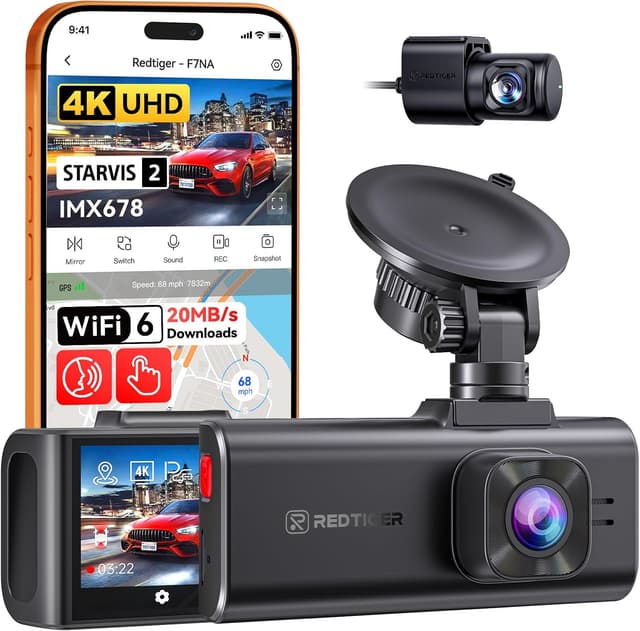
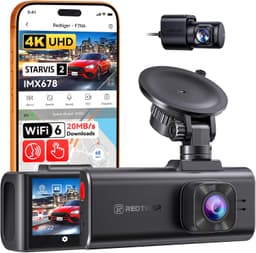
A genuine bargain: true 4K front video on a Sony STARVIS 2 IMX678 sensor, 5GHz Wi-Fi, and GPS for around $140. It ranks last only because it is the sole two-channel unit here: there is no interior camera, a real gap for a trucker who needs cab evidence for insurance or company claims. As a front-and-rear recorder for a company driver or a first camera on a used rig, though, nothing else here comes close on price.
True 4K front recording on a Sony STARVIS 2 IMX678 sensor for around $1405GHz Wi-Fi with fast clip transfer and built-in GPSWDR/HDR night processing and 24-hour parking modeTwo channels only, no interior camera, a real gap for trucking incident claimsRear camera is 1080p
A dash cam for a semi truck has to do more than a car camera, and the specs that matter most are not always the ones on the front of the box. Start with channels and coverage. A single front camera is rarely enough for a commercial driver; the mainstream choice for trucking is a three-channel system that records the road ahead, the cab interior, and the road behind at once. The interior lens is the part most car buyers skip and most professional drivers rely on, because cab footage is what protects an owner-operator against false claims and is what many fleet insurance and safety programs now require. If you want to see the sleeper and both sides of the cab as well, a four-channel system adds a second interior lens for full 360-degree coverage. Only after deciding how many angles you need should you weigh resolution: a 4K front camera on a modern Sony STARVIS 2 sensor keeps license plates legible at highway closing speeds, while 2K rear and interior channels are sharp enough for detail without filling storage as fast as 4K on every lens would. Night performance is the next priority, since much of a long-haul week happens in the dark. Look for STARVIS 2 sensors with HDR or WDR on the outward channels and infrared LEDs on the interior lens, which is the only way the cab is actually visible at night. Durability matters more in a truck than a car: cabs get hot, vibration is constant, and an IP-rated, capacitor-based camera holds up far better to heat than a battery-based consumer unit. Then think about storage and power the way a professional does. Multi-channel 4K recording fills cards quickly, so favor high microSD capacity or, on the VIOFO A329S, an external SSD for weeks of continuous footage. Finally, plan the install: parking mode and reliable power both require a hardwire kit, and on a semi that kit must be rated for the 24-volt electrical system. Built-in GPS, which every pick here includes, stamps speed and location onto the footage, often the deciding evidence in a dispute.
Rankings reflect published manufacturer specifications and aggregated independent reviews from outlets including The Drive, PCWorld, Android Police, and specialist dash-cam sites, cross-checked against current Amazon listings for pricing, ASIN, and availability. We score and compare these dash cams based on published specifications, independent expert reviews, and verified owner feedback; we do not independently bench-test hardware.
Video Quality
Resolution, sensor, and HDR/night clarity across channels
30%
Coverage & Channels
Front, interior, and rear coverage and field of view
25%
Durability & Reliability
Heat and vibration tolerance, weather sealing, capacitor design
15%
Parking & Storage Features
Parking modes, GPS, and storage capacity for long hauls
Do these dash cams work on a 24-volt semi-truck electrical system?
Yes. All five are compatible with a truck's 24-volt system when powered through the manufacturer's hardwire kit: VIOFO's HK series, Vantrue's hardwire kit, and Redtiger's hardwire kit each accept a 12V-to-24V range of input, which is also what enables parking mode. The bundled cigarette-lighter adapters are fine for basic driving power, but a hardwired kit rated for 24V is the standard install on a semi.
Do I really need an interior-facing camera in a truck?
For owner-operators and fleets, usually yes. An interior camera provides evidence in a disputed incident, protects against false claims, and is required by many fleet insurance and safety programs. Four of our five picks (all except the Redtiger F7NA) include an interior lens, and the Vantrue N4 Pro S and N5 add infrared LEDs so the cab is visible at night.
How much storage do I need for long-haul driving?
High-resolution multi-channel recording fills cards quickly, so long-haul drivers should prioritize capacity. The Vantrue N4 Pro S supports up to 1TB and the N5 and VIOFO A229 Pro up to 512GB microSD, while the VIOFO A329S uniquely supports an external SSD up to 4TB, enough for weeks of continuous three-channel footage before it loops over the oldest files.
Will a dash cam record while the truck is parked?
All five offer a parking mode that records or captures clips when the engine is off, but it needs constant power from a hardwire kit, and on a truck, one rated for the 24V system. Buffered or low-power parking modes save storage by keeping footage mainly around a detected impact or motion event rather than recording continuously.
Are these the right cameras for exterior blind-spot or trailer monitoring?
These are cab-mounted front, interior, and rear systems. If your priority is exterior blind-spot or trailer coverage with weatherproof cameras mounted outside the cab, look at dedicated waterproof multi-camera truck systems instead. For the in-cab front-interior-rear coverage most drivers and fleets want, the picks here are the mainstream choice.