BlackVue Elite 9 2CH vs Vantrue E1 Pro
BlackVue Elite 9 2CH (#3, best premium) vs Vantrue E1 Pro (#4): in our Dash Cams with Parking Mode scoring the BlackVue Elite 9 2CH totals 8.3/10 and the Vantrue E1 Pro 7.2/10, the BlackVue Elite 9 2CH leading on Parking Protection and Coverage and the Vantrue E1 Pro on Value.
We may earn a commission when you buy through our links.
TopsFive comparison scores
Side by side
| BlackVue Elite 9 2CH | Vantrue E1 Pro | |
|---|---|---|
| Parking Mode | Buffered / Energy Saving (impact wake) / time-lapse | 24/7 buffered motion |
| Channels | 2 (front + rear) | 1 (front) |
| Front Resolution | 4K (2160p) | 4K (2160p) |
| Image Sensor | Sony STARVIS 2 (IMX678 front + IMX675 rear) | Sony STARVIS 2 (IMX678) |
| Power Source | Supercapacitor (hardwire cable included) | Supercapacitor |
| Cloud Backup | Optional (LTE module or Wi-Fi hotspot) | Optional (LTE-ready) |
| Connectivity | Wi-Fi + GPS | 5GHz Wi-Fi + GPS |
| Max Storage | microSD up to 1TB | microSD up to 512GB |
| Rear Resolution | 2K (1440p) | — |
| Field of View | 146° front / 142° rear | — |
| Operating Temperature | -20°C to 65°C | — |
| Price | Check price → | Check price → |
How they differ in real use
Built from our dash cams with parking mode scoring, each product's published specifications, and verified owner feedback — not hands-on testing.
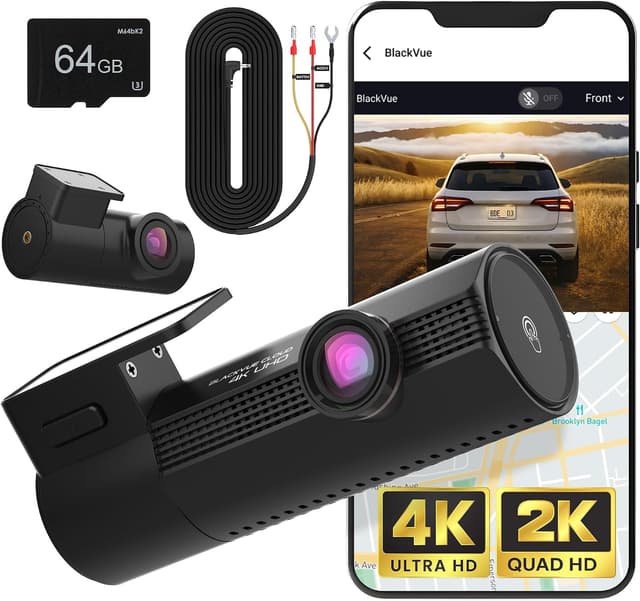
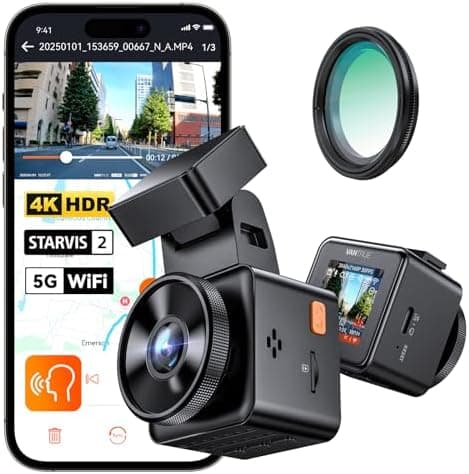
Both the BlackVue Elite 9 2CH and the Vantrue E1 Pro made our Top 5 Dash Cams with Parking Mode, at #3 (best premium) and #4. The pick for drivers who want to know when their parked car is hit, not just find out later: paired with BlackVue's optional LTE module or an in-car Wi-Fi hotspot, the Elite 9 pushes impact alerts and remote live view to your phone through BlackVue Cloud, and its Energy Saving parking mode idles on an ultra-low-power circuit and wakes on impact, so it can stand guard for weeks rather than days. Unlike the single-lens picks below it, it covers both ends of the car with a 4K HDR STARVIS 2 front camera and a 2K HDR rear, and a hardwire cable comes in the box. It ranks behind the Thinkware because it wakes on a G-sensor impact rather than watching with radar, and behind the A229 Plus on value: it costs far more, its remote features need an extra module and data plan, and early firmware had livestream glitches that BlackVue has been patching. The most discreet way to protect a parked car: barely larger than a coin, the E1 Pro hides behind the mirror yet records true 4K on a Sony STARVIS 2 sensor with PlatePix to keep plates legible, and its supercapacitor keeps the 24/7 buffered parking mode reliable through prolonged heat. It ranks below the front-and-rear picks because it is a single front-facing lens, blind to hits from behind, and parking mode needs a hardwire kit or battery pack bought separately. For a small car or a stealthy install, though, it packs the most parking capability into the smallest body here.
We score dash cams with parking mode on Parking Protection (30%), Video Quality (25%), Coverage (15%), Power & Reliability (15%) and Value (15%). On that basis the BlackVue Elite 9 2CH totals 8.3 out of 10 and the Vantrue E1 Pro 7.2. The widest gap is Parking Protection, where the BlackVue Elite 9 2CH scores 9 against 7 for the Vantrue E1 Pro: type and effectiveness of parking mode (radar, buffered, or motion) and power efficiency. Coverage also separates them: 8 for the BlackVue Elite 9 2CH versus 5 for the Vantrue E1 Pro. The Vantrue E1 Pro claws back ground on Value.
On paper, the specifications that actually differ: Parking Mode: Buffered / Energy Saving (impact wake) / time-lapse on the BlackVue Elite 9 2CH versus 24/7 buffered motion on the Vantrue E1 Pro; Channels: 2 (front + rear) on the BlackVue Elite 9 2CH versus 1 (front) on the Vantrue E1 Pro; Image Sensor: Sony STARVIS 2 (IMX678 front + IMX675 rear) on the BlackVue Elite 9 2CH versus Sony STARVIS 2 (IMX678) on the Vantrue E1 Pro; Power Source: Supercapacitor (hardwire cable included) on the BlackVue Elite 9 2CH versus Supercapacitor on the Vantrue E1 Pro; Cloud Backup: Optional (LTE module or Wi-Fi hotspot) on the BlackVue Elite 9 2CH versus Optional (LTE-ready) on the Vantrue E1 Pro; Connectivity: Wi-Fi + GPS on the BlackVue Elite 9 2CH versus 5GHz Wi-Fi + GPS on the Vantrue E1 Pro. They match on Front Resolution.
Check current pricing at the merchant links below. Owners praise the BlackVue Elite 9 2CH for energy Saving parking mode wakes on impact from an ultra-low-power standby, listed for up to about 30 days parked and three parking options: buffered motion/impact recording, Energy Saving, and time-lapse; the most common complaint is one of the most expensive cameras on this list. Owners praise the Vantrue E1 Pro for supercapacitor withstands extreme heat, so parked recording stays reliable in a hot car and true 4K on a Sony STARVIS 2 (IMX678) sensor with PlatePix keeps plates legible day and night; the most common complaint is front-only, no rear coverage for parking hits from behind.
BlackVue Elite 9 2CH
- Energy Saving parking mode wakes on impact from an ultra-low-power standby, listed for up to about 30 days parked
- Three parking options: buffered motion/impact recording, Energy Saving, and time-lapse
- 4K HDR front (Sony STARVIS 2 IMX678) and 2K HDR rear (IMX675) cover both ends of the car
- BlackVue Cloud impact alerts, remote live view, and GPS tracking with the optional LTE module or a Wi-Fi hotspot
- One of the most expensive cameras on this list
- Remote alerts and live view away from the car need the optional LTE module or an in-car hotspot, plus a data plan
- No screen, so setup and playback run through the app; early owners reported livestream and parked-GPS glitches that BlackVue has been addressing in firmware
Vantrue E1 Pro
- Supercapacitor withstands extreme heat, so parked recording stays reliable in a hot car
- True 4K on a Sony STARVIS 2 (IMX678) sensor with PlatePix keeps plates legible day and night
- Dollar-coin-sized body mounts discreetly behind the mirror
- 5GHz Wi-Fi, GPS, and an included CPL filter to cut windshield glare
- Front-only, no rear coverage for parking hits from behind
- Parking mode needs a hardwire kit (about $20 extra) or a battery pack
- No built-in cloud backup
Which should you buy?
The BlackVue Elite 9 2CH is the better fit for drivers who want phone alerts and remote live view when the parked car is hit and owners who leave the car parked for days at a time; it is the higher-scoring pick here, chiefly for Parking Protection and Coverage. The Vantrue E1 Pro is the better fit for drivers who want the smallest, most discreet parking camera and owners of hot-climate cars who need supercapacitor reliability, and the stronger choice if Value matters more to you than the overall score. The BlackVue Elite 9 2CH is a poor fit for tight budgets; the Vantrue E1 Pro is a poor fit for drivers who need rear parking coverage.
Choose the BlackVue Elite 9 2CH if
- Drivers who want phone alerts and remote live view when the parked car is hit
- Owners who leave the car parked for days at a time
- Buyers who want 4K front and 2K rear coverage with HDR on both
Skip it if
- Tight budgets
- Drivers who want an on-camera screen
Choose the Vantrue E1 Pro if
- Drivers who want the smallest, most discreet parking camera
- Owners of hot-climate cars who need supercapacitor reliability
- Anyone wanting 4K plate capture in a mini body
Skip it if
- Drivers who need rear parking coverage
- Those who want parking mode with no extra purchase
Common questions
Is the BlackVue Elite 9 2CH better than the Vantrue E1 Pro?
In our Dash Cams with Parking Mode ranking the BlackVue Elite 9 2CH scores higher overall, 8.3 to 7.2, with the biggest advantage in Parking Protection. The Vantrue E1 Pro is stronger on Value, so it is the better pick if that matters most to you.
What is the main difference between the BlackVue Elite 9 2CH and the Vantrue E1 Pro?
The headline spec difference is Parking Mode: Buffered / Energy Saving (impact wake) / time-lapse on the BlackVue Elite 9 2CH versus 24/7 buffered motion on the Vantrue E1 Pro. In use, the gap that matters most is Parking Protection (9 vs 7 in our scoring): type and effectiveness of parking mode (radar, buffered, or motion) and power efficiency.