Best 240Hz+ Gaming Monitors 2026

Ultra-fast monitors for competitive esports.

Last updated: February 1, 20265 products tested

Our Top Picks

Best OverallASUS ROG Swift PG27AQDM

ASUS ROG Swift PG27AQDM

ASUS

View details →
Best PremiumAlienware AW2725DF

Alienware AW2725DF

Alienware

View details →
Best BudgetAOC AGON PRO AG276QZD2

AOC AGON PRO AG276QZD2

AOC

View details →

Full Rankings

#1
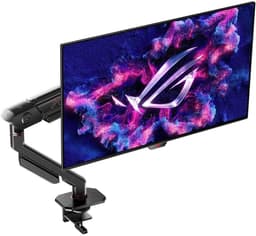
ASUS ROG Swift PG27AQDM

ASUS ROG Swift PG27AQDM

Best Overall

The OLED speed king combines 240Hz with 0.03ms response time. Motion clarity that makes traditional LCDs look like they're smearing. True blacks and 1000+ nit HDR.

Pros

  • 240Hz OLED
  • 0.03ms GtG response
  • 1000+ nits HDR peak

Cons

  • Risk of burn-in
  • Only 1440p
  • Expensive
#2
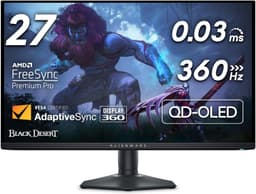
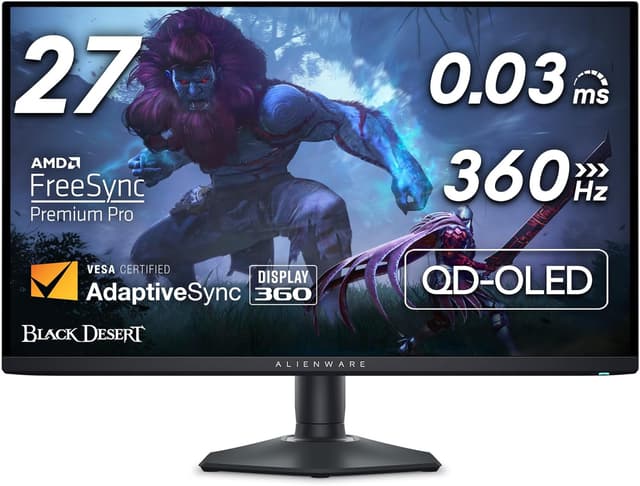
Alienware AW2725DF

Alienware AW2725DF

Best Premium

QD-OLED at 360Hz pushes refresh rates to new heights. The smoothest motion possible with Samsung's QD-OLED technology for superior color volume.

Pros

  • 360Hz QD-OLED
  • 0.03ms response
  • Excellent color accuracy

Cons

  • Extremely expensive
  • 1440p only
  • Burn-in concerns
#3
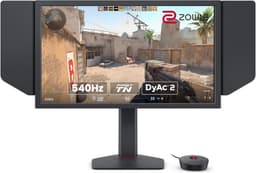
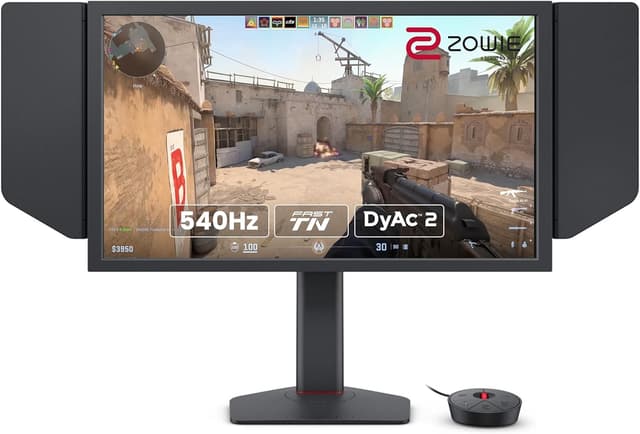
BenQ ZOWIE XL2586X

BenQ ZOWIE XL2586X

The esports tournament standard with DyAc 2 motion blur reduction at 540Hz. What CS2 pros demand when every frame matters.

Pros

  • 540Hz refresh rate
  • DyAc 2 motion blur reduction
  • Tournament-proven

Cons

  • TN panel with limited colors
  • Only 1080p
  • Very expensive for TN
#4
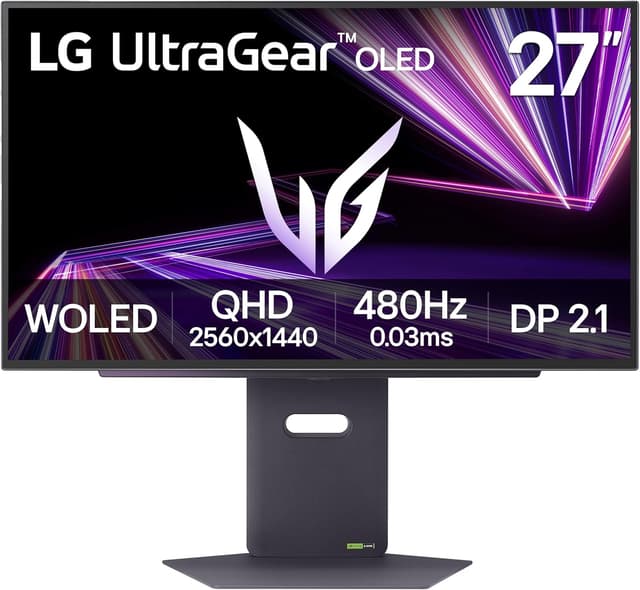
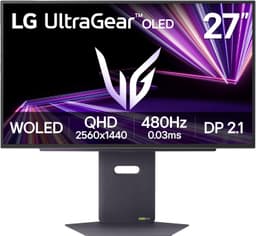
LG UltraGear 27GX790A-B

LG UltraGear 27GX790A-B

The world's fastest OLED at 480Hz with MLA+ technology for 1300 nit peak brightness. Anti-glare coating and DisplayPort 2.1 make it future-proof for competitive gaming.

Pros

  • 480Hz OLED refresh rate
  • 0.03ms response time
  • 1300 nit peak (MLA+)

Cons

  • Only 1440p resolution
  • Expensive
  • No built-in speakers
#5
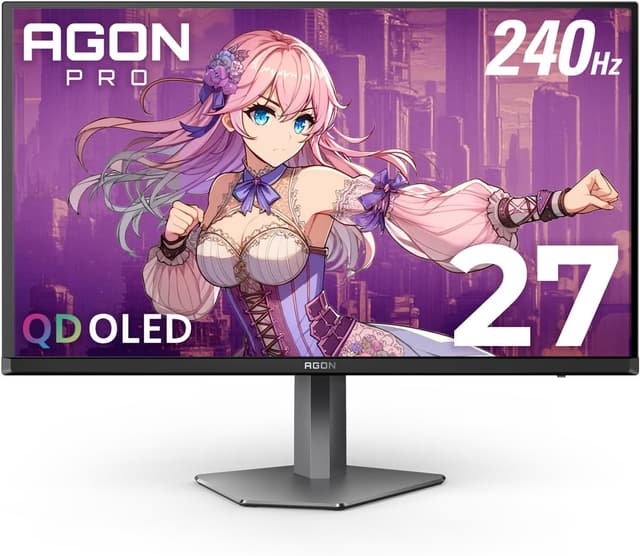
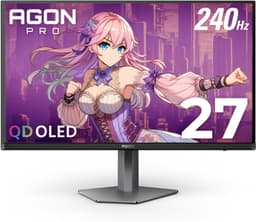
AOC AGON PRO AG276QZD2

AOC AGON PRO AG276QZD2

Best Budget

QD-OLED at just $500—nearly $300 less than comparable OLED monitors. Samsung's QD-OLED panel delivers 240Hz with 0.03ms response and 99% DCI-P3 coverage at an unbeatable price.

Pros

  • QD-OLED at $500
  • 240Hz with 0.03ms response
  • 99% DCI-P3 coverage

Cons

  • Only HDMI 2.0 (no 2.1)
  • Glossy screen
  • OLED burn-in risk

Score Comparison

Product
Speed
35%
Input Lag
25%
Panel Quality
20%
Features
10%
Value
10%
Weighted
Score
Price
#1ASUS ROG Swift PG27AQDM
101010989.70$799
#2Alienware AW2725DF
101010979.60$643
#3BenQ ZOWIE XL2586X
10107979.00$899
#4LG UltraGear 27GX790A-B
1010101089.80$746
#5AOC AGON PRO AG276QZD2
101098109.60$399

Buying Guide

240Hz+ monitors are for competitive players where every frame matters. Prioritize response time, minimal motion blur, and low input lag over color accuracy. TN panels are fastest; IPS offers better viewing angles.

What We Evaluate

35%

Speed

Response time and motion clarity

25%

Input Lag

System latency

20%

Panel Quality

Colors and viewing angles

10%

Features

G-Sync, FreeSync, etc.

10%

Value

Performance per dollar

Our Testing Methodology

We test monitors for pixel response time, input lag, motion clarity, and VRR performance using high-speed cameras and specialized testing equipment.

Learn more about how we test →

Frequently Asked Questions

OLED vs IPS for competitive gaming?
OLED offers superior response times (0.03ms vs 1ms+) and contrast. IPS avoids burn-in risk and offers brighter sustained HDR. For pure speed, OLED wins.
Is 360Hz+ worth it over 240Hz?
Marginally. The jump from 60Hz to 144Hz is dramatic, 144Hz to 240Hz is noticeable, but 240Hz to 360Hz is subtle. Most benefit from 240Hz being more affordable.
Should I worry about OLED burn-in?
For gaming, burn-in risk is low due to dynamic content. Static HUD elements are the main concern. Use pixel refresh features and avoid static content for extended periods.

Related Comparisons