L-Theanine for Calm Focus ranked on form, dose, third-party testing and value per unit of active ingredient.
Updated August 5, 20265 rankedNo paid placements
We may earn a commission when you buy through our links. Prices and availability shown are accurate as of Aug 5, 2026 and are subject to change; the merchant's price at purchase applies.
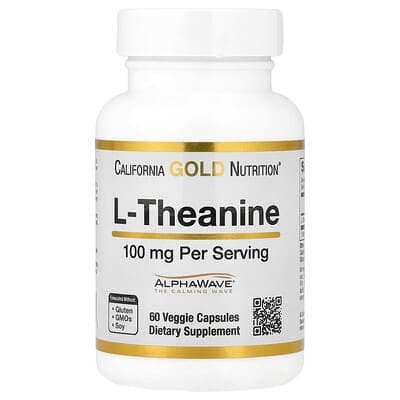
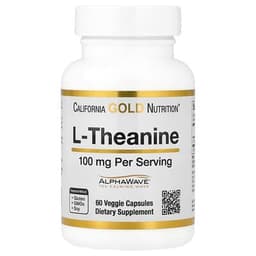
It has the best weighted balance of branded form, label clarity, published product-specific evidence, and price. Its roughly 25,000 iHerb reviews reinforce buyer trust, but quality criteria, not popularity, drive the rank.
Branded AlphaWave L-theanine with 100 mg fully disclosed per capsulePublished product-specific iTested report lists a 100 mg HPLC potency resultVegan capsule with no caffeine and broad allergen exclusions100 mg is the bottom of the requested research-dose rangeAvailable iTested report is dated 2018 and does not document the current lot
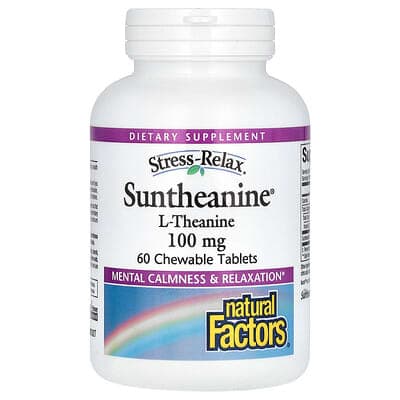
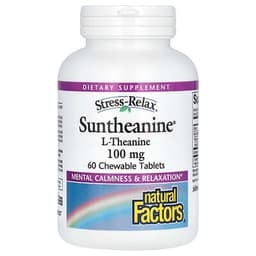
Its Suntheanine form, 200 mg serving, and named Isura verification are strong on the heavily weighted criteria. It ranks below the winner because of its substantially higher active-ingredient cost and added-sugar chewable formulation.
200 mg Suntheanine serving directly matches several human-trial dosesIsura mass-spec laboratory verification and non-GMO documentation are identifiedVegan chewable format with no caffeineCosts $0.63 per 200 mg serving, the highest cost in this listTwo-tablet serving contains 3 g added sugar plus xylitol and flavoring
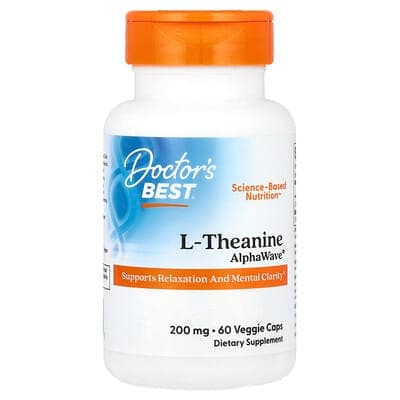
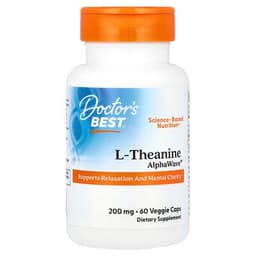
The branded form and trial-aligned 200 mg dose keep it ahead of generic products. Its lack of accessible product-specific testing evidence prevents a higher rank despite otherwise strong formulation and value.
200 mg of branded AlphaWave in one capsuleVegan, non-GMO, gluten-free, soy-free, and caffeine-free labelingFully disclosed single active without a proprietary blendNo product-specific COA or USP/NSF certification is linked on iHerbContains microcrystalline cellulose, stearic acid, and silicon dioxide
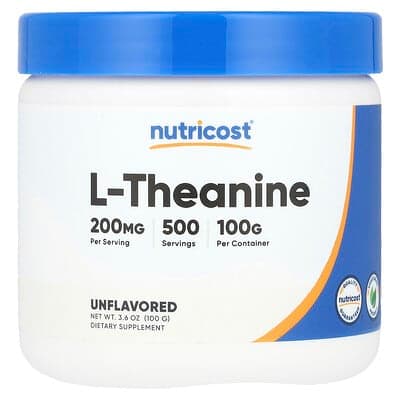
Exceptional value, a 200 mg serving, and a one-ingredient label earn fourth place. It remains below the branded products because neither L-isomer process documentation nor a product-specific laboratory report is published on the iHerb page.
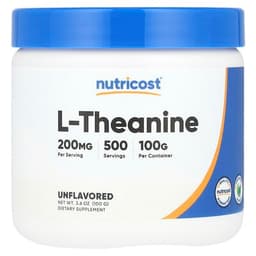
200 mg serving with no other ingredientsApproximately $0.03 per serving and 500 servings per containerVegetarian, gluten-free, non-GMO, and caffeine-free labelingGeneric L-theanine without a disclosed branded L-isomer processMeasuring a 0.2 g scoop can be less repeatable than using a premeasured capsule
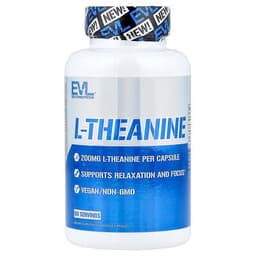
Its 200 mg dose, vegan capsule, low price, and roughly 5,000 iHerb reviews make it the strongest remaining generic capsule. Weak testing documentation and undisclosed L-isomer process keep it behind the other selections.
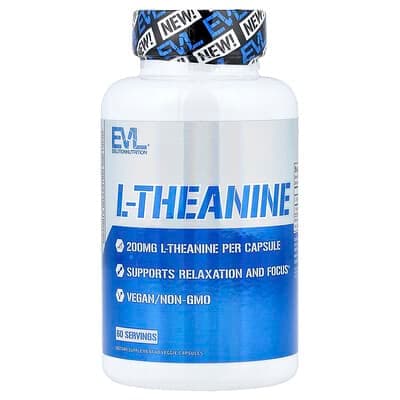
200 mg of fully disclosed L-theanine per capsuleVegan formula with no caffeineApproximately $0.12 per 200 mg servingGeneric L-theanine without Suntheanine or AlphaWave identificationNo recognized certification or published product-specific COA linked on iHerb
Start with the Supplement Facts panel rather than the front-label dosage. For L-theanine, the relevant number is milligrams per labeled serving, and a serving may contain one capsule, two chewable tablets, or one scoop. Published human studies have used approximately 97 mg of L-theanine with 40 mg of caffeine for attention tasks, 200 mg as a single dose or daily dose, and 400 mg per day in a 28-day study. These studies were generally small, sometimes industry-funded, and do not guarantee that matching the dose will produce the same outcome. A 100 mg serving sits at the bottom of the requested 100–400 mg research range; 200 mg more directly matches several standalone trials. Form matters mainly because the label should establish that the ingredient is the L-isomer rather than an unspecified theanine mixture. Suntheanine is produced through a branded enzymatic process, while AlphaWave is identified as a highly purified branded L-theanine. Generic L-theanine is not automatically inferior, but it provides less process and purity disclosure unless the manufacturer publishes supporting documentation. There is not strong head-to-head human evidence proving that either branded form is absorbed better than every legitimate generic product. Testing should be evaluated separately from branding. The strongest evidence is a recognized finished-product certification or a recent, product-specific certificate of analysis naming the laboratory, lot, assay method, specification, and result. USP and NSF product certifications verify defined quality requirements; NSF Certified for Sport and Informed Choice are especially relevant when prohibited-substance screening matters. IFOS is designed for fish oils and is not pertinent to an L-theanine product. GMP registration, Non-GMO Project verification, gluten-free labeling, and a general third-party-tested statement do not by themselves confirm current-batch L-theanine potency. An old product-specific report is useful but weaker than a report matching the bottle's current lot. Choose the delivery format deliberately. Capsules provide a premeasured amount; hypromellose capsules can be vegan, whereas gelatin capsules are not. Chewables may add sugar, xylitol, flavoring, and multiple tablets per serving. Powder offers the lowest cost per active milligram and no capsule fillers, but a 0.2 g scoop is easier to measure inconsistently than a capsule. Avoid proprietary blends that conceal the L-theanine amount, overlooked caffeine, unexplained active mixtures, and comparisons based only on bottle price or capsule count. Calculate value as price divided by total labeled L-theanine: servings multiplied by milligrams per serving. Finally, check caffeine separately. None of the selected products includes caffeine, allowing buyers to control stimulant intake independently; combination products require attention to total caffeine from coffee, tea, and other supplements.
We rank on third-party testing (30%), form and bioavailability (25%), dose versus published human research (20%), label transparency (15%) and value per unit of active ingredient (10%). Specifications are taken from each product's supplement facts panel on its iHerb listing, and certification claims are checked against the certifying body's directory where one is published. We do not test products ourselves, and nothing here is medical advice.
Third-Party Testing
Independent certification or a published certificate of analysis
30%
Form & Bioavailability
Whether the chemical form is the well-absorbed one
25%
Dose vs Research
Per-serving dose versus doses used in published human trials
20%
Label Transparency
Full per-ingredient disclosure and minimal fillers
Are Suntheanine and AlphaWave absorbed better than generic L-theanine?
Both are branded L-theanine ingredients with more explicit production and L-isomer purity information: Suntheanine uses an enzymatic process, while AlphaWave is described as highly purified. That added traceability is valuable, but published evidence does not establish that either is universally absorbed better than every correctly manufactured generic L-theanine product.
What L-theanine dose has been used in human research?
Human studies have used approximately 97 mg with 40 mg caffeine for attention tasks, 200 mg as a single or daily dose, and 400 mg per day in a 28-day study. These are study doses rather than universal recommendations; follow the product label and seek individualized professional guidance when appropriate.
Should an L-theanine product include caffeine?
It depends on whether you specifically want a fixed combination. Some attention studies paired about 97 mg L-theanine with 40 mg caffeine, but other trials evaluated L-theanine alone. A caffeine-free product allows independent control of coffee, tea, or supplemental caffeine and avoids locking every serving to a stimulant dose.
What third-party evidence is most meaningful?
Look for a recognized finished-product certification or a recent product-specific COA that identifies the product, lot, laboratory, test method, specification, and measured result. GMP, non-GMO, gluten-free, and general third-party-tested statements provide different information and should not be treated as equivalent to current-batch potency verification.