Top 5 Best Ultra Short Throw Projectors Under $2,000 2026
The best 4K ultra short throw (UST) laser projectors sold for under $2,000, scored on picture quality, measured brightness, value, smart features, gaming and built-in sound.
Updated October 5, 20265 rankedNo paid placements
We may earn a commission when you buy through our links.
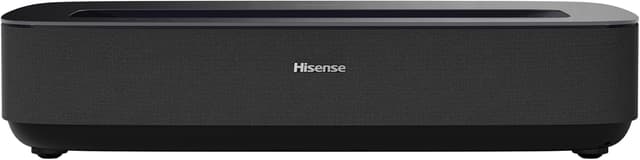
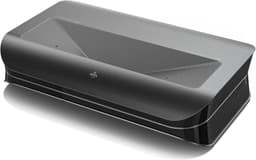
The most complete package for the least money: at about $1,499 it is the cheapest projector here, yet it is also the only pick that combines built-in Google TV with Dolby Vision, and its 0.22:1 lens puts a 100-inch image about 7.2 inches from the wall, closer than the AWOL models' 8.5 inches. What Hi-Fi rated it the best UST it has reviewed for performance per dollar. It gives up color volume to the RGB triple-laser LTV-3000 Pro and lags it in gaming (about 30 ms vs 15 ms at 4K/60, with no 120Hz), but the 3000 Pro costs about $400 more and needs a streaming stick.
Balanced, consistent picture with good shadow detail; What Hi-Fi rated it the best UST it has reviewed for performance per dollar0.22:1 throw puts a 100-inch image about 7.2 inches from the wall, the shortest placement in this groupGoogle TV built in on the US model, plus Dolby Vision, so no streaming stick is neededSingle blue-laser light source looks flatter in dim scenes than the RGB triple-laser AWOL modelsBuilt-in 2 x 15W speakers lack bass and upscaling of lower-resolution content is only middling (What Hi-Fi); game mode is about 30 ms at 4K/60 with no 120Hz
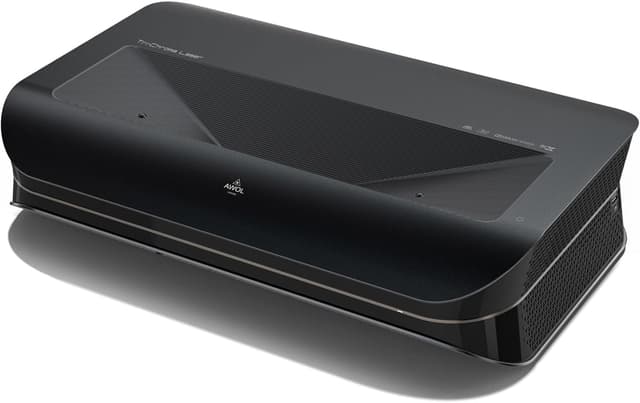
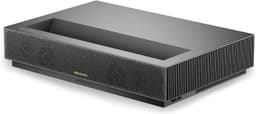
The best picture under $2,000 for buyers willing to add a streaming stick: Projector Reviews measured 2,586 ANSI lumens, the brightest independent figure in this list, and praised its accurate color and deep blacks, while its RGB triple laser covers a wider gamut than the Hisense PL2's single laser. It supports both Dolby Vision and HDR10+, and its lag is half the PL2's at 4K/60 (15 ms vs about 30 ms). It ranks second because it costs about $400 more than the PL2 and its built-in launcher has no useful apps. It ranks above the NexiGo Aurora Lite on brightness: roughly 2,586 measured lumens against the Aurora Lite's 1,287 calibrated.
Measured 2,586 ANSI lumens (Projector Reviews), the brightest independent figure in this listRGB triple laser gives the widest color here; Projector Reviews found accurate out-of-the-box color and excellent blacksSupports both Dolby Vision and HDR10+, with 15 ms lag at 4K/60 and 8 ms at 1080p/120Built-in Android launcher has no real app support, so you juggle a streaming stick and a second remoteRemote is not backlit and the matte cabinet shows fingerprints (Projector Reviews)
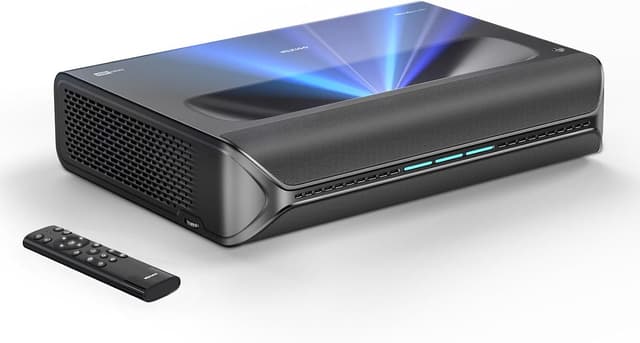
The pick for gamers and dark rooms: it is the only projector here that accepts 4K/120Hz, with under 10 ms lag at 1080p/240Hz, and The Smart Home Hookup measured a native contrast of 3,632:1 with a lower black floor than the AWOL LTV-2500. Its 60W four-driver Dolby Atmos system is the strongest built-in sound in the list. It ranks below the LTV-3000 Pro because it measured about 1,287 lumens calibrated against the 3000 Pro's 2,586, so it struggles with ambient light, and, like both AWOLs, it needs a streaming stick. It costs about $240 more than the LTV-2500.
Best measured contrast in this group: 3,632:1 native with a low black floor (The Smart Home Hookup)The only pick with 4K/120Hz input; under 10 ms lag at 1080p/240Hz (The Smart Home Hookup)60W Dolby Atmos system (2 x 15W woofers + 2 x 15W tweeters), the most built-in power here, plus eARC and active 3DDimmest of the five once calibrated (about 1,287 lumens in an AVS Forum review), so it needs a darker roomBare-bones Android TV with no useful apps; a streaming stick is needed
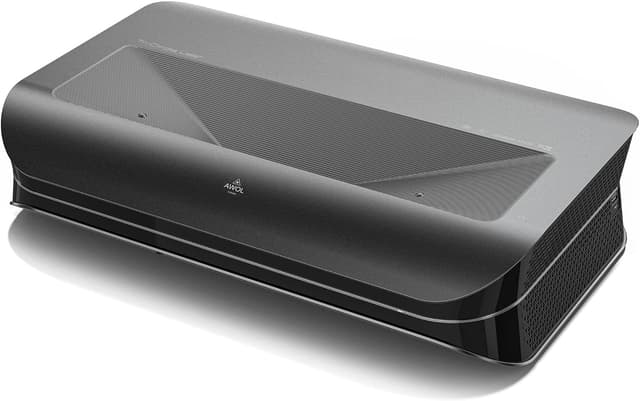
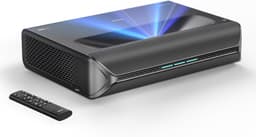
The cheapest way to get RGB triple-laser color with Dolby Vision and HDR10+: at about $1,559 it costs about $340 less than its LTV-3000 Pro sibling and matches it on throw, speakers and lag (15 ms at 4K/60, 8 ms at 1080p/120), and the current listing includes a Fire TV Stick 4K Max. It ranks fourth because ProjectorCentral measured 1,682 ISO lumens, well short of the 3000 Pro, with a blue bias that needs calibration, and its black floor sits above the Aurora Lite's. It beats the Formovie Cinema Edge on HDR support, color and gaming lag.
RGB triple-laser color with Dolby Vision and HDR10+ at the lowest price of the triple-laser picksLow gaming lag (15 ms at 4K/60, 8 ms at 1080p/120) and quiet operation (Projector Reviews, Heimkinowelten)Fire TV Stick 4K Max included per the current Amazon listing, so streaming works out of the boxMeasured 1,682 ISO lumens at maximum (ProjectorCentral), well below the LTV-3000 Pro, and a blue bias that needs calibrationHigher black floor than the NexiGo Aurora Lite, so dark scenes look grayer (The Smart Home Hookup); some laser speckle
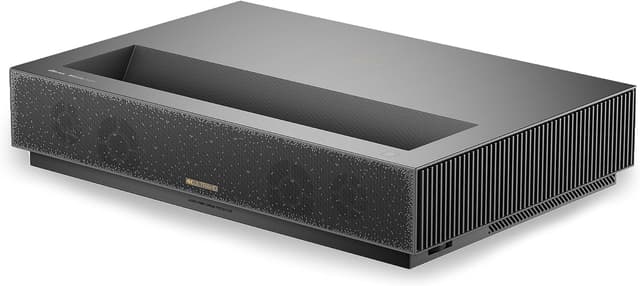
The simplest setup here: like the Hisense PL2 it runs Google TV, and it adds officially licensed Netflix in a compact chassis rated at 2,100 ISO lumens. The Smart Home Hookup named it its best UST under $2,000 for 2025. It ranks last because it is the only pick without Dolby Vision or HDR10+, Engadget measured about 40 ms of input lag (vs 15 ms for the LTV-2500), and TechRadar and Engadget both found its color underwhelming. At about $1,799 it also costs $300 more than the better-equipped PL2.
Google TV with officially licensed Netflix built in: no stick, one remoteSharp 4K image in a compact cabinet (TechRadar, Engadget); The Smart Home Hookup's best UST under $2,000 for 2025Rated 2,100 ISO lumens with a 0.23:1 throwNo Dolby Vision or HDR10+ (HDR10 and HLG only), and color and gamut are underwhelming (TechRadar, Engadget)About 40 ms input lag at 60Hz (Engadget) and a sluggish Google TV processor
An ultra short throw projector sits on a low media console a few inches from the wall and throws a 100-inch or larger picture upward, which makes it the most practical way to put a cinema-sized image in a living room without ceiling mounts or cable runs. Under $2,000, every credible option we found on Amazon US uses a 4K pixel-shift DLP chip and a laser light source, so the differences come down to five things. First, the light source. An RGB triple laser, as in both AWOL Vision models here, produces red, green and blue directly and covers the widest color gamut, which pays off in HDR films; single blue-laser designs such as the Hisense PL2 and Formovie Cinema Edge use a phosphor wheel and look slightly flatter, but show less of the speckle some viewers notice on triple-laser models. The NexiGo Aurora Lite sits in between with a hybrid tri-color laser. Second, real brightness. Rated lumens are a ceiling, and calibrated output is often much lower: Projector Reviews measured the AWOL LTV-3000 Pro at 2,586 ANSI lumens, while an AVS Forum review measured the Aurora Lite at about 1,287 lumens once calibrated. If you watch with lights on or daylight in the room, favor the brighter models and budget for an ambient-light-rejecting screen made for UST projectors, because a plain wall washes out quickly. Third, software. The Hisense PL2 and Formovie Cinema Edge run Google TV, and the Formovie carries officially licensed Netflix; the AWOL and NexiGo launchers have no useful apps, so plan on a streaming stick (the LTV-2500's current listing includes a Fire TV Stick 4K Max). Fourth, gaming. Only the Aurora Lite accepts 4K at 120Hz; the AWOLs measure 15 ms at 4K/60, while the PL2 is about 30 ms and the Cinema Edge about 40 ms, which casual players will tolerate but competitive players will notice. Fifth, placement. Check the distance chart before you buy: the PL2 throws 100 inches from about 7.2 inches off the wall, the AWOLs from about 8.5 inches, and your console must be deep enough to hold the projector with that clearance. This list is researched, not bench-tested: we compare published specifications, independent measurements and reviews, and verified owner feedback, and we name the source of every measured figure. Prices move often, especially around Prime Big Deal Days and Black Friday, so check the live price before buying.
We rank these projectors by researching published manufacturer specifications, independent reviews and measurements (What Hi-Fi, Projector Reviews, ProjectorCentral, The Smart Home Hookup, Android Central, AVS Forum, TechRadar, Engadget and Heimkinowelten), and current Amazon US listing data for availability and price. We do not bench-test products ourselves; every measured brightness, contrast and input-lag figure cited is attributed to the third-party source that measured it. Because an ultra short throw projector usually replaces a living-room TV, we weight picture quality most heavily, followed by brightness and value, then smart features, gaming performance and built-in sound. Only projectors sold new on Amazon US at or under about $2,000 at the time of research were considered.
Picture Quality
Color gamut, contrast, black level and HDR format support (Dolby Vision, HDR10+) in independent reviews and measurements
25%
Brightness
Measured lumens where published, and how well the image holds up in a living room with some ambient light
20%
Value
Picture, features and included extras per dollar at the current Amazon price, within the $2,000 cap
20%
Smart Features
Built-in streaming platform and licensed apps, or whether a separate streaming stick and remote are needed
15%
Gaming
Measured input lag at 4K/60 and support for 120Hz signals for consoles and PCs
10%
Built-in Sound
Speaker power, Dolby Atmos support and how well the built-in system replaces a soundbar
Can you get a good 4K UST projector for under $2,000?
Yes. All five picks here use a 4K (0.47-inch DLP XPR pixel-shift) chip and a laser light source, and each sold new on Amazon US for about $1,499 to $1,899 at the time of research. The compromises at this price are brightness and software rather than resolution: the AWOL and NexiGo models need a streaming stick, and the Formovie Cinema Edge skips Dolby Vision. Premium models such as the Hisense PX3-Pro, XGIMI Aura 2 and Epson Lifestudio Grand were selling for about $2,200 to $2,500, above this list's cap.
Do I need a special screen for an ultra short throw projector?
For the best results in a room with lights on, yes. A UST projector fires light upward at a steep angle, so ceiling lights and windows wash out a plain wall or a standard white screen. An ambient-light-rejecting (ALR) screen designed for UST projectors, often called a CLR or Fresnel screen, reflects the projector's light toward the viewer while rejecting light from above. In a dark room, a smooth, flat white wall works, but any texture or waviness shows up badly at such a steep angle.
How far from the wall does a UST projector sit?
Only a few inches. The Hisense PL2's 0.22:1 lens throws a 100-inch image from about 7.2 inches off the wall, and the AWOL LTV-3000 Pro and LTV-2500 need about 8.5 inches. Moving the projector further back makes the image larger, up to 150 inches for every pick here. Measure your media console depth first: the projector, plus a few inches of clearance, has to fit on it.
Which UST projector under $2,000 is best for gaming?
The NexiGo Aurora Lite is the only pick here that accepts a 4K/120Hz signal, and The Smart Home Hookup measured under 10 ms of lag at 1080p/240Hz. The AWOL LTV-3000 Pro and LTV-2500 are also quick at 15 ms at 4K/60 and 8 ms at 1080p/120. The Hisense PL2 (about 30 ms) and Formovie Cinema Edge (about 40 ms, per Engadget) are fine for casual play but slower for competitive shooters.
Is a triple-laser projector better than a single-laser one?
For color, usually. An RGB triple laser, used by both AWOL models here, produces red, green and blue directly and covers a wider color gamut, which shows in HDR content. Single blue-laser designs such as the Hisense PL2 and Formovie Cinema Edge use a phosphor wheel and look a little flatter in color, but they tend to show less laser speckle, which some viewers notice on triple-laser models. ProjectorCentral noted some speckle on the LTV-2500.