The best robot lawn mowers for small yards (roughly a quarter-acre and under), ranked on setup, cut quality, obstacle handling, noise, and value for compact lawns.
Updated October 8, 20265 rankedNo paid placements
We may earn a commission when you buy through our links.
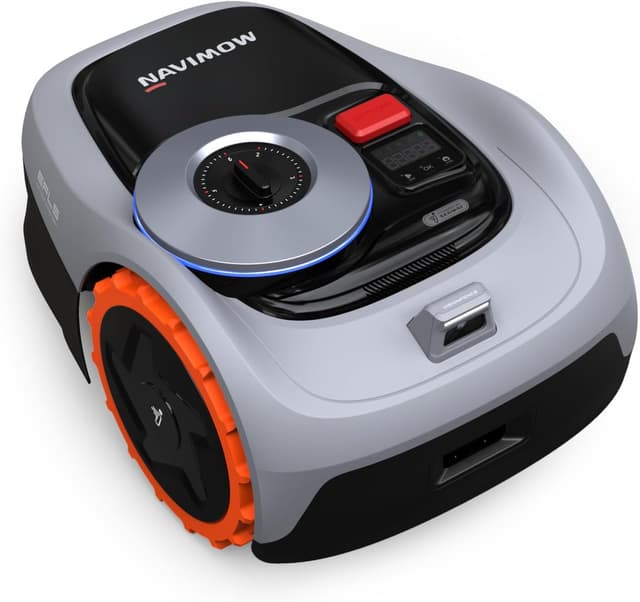
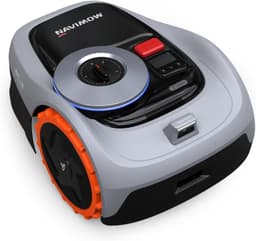
The best balance of convenience, capability, and price for a small yard. The i105N is fully wire-free: RTK plus a 140-degree VisionFence camera let you map the lawn by walking the boundary with your phone, and its AI recognizes 150+ obstacle types rather than bumping into them. At its mid-tier price it undercuts the other wire-free picks while covering everything a compact lawn needs, which is why it takes the top spot over the more expensive eufy and Mammotion.
Fully wire-free RTK + Vision setup: no perimeter cable to layCamera recognizes 150+ obstacle types instead of just bumping into themQuiet 58 dB operation is fine to run near a patioRTK relies on a clear sky view, so heavily wooded lots can lose signalGPS anti-theft tracking requires the optional 4G add-on module
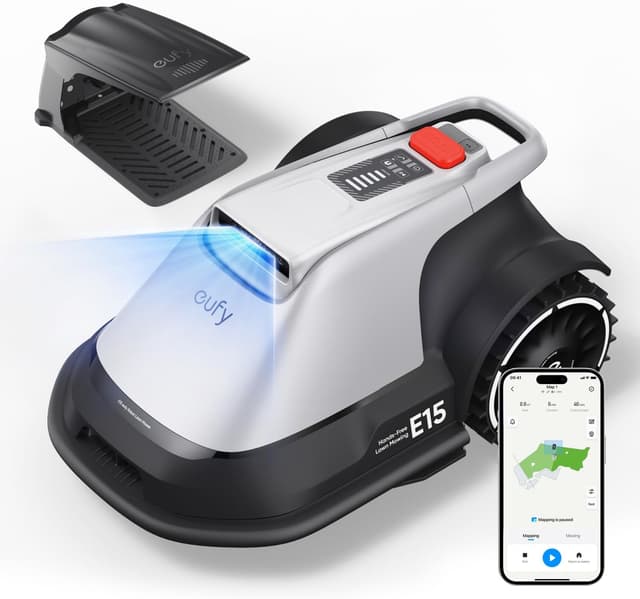
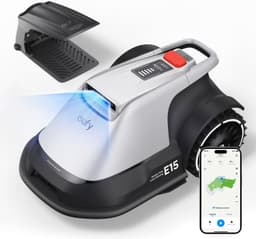
The most hands-off setup on the list: pure-vision navigation skips both the boundary wire and the RTK antenna, and it adds the extras that matter for a robot left outside: built-in GPS anti-theft, rain auto-recall, and 3D obstacle avoidance. It ranks second rather than first because it costs noticeably more than the Navimow and its camera-only navigation is the most likely here to get confused on a complex or irregular lawn.
Pure-vision navigation: no boundary wire and no RTK antenna to placeBuilt-in GPS anti-theft tracking as standardAuto-recall to base in rain or low lightCamera-only navigation can lose its way on complex or irregular lawnsOne of the pricier picks for a small-yard robot
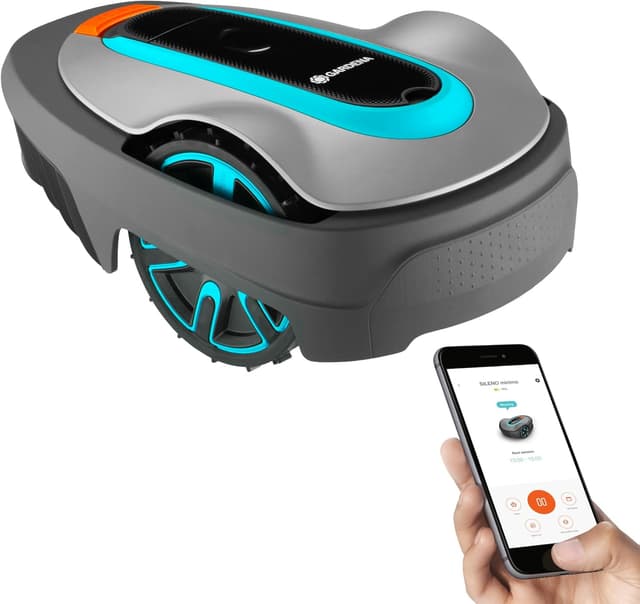
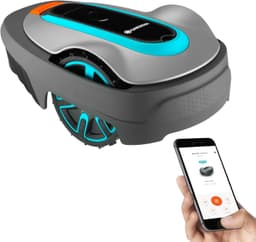
The cheapest mower here and the quietest, at a class-leading 57 dB(A). The trade-off is a one-time boundary-wire install and bumper-based collision sensing instead of a camera. For a buyer who wants a proven, low-drama cut on a compact city lawn and doesn't mind laying a cable once, the SILENO City is the value champion. It ranks below the wire-free picks only because that install effort and the lack of obstacle avoidance are real compromises.
Lowest price of the group for a compact city lawn57 dB(A) is the quietest here, genuinely patio-and-neighbor friendlyPatented streak-free navigation handles narrow passages and tight cornersRequires laying a boundary wire, the most setup effort hereBumper-based collision sensing, no camera obstacle avoidance
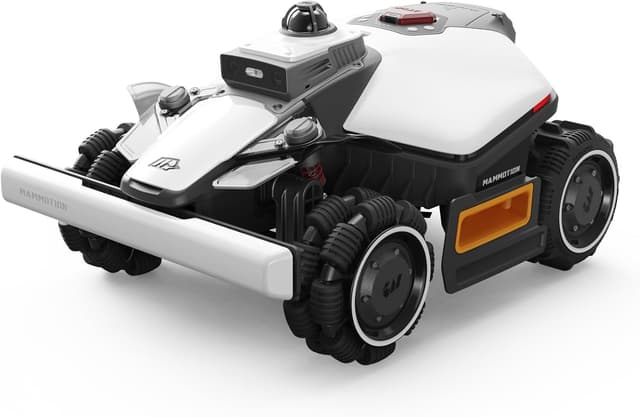
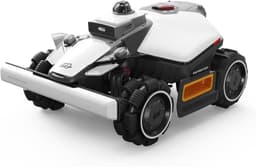
The most capable robot here by a wide margin, and Mammotion's current successor to the LUBA mini AWD: all-wheel drive is rated for 80% slopes, 360-degree LiDAR plus dual cameras map the lawn wire-free without an RTK antenna (so tree cover is not a problem), and a dedicated edge disc, 4G GPS tracking, and 20-zone mapping are all built in. It ranks fourth specifically for the small, flat-yard buyer this list serves: it is the priciest option, its 0.37-acre rating is more than a compact lawn needs, and its terrain hardware is wasted on level ground. If your small yard is genuinely hilly, uneven, or shaded, it is the clear pick despite the rank.
All-wheel drive rated for 80% (38.6°) slopes in the mowing area, far beyond any other pick here360° LiDAR + dual-camera AI vision: no boundary wire, no RTK antenna, and reliable positioning under treesDedicated 4.7 in edge disc cuts to about 2.1 in from walls, reducing hand trimmingThe most expensive mower on this list, with more capacity (0.37 acre) than a small lawn needsThe edge disc's cutting height is fixed, so it can mismatch the main deck setting
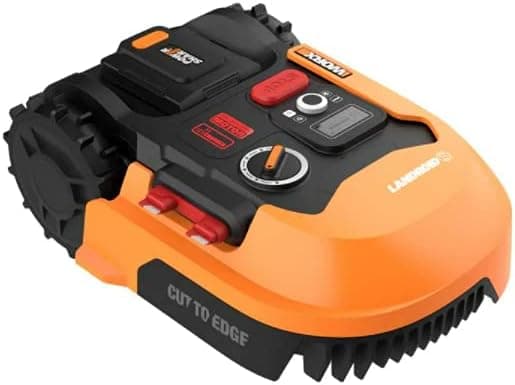
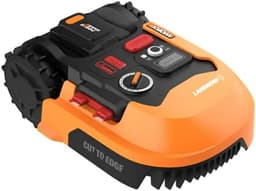
A solid boundary-wire choice whose strongest argument is ecosystem fit: its 20V Power Share battery is shared across the entire Worx tool lineup, so existing Worx owners buy into batteries they already have. It lands last because it needs a perimeter wire, has no camera obstacle avoidance, and reviewers report it can get stuck on uneven ground. That's fine for a clear, simple lawn, but outclassed by the wire-free and quieter picks above it.
20V Power Share battery works across the whole Worx tool lineupPatented AIA algorithm navigates narrow passagesFloating blade disc improves clearance on uneven groundBoundary wire required, no wire-free setup optionNo camera obstacle avoidance; bumps into objects before rerouting
Choosing a robot mower for a small yard is a different problem than shopping for the acre-eating flagships, and counterintuitively, small lawns can be harder for a robot to handle than big open ones: coverage capacity matters far less than precision in tight corners, around beds, and along fence lines. The first decision is navigation type. Wire-free models (RTK, vision, or LiDAR: the Segway Navimow i105N, eufy E15, and Mammotion LUBA mini 2 AWD 1500H here) skip the buried perimeter cable entirely: you walk the boundary once with your phone and the robot maps it, which is faster to set up and far easier to change later. Boundary-wire models (the Gardena SILENO City and Worx Landroid S) need a cable pinned or buried around the lawn's edge, an afternoon of setup you only do once but can't easily revise. Wire-free is the modern convenience story; boundary-wire is proven, reliable, and usually cheaper. Next, size to your lawn honestly: match the mower's coverage rating to your actual square footage rather than buying more capacity than a small lot needs, and remember most compact yards fall well under 8,700 sq ft. Slope matters if any part of your yard is graded; most of these handle a gentle 18–35% incline, while an all-wheel-drive unit is only worth the premium if you have genuinely steep sections. Obstacle handling separates the tiers: camera-and-AI systems steer around toys, hoses, and pets, while wire-only bumper models simply nudge into obstacles and reverse, which is fine for a clear lawn but frustrating around garden furniture. Because a robot runs while you're home, check the published noise figure. Anything in the high-50s dB is quiet enough to run near a patio or a close neighbor's window. Finally, weigh the total ownership picture: replacement blades are cheap but recurring, GPS anti-theft is built in on some models and an add-on on others, and app features like multi-zone scheduling are genuinely useful on a segmented small lot. TopsFive does not test these mowers in-house; our rankings are built from published manufacturer specifications, independent expert reviews, and verified owner feedback.
Rankings are built from published manufacturer specifications, independent expert reviews and guides (including PCWorld, T3, TechRadar, Tom's Guide, and specialist outlets such as RoboMowLab and Lawn Love), and verified owner feedback, cross-checked against current Amazon listing data for pricing, ASIN, and availability. TopsFive does not test these mowers in-house. Because small lawns reward precision and easy setup over raw coverage, we weight setup-and-navigation and value most heavily, followed by cut quality, smart obstacle handling, and quiet operation for running near patios and neighbors.
Setup & Navigation
Wire-free vs boundary-wire install and mapping reliability on a small, tight lawn
25%
Cut Quality & Coverage
Even, streak-free cutting and coverage matched to small-yard sizes
20%
Smart Features & Obstacle Handling
Obstacle avoidance, slope capability, app control, zones, and anti-theft
20%
Quiet Operation
Published noise level for running near patios and close neighbors
Do I need a wire-free robot mower for a small yard, or is a boundary wire fine?
Both work; it's a convenience-versus-cost trade. Wire-free models (the Segway Navimow i105N, eufy E15, and Mammotion LUBA mini 2 AWD 1500H here) let you map the lawn by walking the boundary with your phone, which is faster to set up and easy to change later. Boundary-wire models (the Gardena SILENO City and Worx Landroid S) need a cable pinned or buried around the edge once, more setup effort, but they're proven, reliable, and usually cheaper. For a small lawn you'll only edit occasionally, a boundary wire is perfectly livable; if you want the least hassle, go wire-free.
How much lawn can these actually cover?
Four of the five are sized specifically for small lots. The Gardena SILENO City is rated for up to 2,700 sq ft, the Segway Navimow i105N and Worx Landroid S for about 1/8 acre (roughly 5,400 sq ft), and the eufy E15 for around 0.2 acre (about 8,700 sq ft). The Mammotion LUBA mini 2 AWD 1500H is rated for up to 0.37 acre (about 16,000 sq ft), which is more than most small yards need; it earns its place for steep or rough terrain rather than capacity. Match the rating to your actual square footage; buying far more capacity than a small yard needs mostly adds cost.
Which is the quietest to run near a patio or a neighbor?
The Gardena SILENO City, at a class-leading 57 dB(A), is the quietest here. The eufy E15 (under 56 dB on its spec) is also very quiet, and the Navimow i105N sits around 58 dB. Published review data puts the Mammotion LUBA mini 2 AWD 1500H at about 56 dB(A), against a 70 dB rated maximum, and the Worx Landroid S is rated at roughly 60 dB. All are quiet enough to run during the day without disturbing most households.
Do robot mowers handle slopes in a small yard?
To a point. The eufy E15 is limited to gentle 18° slopes, while the Navimow i105N (30%), Worx Landroid S (about 20°/35%), and Gardena SILENO City (35%) handle moderate inclines. If your small yard has genuinely steep sections, the all-wheel-drive Mammotion LUBA mini 2 AWD 1500H is in a different league, rated for gradients up to 80% (38.6°) inside the mowing area, but it's overkill and over-priced for a flat lawn.
Can someone steal my robot mower, and can I track it?
It's a real consideration for a device left outside. The eufy E15 and Mammotion LUBA mini 2 AWD 1500H include built-in GPS anti-theft tracking (the Mammotion over a built-in 4G module). The Segway Navimow i105N offers GPS tracking through an optional 4G add-on module, and the Worx Landroid S supports GPS via an optional Find My Landroid accessory. The Gardena SILENO City relies on a PIN code and alarm rather than GPS. All of them are useless to a thief without the owner's PIN, but only the eufy and Mammotion tell you where the unit is out of the box.