Gentle Iron Supplements ranked on form, dose, third-party testing and value per unit of active ingredient.
Updated August 5, 20265 rankedNo paid placements
We may earn a commission when you buy through our links. Prices and availability shown are accurate as of Aug 5, 2026 and are subject to change; the merchant's price at purchase applies.
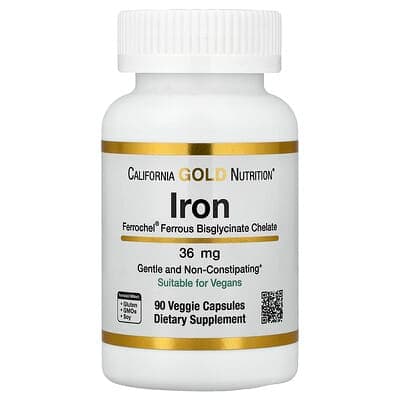
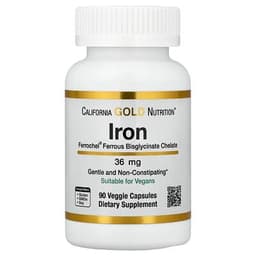
It narrowly takes first because it combines a product-specific iTested certificate with the best active-ingredient value and a fully disclosed bisglycinate dose. Its 10,000+ recent sales also support buyer trust, but certification, form and value drive the rank.
36 mg elemental iron as ferrous bisglycinate chelate per capsuleThe iHerb page links a product-specific iTested certificate$8.02 for 90 servings, about $0.0025 per mg of elemental ironNo vitamin C appears on the Supplement Facts panelThe 36 mg serving is higher than the 25 mg bisglycinate dose used in the cited pregnancy trial
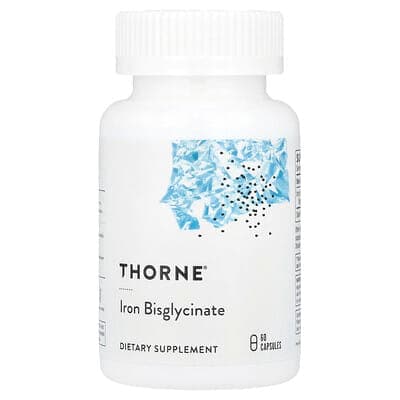
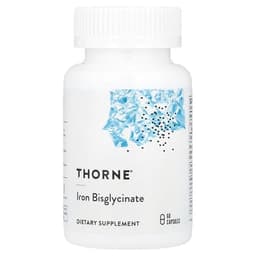
This has the strongest certification evidence and a research-aligned 25 mg dose, but its much higher cost per mg keeps it just behind the iTested California Gold product. Its 10,000+ recent sales reinforce the selection without overriding the weighted criteria.
NSF Certified for Sport listing is product-specific25 mg elemental iron matches the bisglycinate dose used in the cited randomized pregnancy trialSingle-active formula with four disclosed capsule excipientsNo vitamin C appears on the Supplement Facts panel$0.27 per serving is roughly three times the cost of the two value leaders
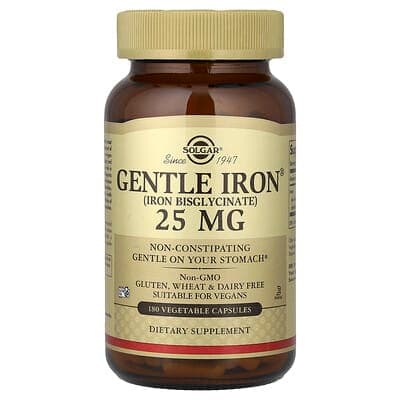
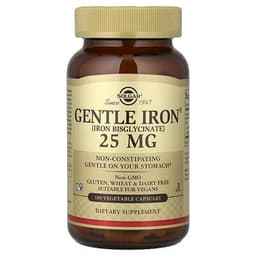
Among the uncertified options, its short excipient list, research-aligned dose and strong bottle value produce the best weighted score. Its roughly 47,000 reviews and 3,000+ recent sales also win the close popularity tiebreaker.
25 mg elemental iron as bisglycinate matches the cited randomized pregnancy-trial dose180 one-capsule servings at about $0.09 eachLabel lists Certified Gluten Free, vegan and Kosher Parve attributesNo vitamin C appears on the Supplement Facts panelNo USP, NSF or public product-specific certificate of analysis is shown on the iHerb page
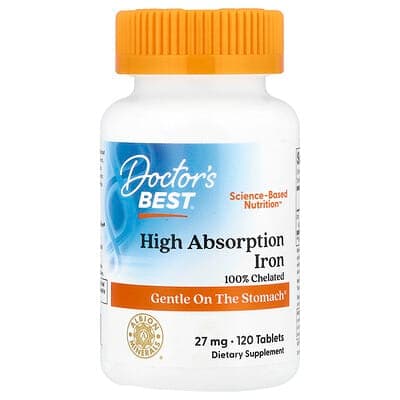
It is the strongest raw-value option after California Gold and uses the preferred form, but absent product-specific certification and a longer excipient list leave it narrowly behind Solgar. Solgar's much larger review base breaks that close quality tie.
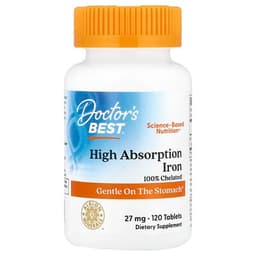
27 mg elemental iron as Ferrochel ferrous bisglycinate chelate$9.99 for 120 servings, the lowest rounded cost per serving in the listLabel identifies the product as vegan, non-GMO, gluten-free and soy-freeNo vitamin C appears on the Supplement Facts panelThe tablet uses microcrystalline cellulose, croscarmellose sodium, a multi-ingredient coating, magnesium stearate and silicon dioxide
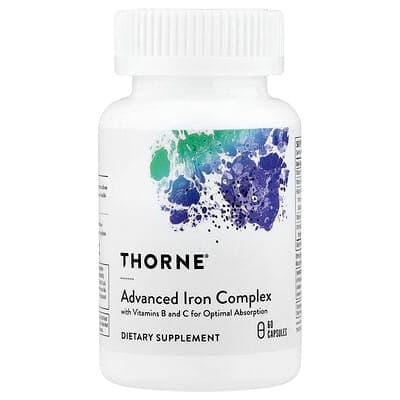
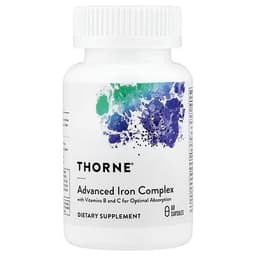
The cofactor formula is the most comprehensive and its 5,000+ recent sales show strong demand, but the fixed scoring penalizes its lack of product-specific external certification and the list's highest active-ingredient cost. Popularity cannot outweigh those heavier criteria.
36 mg elemental iron as Ferrochel ferrous bisglycinate chelateIncludes 15 mg vitamin C plus disclosed active forms of vitamin B6, folate and vitamin B12No proprietary blend; every active amount is statedNo USP, NSF or public product-specific certificate of analysis is shown for this product$0.43 per serving and about $0.0120 per mg of elemental iron are the highest costs in the list
Start with the form, not the front-label word gentle. Ferrous bisglycinate, also called iron bisglycinate chelate or Ferrochel when that branded ingredient is used, binds ferrous iron to glycine. It is the preferred form in this list. Ferrous sulfate is inexpensive and widely studied, but a systematic review found substantially more gastrointestinal adverse effects with ferrous sulfate than placebo or intravenous iron, and a randomized pregnancy trial directly compared 25 mg elemental iron from ferrous bisglycinate with 50 mg from ferrous sulfate. That trial dose is useful context, not a universal dosing instruction: its participants were pregnant women, while other human absorption studies used 40 to 80 mg elemental iron as ferrous sulfate and examined daily versus alternate-day schedules. Your appropriate dose depends on laboratory results, diet, life stage, medicines and the reason iron was recommended, so discuss iron dosing and follow-up testing with a doctor. Always compare elemental iron, not the larger weight of the iron compound. The five labels here provide 25 to 36 mg elemental iron per serving. More is not automatically better, and taking several capsules can change both the dose and the risk profile. Vitamin C is another differentiator. Thorne Advanced Iron Complex includes 15 mg; the other four do not. A vitamin-C-containing formula is convenient, but vitamin C can also come from food, so its presence does not automatically justify a large price premium. Testing language needs careful reading. NSF Certified for Sport is product certification that includes label-claim and banned-substance checks. A product-specific certificate of analysis, such as iHerb's iTested document, is also stronger evidence than a general statement that a facility follows cGMP. Non-GMO, vegan, kosher and gluten-free marks can matter for dietary needs, but they do not verify iron potency or contaminants. Prefer a fully disclosed Supplement Facts panel and an explicit other-ingredients list; avoid proprietary blends that hide individual amounts. For value, divide price by total elemental iron in the bottle, not merely capsule count. Also check serving size: one tablet is one serving in these five, but that is not universal. Common mistakes include assuming every chelate is bisglycinate, treating a high milligram number as inherently superior, comparing bottle prices without servings, and taking iron beside calcium, tea or coffee without asking whether timing matters. Iron also interacts with some medicines, including certain thyroid medicines and antibiotics. A pharmacist or doctor can advise on spacing. Keep iron away from children because accidental overdose can be dangerous.
We rank on third-party testing (30%), form and bioavailability (25%), dose versus published human research (20%), label transparency (15%) and value per unit of active ingredient (10%). Specifications are taken from each product's supplement facts panel on its iHerb listing, and certification claims are checked against the certifying body's directory where one is published. We do not test products ourselves, and nothing here is medical advice.
Third-Party Testing
Independent certification or a published certificate of analysis
30%
Form & Bioavailability
Whether the chemical form is the well-absorbed one
25%
Dose vs Research
Per-serving dose versus doses used in published human trials
20%
Label Transparency
Full per-ingredient disclosure and minimal fillers
Is ferrous bisglycinate different from ferrous sulfate?
Yes. They are different iron compounds. Every product here uses ferrous or iron bisglycinate chelate, while ferrous sulfate is a conventional iron salt. A randomized pregnancy trial used 25 mg elemental iron as bisglycinate versus 50 mg as sulfate, and a separate systematic review documented gastrointestinal adverse effects with ferrous sulfate; neither finding guarantees how an individual will tolerate a product.
Is 25 to 36 mg of elemental iron the right dose?
That cannot be decided from a product page. A published pregnancy trial used 25 mg daily as ferrous bisglycinate, while human absorption studies of ferrous sulfate used doses from 40 mg upward and tested different schedules. Those studies involved specific populations and are not personal dosing instructions; discuss the dose, schedule and follow-up labs with a doctor.
Should a gentle iron supplement include vitamin C?
It is convenient but not mandatory in the capsule. Only Thorne Advanced Iron Complex in this list includes vitamin C, at 15 mg per serving; the other four labels list none. Vitamin C can also come from food, so compare the complete formula and cost rather than treating its presence as an automatic quality marker.
What does third-party certification tell me?
A product listing in NSF Certified for Sport verifies more than a general factory claim, including label-content and banned-substance checks. A product-specific certificate of analysis can show measured results for the named product. cGMP, non-GMO, vegan, kosher and gluten-free statements address different questions and should not be treated as proof of potency or clinical outcomes.