Insta360 Link 2C vs Elgato Facecam 4K
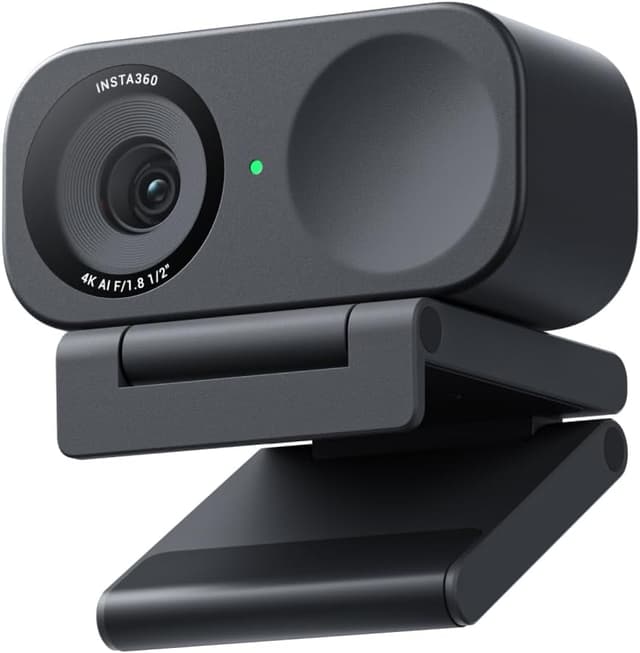
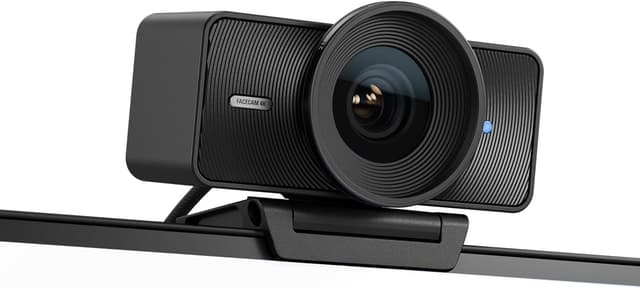
Insta360 Link 2C (#2, best value) vs Elgato Facecam 4K (#3): in our Streaming Webcams scoring the Insta360 Link 2C totals 8.7/10 and the Elgato Facecam 4K 7.9/10, the Insta360 Link 2C leading on Autofocus and Low Light and the Elgato Facecam 4K on Video Quality.
We may earn a commission when you buy through our links.
TopsFive comparison scores
Side by side
| Insta360 Link 2C | Elgato Facecam 4K | |
|---|---|---|
| Resolution | 4K @ 30fps / 1080p @ 60fps | 4K @ 60fps (HDR up to 4K30) |
| Field of View | 79.5° DFOV / 67° HFOV | 90° |
| Sensor | 1/2" Sony Starlight | 1/1.8" Sony STARVIS 2 |
| Autofocus | Phase Detection (PDAF) | Fixed focus (30–120 cm at 4K) |
| Connection | USB-C 2.0 | USB-C (USB 3.0) |
| Weight | 46.5g | 112g |
| Aperture | — | f/4.0 |
| Price | Check price → | Check price → |
How they differ in real use
Built from our streaming webcams scoring, each product's published specifications, and verified owner feedback — not hands-on testing.
Both the Insta360 Link 2C and the Elgato Facecam 4K made our Top 5 Streaming Webcams, at #2 (best value) and #3. The smartest webcam at any price. AI auto-framing, gesture control, DeskView mode, and Phase Detection Autofocus packed into a 46.5g body at $149, offering features that premium webcams twice the price can't match. The best mid-range option for creators who switch between formats, from face-cam to desk tutorials. The pick for 4K at 60fps, which neither the Razer Kiyo Pro Ultra nor the Insta360 Link 2C offers (both top out at 4K30). A 1/1.8-inch STARVIS 2 sensor, HDR up to 4K30, a 49mm filter thread and DSLR-style Camera Hub controls give lit setups the sharpest, smoothest image here for about $180. It ranks below the Kiyo and Link because its f/4.0 aperture is noisy in dim rooms and its fixed-focus lens cannot track or refocus for close-up shots, the two areas this list weights most after raw video quality.
We score streaming webcams on Video Quality (35%), Low Light (25%), Autofocus (20%), Features (10%) and Value (10%). On that basis the Insta360 Link 2C totals 8.7 out of 10 and the Elgato Facecam 4K 7.9. The widest gap is Autofocus, where the Insta360 Link 2C scores 10 against 5 for the Elgato Facecam 4K: speed and accuracy. Video Quality also separates them: 9.5 for the Elgato Facecam 4K versus 8 for the Insta360 Link 2C.
On paper, the specifications that actually differ: Resolution: 4K @ 30fps / 1080p @ 60fps on the Insta360 Link 2C versus 4K @ 60fps (HDR up to 4K30) on the Elgato Facecam 4K; Field of View: 79.5° DFOV / 67° HFOV on the Insta360 Link 2C versus 90° on the Elgato Facecam 4K; Sensor: 1/2" Sony Starlight on the Insta360 Link 2C versus 1/1.8" Sony STARVIS 2 on the Elgato Facecam 4K; Autofocus: Phase Detection (PDAF) on the Insta360 Link 2C versus Fixed focus (30–120 cm at 4K) on the Elgato Facecam 4K; Connection: USB-C 2.0 on the Insta360 Link 2C versus USB-C (USB 3.0) on the Elgato Facecam 4K; Weight: 46.5g on the Insta360 Link 2C versus 112g on the Elgato Facecam 4K.
Check current pricing at the merchant links below. Owners praise the Insta360 Link 2C for AI auto-framing and gesture control and phase Detection Autofocus for fast tracking; the most common complaint is 4K limited to 30fps. Owners praise the Elgato Facecam 4K for 4K at 60fps, plus HDR up to 4K30 and 1/1.8-inch Sony STARVIS 2 sensor; the most common complaint is narrow f/4.0 aperture: grainy or soft in dim rooms without key lighting.
Insta360 Link 2C
- AI auto-framing and gesture control
- Phase Detection Autofocus for fast tracking
- Extremely compact and lightweight (46.5g)
- DeskView and Whiteboard modes for tutorials and reviews
- 4K limited to 30fps
- Narrower 67° horizontal FOV
- Digital tracking only (no gimbal)
Elgato Facecam 4K
- 4K at 60fps, plus HDR up to 4K30
- 1/1.8-inch Sony STARVIS 2 sensor
- 49mm filter thread for ND, polarizing or diffusion filters
- DSLR-style manual controls in Camera Hub, saved to onboard memory
- Narrow f/4.0 aperture: grainy or soft in dim rooms without key lighting
- Fixed focus (30–120 cm at 4K), so close-up product shots soften
- No built-in microphone
Which should you buy?
The Insta360 Link 2C is the better fit for content creators who move around during streams and product review and desk tutorial streamers; it is the higher-scoring pick here, chiefly for Autofocus and Low Light. The Elgato Facecam 4K is the better fit for streamers with a lit setup who want 4K60 and creators who want filter-thread and manual image control, and the stronger choice if Video Quality matters more to you than the overall score. The Insta360 Link 2C is a poor fit for those who need 4K at 60fps; the Elgato Facecam 4K is a poor fit for dim rooms without key lighting.
Choose the Insta360 Link 2C if
- Content creators who move around during streams
- Product review and desk tutorial streamers
- Those wanting AI-tracking at a mid-range price
Skip it if
- Those who need 4K at 60fps
- Users wanting the widest FOV
Choose the Elgato Facecam 4K if
- Streamers with a lit setup who want 4K60
- Creators who want filter-thread and manual image control
- Elgato Stream Deck and Camera Hub users
Skip it if
- Dim rooms without key lighting
- Product demos that need close-range autofocus
Common questions
Is the Insta360 Link 2C better than the Elgato Facecam 4K?
In our Streaming Webcams ranking the Insta360 Link 2C scores higher overall, 8.7 to 7.9, with the biggest advantage in Autofocus. The Elgato Facecam 4K is stronger on Video Quality, so it is the better pick if that matters most to you.
What is the main difference between the Insta360 Link 2C and the Elgato Facecam 4K?
The headline spec difference is Resolution: 4K @ 30fps / 1080p @ 60fps on the Insta360 Link 2C versus 4K @ 60fps (HDR up to 4K30) on the Elgato Facecam 4K. In use, the gap that matters most is Autofocus (10 vs 5 in our scoring): speed and accuracy.