Garmin Forerunner 970 vs Apple Watch Ultra 3
Same money, opposite priorities: Garmin's ultimate running computer or Apple's do-everything adventure watch.
We may earn a commission when you buy through our links.
TopsFive comparison scores
Side by side
| Garmin Forerunner 970 | Apple Watch Ultra 3 | |
|---|---|---|
| Display | 1.4" AMOLED | 2.13" OLED, 3000 nits |
| GPS | Multi-band GNSS | Precision dual-frequency |
| Battery | 29 hours GPS | 42 hours GPS |
| Sensors | HR, ECG, SpO2, temperature | — |
| Water Resistance | 5 ATM | 100m + EN13319 |
| Chip | — | S10 |
| Price | Check price → | Check price → |
How they differ in real use
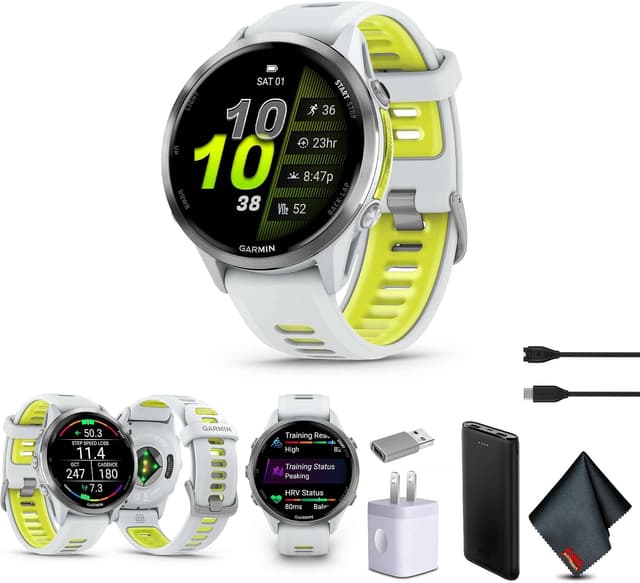
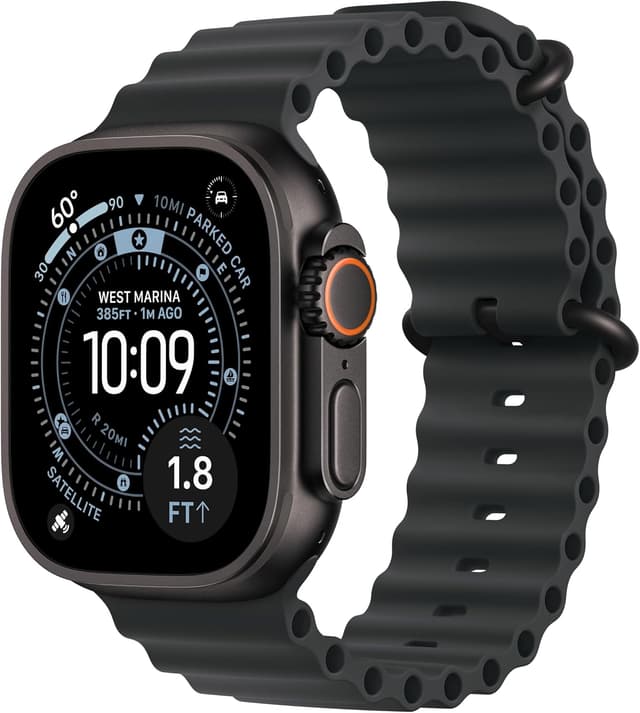
Both watches land at nearly identical prices ($764 for the Forerunner 970, $768 for the Apple Watch Ultra 3), but they're built around different definitions of "best." The Forerunner 970 is a single-purpose training tool: Garmin's Elevate Gen5 sensor and multi-band GNSS chase the most accurate pace and heart-rate data available on a wrist-worn device, and metrics like Running Tolerance and Impact Load exist specifically to help serious runners and triathletes manage training load rather than just log miles. Its interface reflects that focus: dense menus of sport profiles and data screens that reward athletes willing to learn the system, but that can feel like overkill to anyone who just wants a smartwatch. The Apple Watch Ultra 3 takes the opposite path: precision dual-frequency GPS and the S10 chip deliver genuinely competitive workout tracking, but the watch spends equal effort on notifications, apps, Apple Intelligence coaching, and satellite SOS, general smartwatch functions the Forerunner doesn't attempt. The tradeoff shows up most in battery life: the Forerunner's 29-hour GPS rating trails the Ultra 3's 42 hours, but Garmin's non-GPS smartwatch mode still stretches to multiple days, while the Ultra 3 needs nightly or near-nightly charging for most users. Platform lock-in is the other deciding factor: the Ultra 3 requires an iPhone, while the Forerunner 970 pairs with iOS or Android equally.
Garmin Forerunner 970
- Industry-leading GPS accuracy
- Medically-certified ECG
- 60+ sport modes
- Unique training metrics
- Premium pricing
- Complex interface for beginners
- Bulky for small wrists
Apple Watch Ultra 3
- Precision dual-frequency GPS
- Apple Intelligence coaching
- Track detection (industry first)
- 3,000-nit display
- Premium pricing
- 42-hour GPS battery trails competitors
- Requires iPhone
Which should you buy?
Choose the Garmin Forerunner 970 if training data is the priority: its Elevate Gen5 sensor, medical-grade ECG, and running-specific metrics like Running Tolerance exist for athletes who study their numbers, and it pairs the same way with an iPhone or an Android phone. Choose the Apple Watch Ultra 3 if you want one watch that handles serious workouts and everyday smartphone life equally well (messaging, apps, and Apple Intelligence coaching alongside genuinely competitive GPS accuracy), but only if you're already an iPhone owner, since the Ultra 3 doesn't pair with Android at all.
Choose the Garmin Forerunner 970 if
- Serious runners
- Triathletes
- Data-driven athletes
Skip it if
- Casual fitness users
- Budget shoppers
Choose the Apple Watch Ultra 3 if
- Apple ecosystem athletes
- Trail runners
- Triathletes
Skip it if
- Android users
- Multi-day expedition needs
Common questions
Does the Apple Watch Ultra 3 work with Android phones?
No. The Apple Watch Ultra 3 requires an iPhone to pair and set up. The Garmin Forerunner 970 works with both iOS and Android, which matters if you might switch platforms.
Which has better battery life?
The Apple Watch Ultra 3's GPS battery is rated for 42 hours versus the Forerunner 970's 29 hours, but Garmin's watch stretches much longer in non-GPS smartwatch mode, while the Ultra 3 typically needs charging every day or two regardless of GPS use.
Is the Forerunner 970 or Ultra 3 more accurate for running?
Both use multi-band/dual-frequency GPS rated among the most accurate available on a wrist-worn device, and published specs put them close. The bigger difference is what the watch does with that data: Garmin's Running Tolerance and Impact Load metrics are built specifically around training load management, a feature the Ultra 3 doesn't offer.