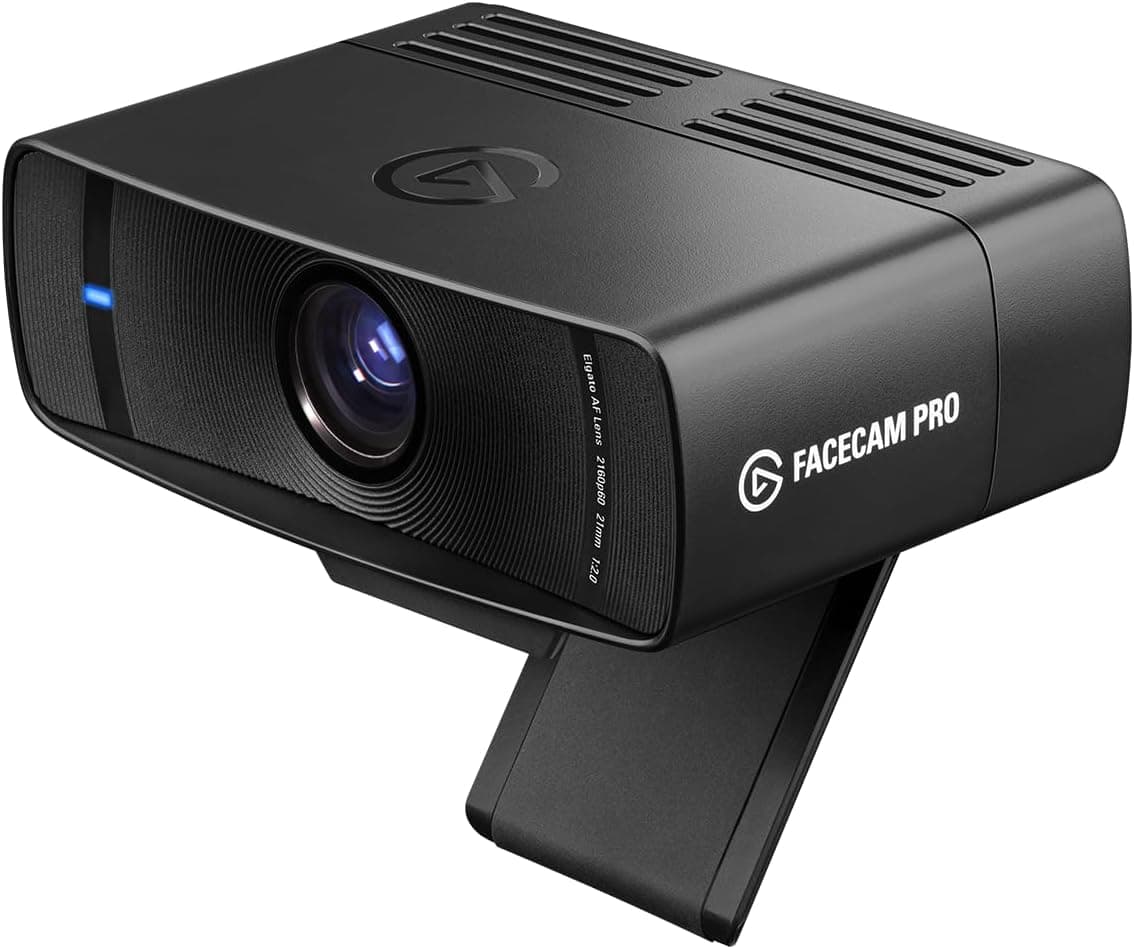
Elgato Facecam Pro
The first true 4K60 webcam, built around a Sony STARVIS CMOS sensor with a 90-degree field of view, an f/2.0 aperture, variable focus and DSLR-style manual controls. Amazon US no longer sells it, and it has been replaced in this ranking by the Elgato Facecam 4K, the brand's current 4K60 webcam.
We may earn a commission when you buy through our links.
Our Verdict
The first true 4K60 webcam, built around a Sony STARVIS CMOS sensor with a 90-degree field of view, an f/2.0 aperture, variable focus and DSLR-style manual controls. Amazon US no longer sells it, and it has been replaced in this ranking by the Elgato Facecam 4K, the brand's current 4K60 webcam.
Pros & Cons
Pros
- •True 4K at 60 FPS
- •Sony STARVIS CMOS sensor with an f/2.0 aperture for good low-light performance
- •Wide 90° field of view with DSLR-style manual controls
- •Integrates with Elgato Camera Hub and Stream Deck ecosystem
- •Autofocus and manual focus modes
Cons
- •No longer sold on Amazon US; replaced in this ranking by the Facecam 4K
- •Premium price point
- •No built-in microphone
- •Requires USB 3.0 for 4K60
Specifications
| Resolution | 4K @ 60fps |
| Field of View | 90° |
| Sensor | Sony STARVIS CMOS |
| Aperture | f/2.0 |
| Autofocus | Elgato Premium AF Lens |
| Connection | USB-C (USB 3.0) |
| Weight | 240g |
Quick Answers
What is the resolution of the Elgato Facecam Pro?
Elgato Facecam Pro resolution: 4K @ 60fps.
What is the field of view of the Elgato Facecam Pro?
Elgato Facecam Pro field of view: 90°.
What is the sensor of the Elgato Facecam Pro?
Elgato Facecam Pro sensor: Sony STARVIS CMOS.
What is the aperture of the Elgato Facecam Pro?
Elgato Facecam Pro aperture: f/2.0.
What is the autofocus of the Elgato Facecam Pro?
Elgato Facecam Pro autofocus: Elgato Premium AF Lens.
What is the connection of the Elgato Facecam Pro?
Elgato Facecam Pro connection: USB-C (USB 3.0).
What is the weight of the Elgato Facecam Pro?
Elgato Facecam Pro weight: 240g.
Who is the Elgato Facecam Pro for?
It suits professional streamers needing the highest quality video, content creators in the Elgato ecosystem, those who want 4K60 without a DSLR setup. It is not the right pick for budget-conscious buyers, users who need a built-in microphone, casual video callers.
Who Is This For?
Best For
- Professional streamers needing the highest quality video
- Content creators in the Elgato ecosystem
- Those who want 4K60 without a DSLR setup
Not For
- Budget-conscious buyers
- Users who need a built-in microphone
- Casual video callers
Where to Buy
Customer Reviews
Alternatives to Consider
Elgato Facecam 4K
Elgato
Elgato's current 4K60 webcam, which takes the Facecam Pro's place in this ranking at a lower price. It records 4K at 60fps from a 1/1.8-inch Sony STARVIS 2 sensor, adds HDR up to 4K30, and has a 49mm filter thread (Elgato bills it as the first webcam with one), so creators can fit ND or diffusion filters. Camera Hub exposes DSLR-style manual controls and saves them to onboard memory. The trade-offs are optical: a narrow f/4.0 aperture and a fixed-focus lens mean it wants good lighting, and reviewers describe low-light noise as its main weakness.
Razer Kiyo Pro Ultra
Razer
Featuring the largest sensor ever put in a webcam (a massive 1/1.2-inch Sony STARVIS 2), the Razer Kiyo Pro Ultra delivers DSLR-like shallow depth of field and exceptional low-light performance through its wide f/1.7 aperture. The result is a cinematic, bokeh-rich image that makes streamers look like they're broadcasting from a professional studio.
Insta360 Link 2C
Insta360
The Insta360 Link 2C packs AI-powered auto-framing, gesture control, and a 1/2-inch Sony sensor into an incredibly compact body weighing just 46.5 grams. Smart modes like DeskView and Whiteboard make it equally useful for streaming product reviews, tutorials, and traditional face-cam content.
Logitech StreamCam
Logitech
The Logitech StreamCam delivers reliable 1080p60 output, AI-enabled facial tracking, and a unique ability to rotate into portrait orientation for vertical content. Its glass lens, smart auto-focus, and built-in stereo microphones make it a dependable mid-range workhorse that just works out of the box.