Thinkware U3000 2CH vs VIOFO A229 Plus 2CH
The two best dash cams for parking protection at opposite ends of the price scale — buy the Thinkware U3000 for radar parking that guards the car the longest, or the VIOFO A229 Plus for supercapacitor-backed front-and-rear coverage at roughly a third of the cost.
We may earn a commission when you buy through our links.
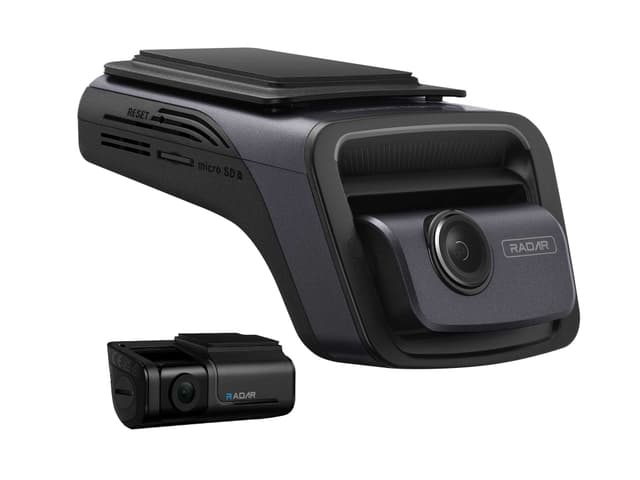
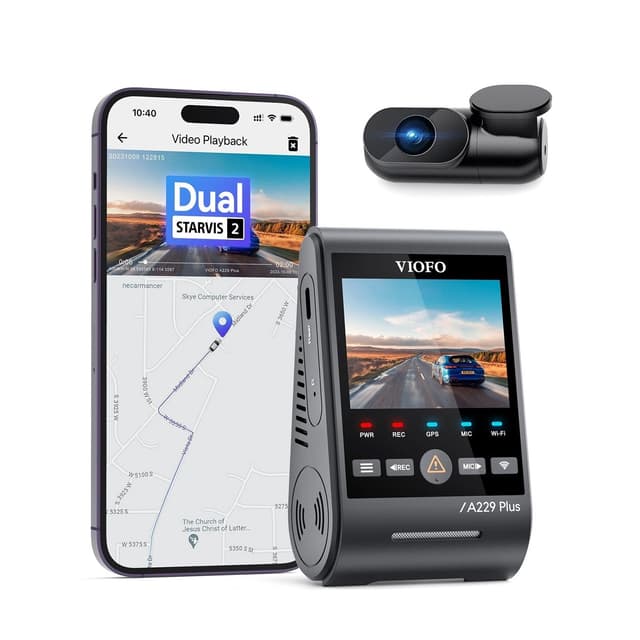
TopsFive comparison scores
Side by side
| Thinkware U3000 2CH | VIOFO A229 Plus 2CH | |
|---|---|---|
| Price | $549.99 | $169.99 |
| Parking Mode | Radar-based buffered | 3 modes (buffered / time-lapse / low-bitrate) |
| Channels | 2 (front + rear) | 2 (front + rear) |
| Front Resolution | 4K (2160p) | 2K (1440p) |
| Image Sensor | Sony STARVIS 2 front + STARVIS rear | Dual Sony STARVIS 2 |
| Power Source | Hardwire (low-power radar) | Supercapacitor |
| Cloud Backup | Optional (LTE module) | No |
| Connectivity | 5GHz Wi-Fi + GPS | 5GHz Wi-Fi + GPS |
| Max Storage | microSD up to 512GB | microSD up to 512GB |
How they differ in real use
These two cameras protect a parked car in genuinely different ways, and the gap is not just price. The Thinkware U3000's headline feature is a built-in radar that detects motion and impacts without keeping the image sensor running. That matters enormously if you park on the street for long stretches: because the camera isn't continuously recording, it sips power and can stand watch far longer before a voltage cutoff shuts it down, then wakes to save a 4K buffered clip when the radar is tripped. The VIOFO A229 Plus takes the conventional route — a supercapacitor plus three selectable parking modes (buffered auto-event, time-lapse, and low-bitrate) with the add-on hardwire kit. It doesn't match the radar's power efficiency, but it answers a question the Thinkware leaves open: rear coverage. The A229 Plus records both the front and rear in 2K on dual Sony STARVIS 2 sensors, so a hit from behind while parked is captured; the U3000 is also a two-channel front-and-rear system, but its rear lens uses an older, non-STARVIS-2 sensor. On price the split is stark — the U3000 runs around $550 with its hardwire cable included, while the A229 Plus is about $170 plus a roughly $20 hardwire kit. One is the premium tool for the longest, lowest-power parked surveillance; the other is the value pick that covers both directions for far less.
Thinkware U3000 2CH
- Built-in radar parking mode draws minimal power, extending parked surveillance far longer than sensor-based motion detection
- Records a 20-second buffered clip (before and after each event) so the moment of impact is never missed
- 4K Sony STARVIS 2 front lens plus 2K rear with Super Night Vision 4.0 for clear night footage
- Ships with a hardwire/OBD cable and 64GB card, so parking mode is ready without extra parts
- By far the most expensive camera on this list at around $550
- Rear camera uses an older STARVIS (not STARVIS 2) sensor
- Reviewers note the mount and cabling design feel dated versus newer rivals
VIOFO A229 Plus 2CH
- Supercapacitor withstands the heat of a parked car far better than a lithium battery
- Three parking modes with the hardwire kit — buffered auto-event, time-lapse, and low-bitrate
- Dual Sony STARVIS 2 sensors record 2K front and 2K rear with HDR
- 5GHz Wi-Fi, ultra-precise GPS, and voice control for around $170
- Parking mode requires the HK4 hardwire kit, sold separately (about $20)
- 2K resolution rather than the 4K of the pricier picks
- No cloud backup — footage lives on the card
Which should you buy?
Choose the Thinkware U3000 if parked protection is your top priority and you park in places where the camera must stand watch for many hours on battery power — its radar mode is the most power-efficient way to do that, and the 4K front lens and included hardwire cable make it a complete package out of the box. Choose the VIOFO A229 Plus if you want strong front-and-rear parking coverage without paying premium money: its supercapacitor handles heat, its three parking modes cover most needs, and it delivers the essentials for roughly a third of the U3000's cost. In short, the U3000 is the specialist's choice for maximum parked surveillance; the A229 Plus is the smart everyday buy for most drivers.
Choose the Thinkware U3000 2CH if
- Drivers who park on the street and want the longest parked surveillance
- Buyers who want radar impact detection with minimal battery drain
- Anyone who wants parking mode ready out of the box
Skip it if
- Tight budgets
- Drivers who only need basic driving footage
Choose the VIOFO A229 Plus 2CH if
- Value-focused buyers who want front-and-rear parking coverage
- Drivers who park in hot climates where battery cameras struggle
- Anyone wanting three selectable parking modes
Skip it if
- Drivers who want 4K resolution
- Those unwilling to buy a separate hardwire kit
Common questions
Is radar parking mode worth paying three times more for?
It depends on how you park. Radar's advantage is power efficiency — it watches for motion and impacts without running the image sensor, so on the Thinkware U3000 it can guard a parked car far longer before a voltage cutoff intervenes. If you park on the street overnight or leave the car for days, that endurance is worth a lot. If you mostly park where a hit-and-run is less likely or you can hardwire with a battery pack, the VIOFO A229 Plus's conventional buffered and low-bitrate modes cover the same events for far less money.
Do both cameras cover the rear of the car while parked?
Yes — both are two-channel front-and-rear systems, so each can capture a parking hit from behind. The difference is sensor quality: the VIOFO A229 Plus uses dual Sony STARVIS 2 sensors front and rear, while the Thinkware U3000's rear lens uses an older STARVIS sensor. The U3000's edge is its front 4K lens and its radar detection, not its rear resolution.
Which one is easier to set up for parking mode?
The Thinkware U3000 is simpler out of the box because it includes the hardwire/OBD cable needed for parking mode. The VIOFO A229 Plus requires the HK4 hardwire kit as a separate purchase (about $20) before its parking modes will run with the engine off. Both installs involve routing power to the fuse box or OBD port; neither works on parking mode from the bundled cigarette-lighter plug alone.