Sihoo Doro C300 vs Autonomous ErgoChair Pro
Two strong mid-range chairs for lower back pain with opposite personalities: the Sihoo Doro C300 adjusts to you automatically for less money, while the Autonomous ErgoChair Pro hands you a sliding lumbar and nine points of manual control.
We may earn a commission when you buy through our links.
TopsFive comparison scores
Side by side
| Sihoo Doro C300 | Autonomous ErgoChair Pro | |
|---|---|---|
| Lumbar Support | Dynamic self-adjusting lumbar | 6-inch sliding adjustable lumbar |
| Backrest Material | Breathable mesh | Breathable mesh |
| Recline | Up to ~128°, tilt lock | Up to ~136°, adjustable tension |
| Adjustable Armrests | 3D (height, depth, pivot) | 4D adjustable |
| Adjustable Headrest | Integrated (non-adjustable) | Yes (height + tilt) |
| Seat Depth Adjust | No | No |
| Weight Capacity | 300 lb | 300 lb |
| Warranty | 3-year limited | Manufacturer limited warranty |
| Price | Check price → | Check price → |
How they differ in real use
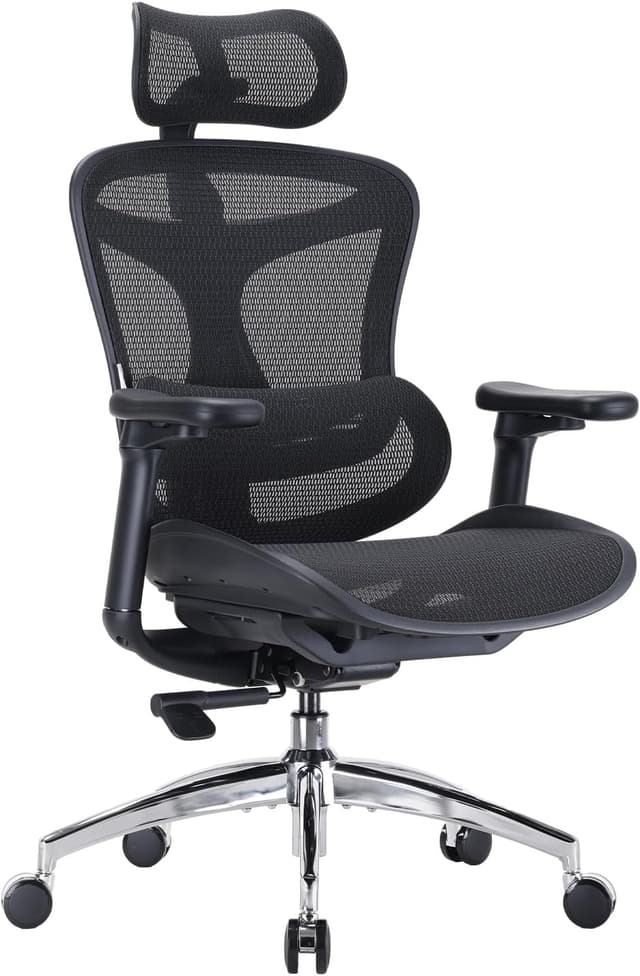
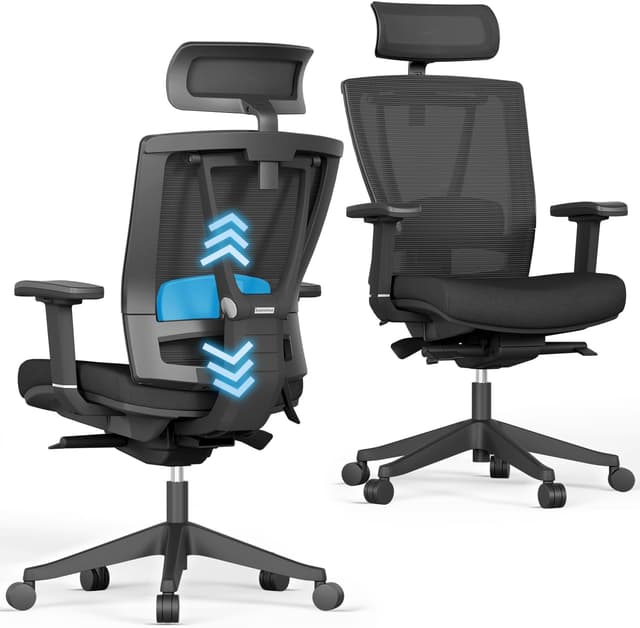
The core difference is philosophy: automatic versus manual lumbar support. The Sihoo Doro C300 uses a dynamic lumbar that tracks your movement and firms on its own as you shift and recline, so support stays on your low back without you touching a knob, ideal for people who move a lot or simply don't want to fiddle. The Autonomous ErgoChair Pro takes the opposite approach with a six-inch sliding lumbar you position manually up or down the backrest, plus 4D arms and an adjustable headrest across nine points of adjustment, so you can tune every contact point exactly. That control is the ErgoChair's strength and, for some, its weakness: it takes time to set up right, and reviewers consistently rate its out-of-the-box seat comfort as good rather than great, whereas the Doro C300's molded seat and automatic support feel dialed-in immediately. Price and warranty also separate them: the Doro C300 costs around $300 with a 3-year warranty, while the ErgoChair Pro runs closer to $500. The ErgoChair counters with the adjustable headrest the Doro C300 lacks and a wider tuning range for unusual body proportions. Both use breathable mesh backs and both recline to offload the spine.
Sihoo Doro C300
- Self-adjusting dynamic lumbar tracks your low back as you move
- Strong value: real ergonomics at roughly a third of flagship pricing
- Breathable mesh back stays cool over long sessions
- 3D adjustable armrests and smooth recline
- Dynamic support can feel aggressive for those who dislike pronounced lumbar
- Best fit is roughly 5'4" to 6'2"; outside that it suits less well
- Integrated headrest is not separately adjustable
Autonomous ErgoChair Pro
- Six-inch sliding lumbar places support exactly where you need it
- Nine points of adjustment, including 4D arms and headrest
- Breathable mesh back for long, warm sessions
- Adjustable recline and tension to offload the spine
- Reviewers rate seat comfort as good rather than exceptional
- No adjustable seat depth
- Assembly and tuning take time to get right
Which should you buy?
Choose the Sihoo Doro C300 if you want the most support for your money and would rather the chair adjust to you. Its automatic dynamic lumbar, immediate comfort, and roughly $300 price make it the easier, cheaper chair to live with, and it earns the best-value spot on our list. Choose the Autonomous ErgoChair Pro if you're a tinkerer who wants to place lumbar support precisely, need an adjustable headrest, or have proportions that benefit from its wider adjustment range, just budget the extra money and the setup time. Put simply: the Doro C300 is the smarter default, the ErgoChair Pro the pick for those who want maximum manual control.
Choose the Sihoo Doro C300 if
- Value seekers who want automatic, no-fuss lumbar support
- Movers who shift and recline through the day
- Average-height users between about 5'4" and 6'2"
Skip it if
- People who dislike pronounced, active lumbar pressure
- Very tall or very short users needing a wider fit range
Choose the Autonomous ErgoChair Pro if
- Tinkerers who want to fine-tune every contact point
- Buyers who want an adjustable headrest in the mid-range
- People who value sliding lumbar placement over seat plushness
Skip it if
- Anyone who wants great comfort with minimal setup
- Buyers who need adjustable seat depth
Common questions
Automatic or manual lumbar: which is better for my back?
Both can work; it's about preference. The Sihoo Doro C300's dynamic lumbar adjusts itself as you move, which keeps support in place effortlessly and suits people who shift position often. The Autonomous ErgoChair Pro's sliding lumbar lets you fix support at an exact height, which is better if you want to place it precisely and leave it. If you don't want to fuss, go automatic (Doro C300); if you want control, go manual (ErgoChair Pro).
Is the ErgoChair Pro worth about $200 more than the Doro C300?
Only if you value what it adds: a manually positioned sliding lumbar, an adjustable headrest, and a wider range of adjustment for tuning to unusual proportions. If those matter to you, the premium is justified. If not, the Doro C300 delivers automatic low-back support and immediate comfort for around $300 with a longer 3-year warranty, which is why it ranks above the ErgoChair Pro on our list.
Which is more comfortable right out of the box?
The Sihoo Doro C300. Its molded seat and self-adjusting lumbar feel dialed-in with minimal setup, while reviewers rate the ErgoChair Pro's seat comfort as good rather than exceptional and note it takes time to tune. If you want to unbox, sit, and feel supported quickly, the Doro C300 is the safer choice; the ErgoChair rewards the patience to adjust it.