Shure MV7+ vs Audio-Technica AT2020USB-X
Shure MV7+ (#1, best overall) vs Audio-Technica AT2020USB-X (#4): in our USB Microphones scoring the Shure MV7+ totals 9.5/10 and the Audio-Technica AT2020USB-X 7.8/10, the Shure MV7+ leading on Noise Rejection and Audio Quality and the Audio-Technica AT2020USB-X on Value.
We may earn a commission when you buy through our links.
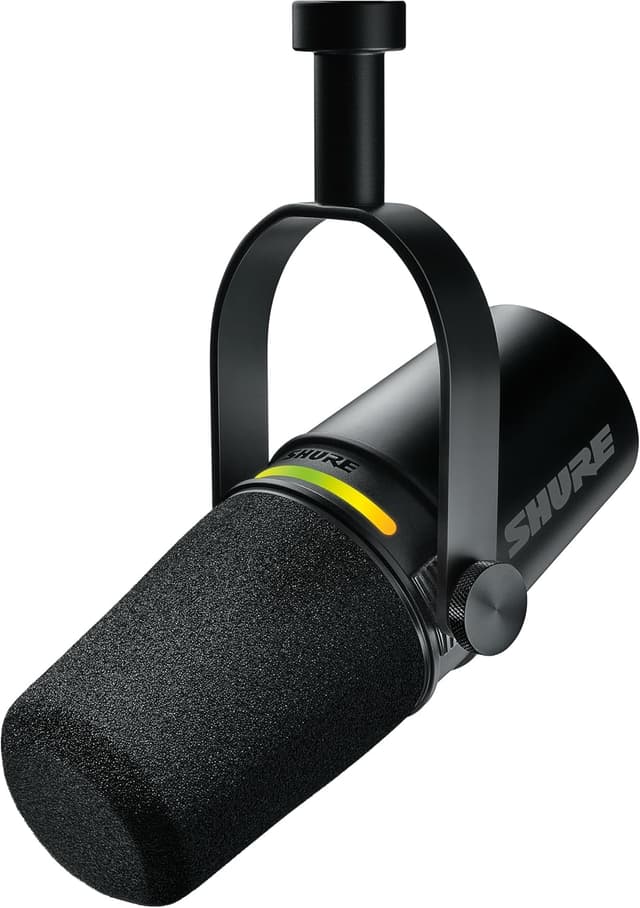
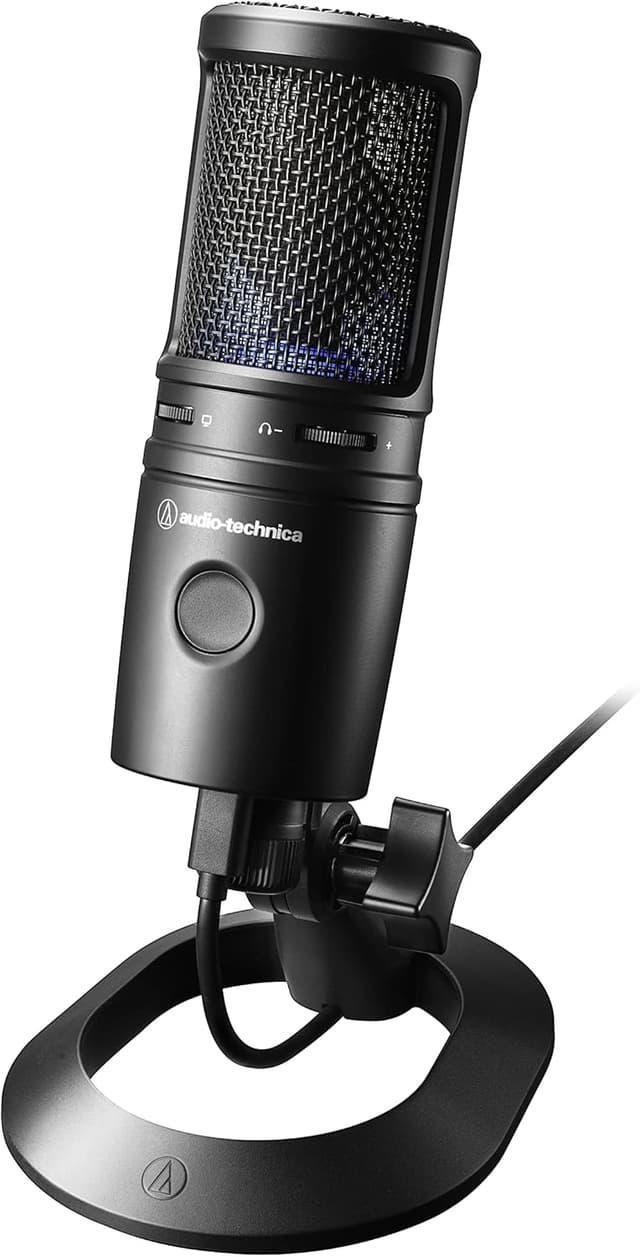
TopsFive comparison scores
Side by side
| Shure MV7+ | Audio-Technica AT2020USB-X | |
|---|---|---|
| Type | Dynamic | Condenser |
| Polar Pattern | Cardioid | Cardioid |
| Frequency Response | 50Hz - 16kHz | 20Hz - 20kHz |
| Sample Rate | 48kHz / 24-bit | Up to 96kHz / 24-bit |
| Connection | USB-C + XLR | USB-C |
| Headphone Out | 3.5mm | 3.5mm with mix control |
| Weight | 574g | 373g |
| Price | Check price → | Check price → |
How they differ in real use
Built from our usb microphones scoring, each product's published specifications, and verified owner feedback — not hands-on testing.
Both the Shure MV7+ and the Audio-Technica AT2020USB-X made our Top 5 USB Microphones, at #1 (best overall) and #4. The most complete USB microphone package available. The MV7+ combines broadcast-quality dynamic audio, intelligent Auto Level Mode, real-time Denoiser, and hybrid USB-C/XLR connectivity. No other mic matches its combination of sound quality, smart features, and upgrade path. The highest recording resolution of any USB mic at 24-bit/96kHz, inheriting the legendary AT2020 capsule trusted by professionals worldwide. At $149, it delivers studio-grade clarity that punches well above its weight for vocal-focused content.
We score usb microphones on Audio Quality (35%), Noise Rejection (25%), Build Quality (20%), Features (10%) and Value (10%). On that basis the Shure MV7+ totals 9.5 out of 10 and the Audio-Technica AT2020USB-X 7.8. The widest gap is Noise Rejection, where the Shure MV7+ scores 10 against 6 for the Audio-Technica AT2020USB-X: background isolation. Audio Quality also separates them: 10 for the Shure MV7+ versus 9 for the Audio-Technica AT2020USB-X. The Audio-Technica AT2020USB-X claws back ground on Value.
On paper, the specifications that actually differ: Type: Dynamic on the Shure MV7+ versus Condenser on the Audio-Technica AT2020USB-X; Frequency Response: 50Hz - 16kHz on the Shure MV7+ versus 20Hz - 20kHz on the Audio-Technica AT2020USB-X; Sample Rate: 48kHz / 24-bit on the Shure MV7+ versus Up to 96kHz / 24-bit on the Audio-Technica AT2020USB-X; Connection: USB-C + XLR on the Shure MV7+ versus USB-C on the Audio-Technica AT2020USB-X; Headphone Out: 3.5mm on the Shure MV7+ versus 3.5mm with mix control on the Audio-Technica AT2020USB-X; Weight: 574g on the Shure MV7+ versus 373g on the Audio-Technica AT2020USB-X. They match on Polar Pattern.
Check current pricing at the merchant links below. Owners praise the Shure MV7+ for hybrid USB-C and XLR outputs for maximum flexibility and auto Level Mode adjusts gain intelligently; the most common complaint is premium price at $299. Owners praise the Audio-Technica AT2020USB-X for industry-leading 24-bit/96kHz resolution and trusted AT2020 capsule with natural warm tone; the most common complaint is cardioid only.
Shure MV7+
- Hybrid USB-C and XLR outputs for maximum flexibility
- Auto Level Mode adjusts gain intelligently
- Real-time Denoiser and Digital Pop Filter
- Customizable LED touch panel with tap-to-mute
- Premium price at $299
- Narrower frequency response (50Hz-16kHz) vs condensers
- Cardioid only, no pattern switching
Audio-Technica AT2020USB-X
- Industry-leading 24-bit/96kHz resolution
- Trusted AT2020 capsule with natural warm tone
- Silent touch-sensitive mute button
- Headphone jack with volume and mix control
- Cardioid only
- Condenser sensitivity picks up room noise
- No onboard DSP or software mixing
Which should you buy?
The Shure MV7+ is the better fit for serious streamers wanting broadcast-quality audio and creators in noisy environments; it is the higher-scoring pick here, chiefly for Noise Rejection and Audio Quality. The Audio-Technica AT2020USB-X is the better fit for vocal-focused podcasters and voiceover artists and musicians recording instruments via USB, and the stronger choice if Value matters more to you than the overall score. The Shure MV7+ is a poor fit for budget creators under $150; the Audio-Technica AT2020USB-X is a poor fit for streamers in noisy rooms with mechanical keyboards.
Choose the Shure MV7+ if
- Serious streamers wanting broadcast-quality audio
- Creators in noisy environments
- Those who want USB now with XLR upgrade path
Skip it if
- Budget creators under $150
- Musicians needing wide frequency response
Choose the Audio-Technica AT2020USB-X if
- Vocal-focused podcasters and voiceover artists
- Musicians recording instruments via USB
- Creators wanting the highest recording resolution
Skip it if
- Streamers in noisy rooms with mechanical keyboards
- Those wanting built-in DSP effects
Common questions
Is the Shure MV7+ better than the Audio-Technica AT2020USB-X?
In our USB Microphones ranking the Shure MV7+ scores higher overall, 9.5 to 7.8, with the biggest advantage in Noise Rejection. The Audio-Technica AT2020USB-X is stronger on Value, so it is the better pick if that matters most to you.
What is the main difference between the Shure MV7+ and the Audio-Technica AT2020USB-X?
The headline spec difference is Type: Dynamic on the Shure MV7+ versus Condenser on the Audio-Technica AT2020USB-X. In use, the gap that matters most is Noise Rejection (10 vs 6 in our scoring): background isolation.