Shokz OpenFit Pro vs Bose Ultra Open Earbuds (2nd Gen)
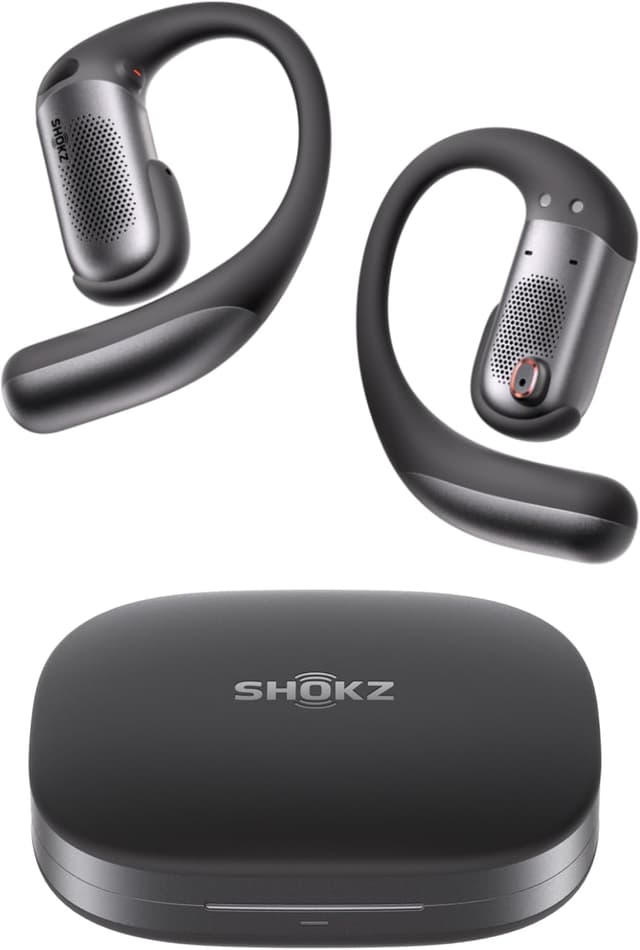
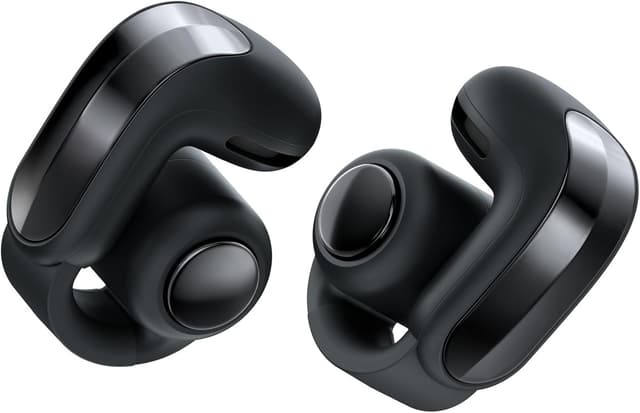
Shokz OpenFit Pro (#3, best premium) vs Bose Ultra Open Earbuds (2nd Gen) (#5): in our Open-Ear Earbuds for Running scoring the Shokz OpenFit Pro totals 8.2/10 and the Bose Ultra Open Earbuds (2nd Gen) 6.7/10, the Shokz OpenFit Pro leading on Running Stability and Sweat & Weather Resistance.
We may earn a commission when you buy through our links.
TopsFive comparison scores
Side by side
| Shokz OpenFit Pro | Bose Ultra Open Earbuds (2nd Gen) | |
|---|---|---|
| Design | True wireless ear hooks with optional support accessories | Clip-on cuff |
| Audio | 11 x 20 mm dual-diaphragm driver, Dolby Atmos with head tracking | Updated transducer with TrueSpatial immersive audio and head tracking |
| Battery (Buds) | Up to 12 hours (6 hours with noise reduction) | Up to 9 hours (5 with Immersive Audio) |
| Battery (Total) | Up to 50 hours with case | Up to 28 hours with case |
| Water Resistance | IP55 | IPX4 |
| Bluetooth | 6.1 | 5.4, aptX Adaptive |
| Multipoint | Yes, 2 devices | Yes, 2 devices |
| Charging | Wireless charging case; 10-minute charge for up to 4 hours | Wireless charging case; 10-minute charge for about 2 hours |
| Price | Check price → | Check price → |
How they differ in real use
Built from our open ear earbuds for running scoring, each product's published specifications, and verified owner feedback — not hands-on testing.
Both the Shokz OpenFit Pro and the Bose Ultra Open Earbuds (2nd Gen) made our Top 5 Open-Ear Earbuds for Running, at #3 (best premium) and #5. The best-sounding Shokz and the only pick with open-ear noise reduction, which helps on a loud treadmill or gym floor while keeping you aware of traffic outdoors. UltraRunning found it secure on trails, and its 12 hours (50 with the case), IP55, Bluetooth 6.1 and triple mics match or beat the OpenFit 2+. It ranks below the OpenFit 2+ because reviewers found the noise reduction modest, switching it on halves battery life to 6 hours, and it costs more. It ranks above the AeroFit 2 and Bose on fit security, call quality and sweat rating. The newest pick (on sale October 1, 2026) and the best for sound away from the run: Gizmodo called it a clear step up from the original, with deeper bass, TrueSpatial head-tracked audio and a tighter clip. It ranks last for running because its IPX4 rating is the lowest here (every other pick is IP55), Bose markets it for travel and office rather than training, and a clip-on cuff is less locked-in than the Shokz hooks or the OpenRun band. It is also the most expensive pick. Choose it over the AeroFit 2 only if your runs are easy and sound quality comes first.
We score open-ear earbuds for running on Running Stability (25%), Sound Quality (20%), Sweat & Weather Resistance (15%), Battery & Charging (15%), Controls & Calls (10%) and Value (15%). On that basis the Shokz OpenFit Pro totals 8.2 out of 10 and the Bose Ultra Open Earbuds (2nd Gen) 6.7. The widest gap is Running Stability, where the Shokz OpenFit Pro scores 8 against 6 for the Bose Ultra Open Earbuds (2nd Gen): how securely the design stays put at running pace (wraparound band, ear hook or clip, and whether the hook adjusts), based on reviewers' running and workout reports. Sweat & Weather Resistance also separates them: 9 for the Shokz OpenFit Pro versus 6 for the Bose Ultra Open Earbuds (2nd Gen).
On paper, the specifications that actually differ: Design: True wireless ear hooks with optional support accessories on the Shokz OpenFit Pro versus Clip-on cuff on the Bose Ultra Open Earbuds (2nd Gen); Audio: 11 x 20 mm dual-diaphragm driver, Dolby Atmos with head tracking on the Shokz OpenFit Pro versus Updated transducer with TrueSpatial immersive audio and head tracking on the Bose Ultra Open Earbuds (2nd Gen); Battery (Buds): Up to 12 hours (6 hours with noise reduction) on the Shokz OpenFit Pro versus Up to 9 hours (5 with Immersive Audio) on the Bose Ultra Open Earbuds (2nd Gen); Battery (Total): Up to 50 hours with case on the Shokz OpenFit Pro versus Up to 28 hours with case on the Bose Ultra Open Earbuds (2nd Gen); Water Resistance: IP55 on the Shokz OpenFit Pro versus IPX4 on the Bose Ultra Open Earbuds (2nd Gen); Bluetooth: 6.1 on the Shokz OpenFit Pro versus 5.4, aptX Adaptive on the Bose Ultra Open Earbuds (2nd Gen). They match on Multipoint.
Check current pricing at the merchant links below. Owners praise the Shokz OpenFit Pro for open-ear noise reduction takes the edge off treadmill and gym hum while you stay aware and tom's Guide called its audio top notch for open-ear buds; it uses a large dual-diaphragm driver; the most common complaint is noise reduction is modest, per Tom's Guide and UltraRunning, and halves battery life to 6 hours. Owners praise the Bose Ultra Open Earbuds (2nd Gen) for updated drivers for deeper bass plus TrueSpatial head-tracked audio; Gizmodo praised the sound and extra volume and clip-on cuff sits outside the ear canal and is comfortable for all-day wear; the most common complaint is rated only IPX4, below the IP55 of every other pick here.
Shokz OpenFit Pro
- Open-ear noise reduction takes the edge off treadmill and gym hum while you stay aware
- Tom's Guide called its audio top notch for open-ear buds; it uses a large dual-diaphragm driver
- UltraRunning and Tom's Guide both found the fit secure through runs and workouts
- Up to 50 hours with the case, wireless charging, Bluetooth 6.1 and a triple-mic call system
- Noise reduction is modest, per Tom's Guide and UltraRunning, and halves battery life to 6 hours
- The most expensive Shokz here; reviewers point to the OpenFit 2+ as better value
Bose Ultra Open Earbuds (2nd Gen)
- Updated drivers for deeper bass plus TrueSpatial head-tracked audio; Gizmodo praised the sound and extra volume
- Clip-on cuff sits outside the ear canal and is comfortable for all-day wear
- 9 hours per charge and 28 hours with a wireless charging case
- Bluetooth 5.4 multipoint plus aptX Adaptive on Snapdragon Sound phones
- Rated only IPX4, below the IP55 of every other pick here
- The most expensive pick, and a clip rather than a hook, so it is less locked-in for hard running
Which should you buy?
The Shokz OpenFit Pro is the better fit for runners who split time between roads and a loud gym or treadmill and listeners who want the best open-ear sound from Shokz; it is the higher-scoring pick here, chiefly for Running Stability and Sweat & Weather Resistance. The Bose Ultra Open Earbuds (2nd Gen) is the better fit for easy runs and walks by listeners who prize sound quality and one pair for commuting, office and light exercise. The Shokz OpenFit Pro is a poor fit for buyers expecting earbud-style noise cancelling; the Bose Ultra Open Earbuds (2nd Gen) is a poor fit for heavy sweaters and rain runners.
Choose the Shokz OpenFit Pro if
- Runners who split time between roads and a loud gym or treadmill
- Listeners who want the best open-ear sound from Shokz
- Runners who also take frequent calls
Skip it if
- Buyers expecting earbud-style noise cancelling
- Value-focused runners
Choose the Bose Ultra Open Earbuds (2nd Gen) if
- Easy runs and walks by listeners who prize sound quality
- One pair for commuting, office and light exercise
- Listeners who want spatial audio for video
Skip it if
- Heavy sweaters and rain runners
- Runners doing intervals or trail running
Common questions
Is the Shokz OpenFit Pro better than the Bose Ultra Open Earbuds (2nd Gen)?
In our Open-Ear Earbuds for Running ranking the Shokz OpenFit Pro scores higher overall, 8.2 to 6.7, with the biggest advantage in Running Stability. The Bose Ultra Open Earbuds (2nd Gen) does not out-score it on any criterion we weigh.
What is the main difference between the Shokz OpenFit Pro and the Bose Ultra Open Earbuds (2nd Gen)?
The headline spec difference is Design: True wireless ear hooks with optional support accessories on the Shokz OpenFit Pro versus Clip-on cuff on the Bose Ultra Open Earbuds (2nd Gen). In use, the gap that matters most is Running Stability (8 vs 6 in our scoring): how securely the design stays put at running pace (wraparound band, ear hook or clip, and whether the hook adjusts), based on reviewers' running and workout reports.