Sennheiser HD 820 vs Sony MDR-7506
Sennheiser HD 820 (#4) vs Sony MDR-7506 (#5, best budget): in our Over-ear Headphones for Studio scoring the Sennheiser HD 820 totals 8.6/10 and the Sony MDR-7506 7.7/10, the Sennheiser HD 820 leading on Detail Resolution and Accuracy and the Sony MDR-7506 on Value.
We may earn a commission when you buy through our links.
Side by side
| Sennheiser HD 820 | Sony MDR-7506 | |
|---|---|---|
| Driver Size | 56mm ring radiator | 40mm neodymium |
| Impedance | 300Ω | 63Ω |
| Frequency Response | 12Hz-43.8kHz | 10Hz-20kHz |
| Weight | 360g | 227g |
| Design | Closed-back with Gorilla Glass reflector | Closed-back, foldable |
| Price | Check price → | Check price → |
How they differ in real use
Built from our over ear music scoring, each product's published specifications, and verified owner feedback — not hands-on testing.
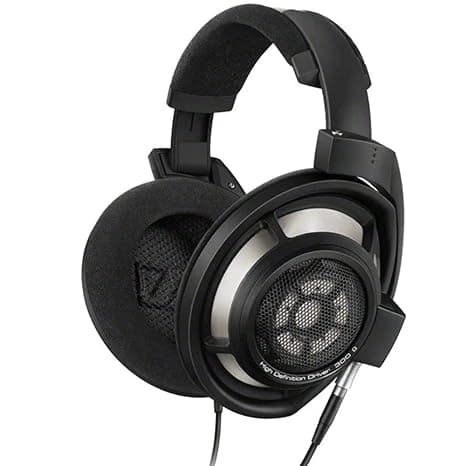
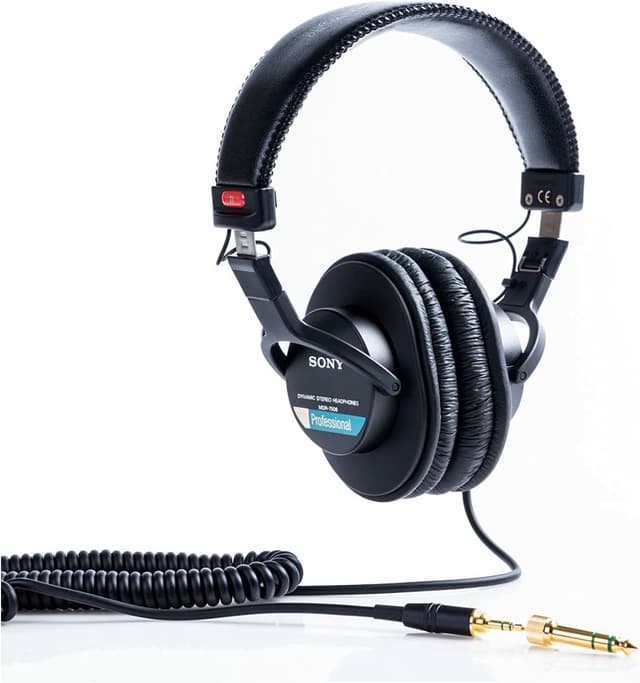
Both the Sennheiser HD 820 and the Sony MDR-7506 made our Top 5 Over-ear Headphones for Studio, at #4 and #5 (best budget). A closed-back audiophile headphone with 56mm ring radiator drivers and Gorilla Glass reflector. Unlike the open-back models above, the HD 820's closed design provides isolation usable during tracking/recording. Its spacious soundstage reveals spatial issues, but the exaggerated staging can mislead mixers. At 300Ω and $2,199, this is a specialist tool, not a mixing workhorse. The ONLY closed-back headphone on this list, essential for tracking and recording where open-back models leak sound into microphones. Industry standard since 1991, found in virtually every professional studio. At $104, every studio should own a pair regardless of what else they have. Not ideal for critical mixing (use open-back for that), but indispensable for recording sessions.
We score over-ear headphones for studio on Accuracy (40%), Detail Resolution (25%), Comfort (15%), Build Quality (10%) and Value (10%). On that basis the Sennheiser HD 820 totals 8.6 out of 10 and the Sony MDR-7506 7.7. The widest gap is Detail Resolution, where the Sennheiser HD 820 scores 10 against 7.5 for the Sony MDR-7506: micro-detail and transient response. Value also separates them: 10 for the Sony MDR-7506 versus 5 for the Sennheiser HD 820.
On paper, the specifications that actually differ: Driver Size: 56mm ring radiator on the Sennheiser HD 820 versus 40mm neodymium on the Sony MDR-7506; Impedance: 300Ω on the Sennheiser HD 820 versus 63Ω on the Sony MDR-7506; Frequency Response: 12Hz-43.8kHz on the Sennheiser HD 820 versus 10Hz-20kHz on the Sony MDR-7506; Weight: 360g on the Sennheiser HD 820 versus 227g on the Sony MDR-7506; Design: Closed-back with Gorilla Glass reflector on the Sennheiser HD 820 versus Closed-back, foldable on the Sony MDR-7506.
Check current pricing at the merchant links below. Owners praise the Sennheiser HD 820 for 56mm ring radiator drivers with glass reflector technology and remarkably spacious soundstage for a closed-back; the most common complaint is requires quality amplification (300Ω). Owners praise the Sony MDR-7506 for industry standard since 1991 and closed-back design essential for tracking/recording (prevents bleed); the most common complaint is bright, fatiguing for long mixing sessions.
Sennheiser HD 820
- 56mm ring radiator drivers with glass reflector technology
- Remarkably spacious soundstage for a closed-back
- Up to 26 dB passive isolation
- Includes balanced 4.4mm Pentaconn cable
- Requires quality amplification (300Ω)
- Very expensive
- Heavier at 360g
Sony MDR-7506
- Industry standard since 1991
- Closed-back design essential for tracking/recording (prevents bleed)
- Reveals flaws (sibilance, distortion, noise)
- 63Ω drives easily from any interface or laptop
- Bright, fatiguing for long mixing sessions
- Non-replaceable coiled cable
- Ear pads wear out (cheap to replace)
Which should you buy?
The Sennheiser HD 820 is the better fit for audiophiles needing isolation and critical listeners with quality amps; it is the higher-scoring pick here, chiefly for Detail Resolution and Accuracy. The Sony MDR-7506 is the better fit for tracking/recording sessions (closed-back prevents bleed) and quality control checks, and the stronger choice if Value matters more to you than the overall score. The Sennheiser HD 820 is a poor fit for bass lovers; the Sony MDR-7506 is a poor fit for critical mixing (open-back is better).
Choose the Sennheiser HD 820 if
- Audiophiles needing isolation
- Critical listeners with quality amps
- Those wanting closed-back without sacrificing soundstage
Skip it if
- Bass lovers
- Those without amplification
Choose the Sony MDR-7506 if
- Tracking/recording sessions (closed-back prevents bleed)
- Quality control checks
- Budget studios needing a do-everything headphone
Skip it if
- Critical mixing (open-back is better)
- Comfort prioritizers
Common questions
Is the Sennheiser HD 820 better than the Sony MDR-7506?
In our Over-ear Headphones for Studio ranking the Sennheiser HD 820 scores higher overall, 8.6 to 7.7, with the biggest advantage in Detail Resolution. The Sony MDR-7506 is stronger on Value, so it is the better pick if that matters most to you.
What is the main difference between the Sennheiser HD 820 and the Sony MDR-7506?
The headline spec difference is Driver Size: 56mm ring radiator on the Sennheiser HD 820 versus 40mm neodymium on the Sony MDR-7506. In use, the gap that matters most is Detail Resolution (10 vs 7.5 in our scoring): micro-detail and transient response.