Optoma GT2400HDR vs Optoma GT2000HDR
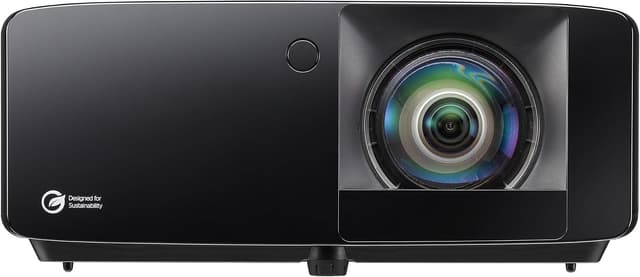
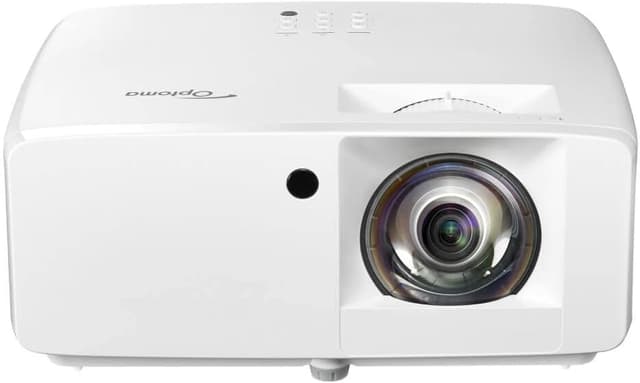
Optoma GT2400HDR (#2, best value) vs Optoma GT2000HDR (#4, best budget): in our Projectors for Golf Simulators scoring the Optoma GT2400HDR totals 9.1/10 and the Optoma GT2000HDR 8.7/10, the Optoma GT2400HDR leading on Image Brightness & Quality and Input Lag and the Optoma GT2000HDR on Value.
We may earn a commission when you buy through our links.
TopsFive comparison scores
Side by side
| Optoma GT2400HDR | Optoma GT2000HDR | |
|---|---|---|
| Resolution | 1080p Full HD (4K HDR input) | 1080p Full HD (4K HDR input) |
| Rated Brightness | 4,200 lumens | 3,500 lumens |
| Throw Ratio | 0.496:1 (fixed short throw) | 0.496:1 (fixed short throw) |
| Lowest Input Lag | 8.4 ms (1080p/120Hz) | 8.6 ms (1080p/120Hz) |
| Light Source | DuraCore laser | DuraCore laser |
| Light Source Life | 30,000 hours (Eco) | 30,000 hours |
| Zoom & Adjustment | Fixed lens, digital keystone | Fixed lens, digital keystone |
| 100" Image From | About 3.6 ft | About 3.6 ft |
| Price | Check price → | Check price → |
How they differ in real use
Built from our projectors for golf simulators scoring, each product's published specifications, and verified owner feedback — not hands-on testing.
Both the Optoma GT2400HDR and the Optoma GT2000HDR made our Top 5 Projectors for Golf Simulators, at #2 (best value) and #4 (best budget). Nearly all of the practical golf-sim performance for $700 less than the BenQ: it's the brightest projector here at 4,200 rated lumens, has the group's lowest input lag at 8.4 ms, adds a dedicated golf sim picture mode, and its IP6X-sealed 30,000-hour laser is built for dusty garage bays. It beats the older GT2100HDR on the golf mode, marginally lower lag, and first-party Amazon stock; only the TK710STi's 4K image and zoom flexibility keep it from the top spot. The budget pick that keeps the specs that actually matter: a 30,000-hour laser, IP6X dust sealing, the same 0.496:1 short throw, and 8.6 ms gaming input lag, at the lowest price of any laser here. It ranks above the TH671ST because it's brighter (3,500 vs 3,000 lumens), faster, cheaper, and maintenance-free, but below the GT2100HDR because its 20% lower output needs a light-controlled room to look its best.
We score projectors for golf simulators on Image Brightness & Quality (30%), Input Lag (20%), Throw & Mounting Flexibility (20%), Reliability & Maintenance (15%) and Value (15%). On that basis the Optoma GT2400HDR totals 9.1 out of 10 and the Optoma GT2000HDR 8.7. The widest gap is Image Brightness & Quality, where the Optoma GT2400HDR scores 9 against 8.2 for the Optoma GT2000HDR: lumens on an impact screen, resolution, and color. Input Lag also separates them: 9.6 for the Optoma GT2400HDR versus 9.3 for the Optoma GT2000HDR. The Optoma GT2000HDR claws back ground on Value.
On paper, the specifications that actually differ: Rated Brightness: 4,200 lumens on the Optoma GT2400HDR versus 3,500 lumens on the Optoma GT2000HDR; Lowest Input Lag: 8.4 ms (1080p/120Hz) on the Optoma GT2400HDR versus 8.6 ms (1080p/120Hz) on the Optoma GT2000HDR; Light Source Life: 30,000 hours (Eco) on the Optoma GT2400HDR versus 30,000 hours on the Optoma GT2000HDR. They match on Resolution, Throw Ratio, Light Source and Zoom & Adjustment.
Check current pricing at the merchant links below. Owners praise the Optoma GT2400HDR for brightest pick here at 4,200 rated lumens: the safest choice for garages and rooms with ambient light hitting the impact screen and lowest input lag of the group at 8.4 ms (1080p/120Hz), with a dedicated golf sim picture mode tuned for grass and sky tones; the most common complaint is 1080p resolution, so course detail is visibly softer than the BenQ TK710STi's 4K image on a large screen. Owners praise the Optoma GT2000HDR for lowest price of any laser option here while keeping the 0.496:1 short throw, 30,000-hour light source, and IP6X dust sealing and 3,500 lumens is still bright enough for a light-controlled bay and beats every lamp projector in this class; the most common complaint is about 20% dimmer than the GT2100HDR/GT2400HDR, so in a garage with ambient light the image washes out sooner.
Optoma GT2400HDR
- Brightest pick here at 4,200 rated lumens: the safest choice for garages and rooms with ambient light hitting the impact screen
- Lowest input lag of the group at 8.4 ms (1080p/120Hz), with a dedicated golf sim picture mode tuned for grass and sky tones
- 0.496:1 throw fills a 100-inch image from about 3.6 ft, fitting even very shallow bays with the projector safely out of swing range
- IP6X dust-sealed optics and a 30,000-hour laser suit dusty garage installs; sold and shipped by Amazon directly
- 1080p resolution, so course detail is visibly softer than the BenQ TK710STi's 4K image on a large screen
- Fixed lens with no optical zoom means mounting position must be calculated exactly; all image-size adjustment is physical
- New to market in 2025, so long-term owner feedback is still thin compared with the GT2100HDR and TH671ST
Optoma GT2000HDR
- Lowest price of any laser option here while keeping the 0.496:1 short throw, 30,000-hour light source, and IP6X dust sealing
- 3,500 lumens is still bright enough for a light-controlled bay and beats every lamp projector in this class
- 8.6 ms input lag (1080p/120Hz enhanced gaming mode) matches the pricier GT2100HDR
- Ultra-compact chassis is easy to ceiling-mount or shelf-mount out of the swing path
- About 20% dimmer than the GT2100HDR/GT2400HDR, so in a garage with ambient light the image washes out sooner
- Amazon stock often comes from smaller third-party sellers with limited quantities
- Fixed lens and 1080p, with no golf-specific picture mode
Which should you buy?
The Optoma GT2400HDR is the better fit for garage bays with ambient light that need maximum brightness and shallow rooms 10-12 ft deep; it is the higher-scoring pick here, chiefly for Image Brightness & Quality and Input Lag. The Optoma GT2000HDR is the better fit for budget builds that still want a maintenance-free laser and basements and rooms with good light control, and the stronger choice if Value matters more to you than the overall score. The Optoma GT2400HDR is a poor fit for buyers set on 4K resolution; the Optoma GT2000HDR is a poor fit for bright garages where every lumen counts.
Choose the Optoma GT2400HDR if
- Garage bays with ambient light that need maximum brightness
- Shallow rooms 10-12 ft deep
- Buyers who want current-generation hardware with first-party Amazon stock
Skip it if
- Buyers set on 4K resolution
- Installs that need optical zoom to fine-tune image size
Choose the Optoma GT2000HDR if
- Budget builds that still want a maintenance-free laser
- Basements and rooms with good light control
- First simulators that may be upgraded later
Skip it if
- Bright garages where every lumen counts
- Buyers who want guaranteed first-party stock
Common questions
Is the Optoma GT2400HDR better than the Optoma GT2000HDR?
In our Projectors for Golf Simulators ranking the Optoma GT2400HDR scores higher overall, 9.1 to 8.7, with the biggest advantage in Image Brightness & Quality. The Optoma GT2000HDR is stronger on Value, so it is the better pick if that matters most to you.
What is the main difference between the Optoma GT2400HDR and the Optoma GT2000HDR?
The headline spec difference is Rated Brightness: 4,200 lumens on the Optoma GT2400HDR versus 3,500 lumens on the Optoma GT2000HDR. In use, the gap that matters most is Image Brightness & Quality (9 vs 8.2 in our scoring): lumens on an impact screen, resolution, and color.