Bowers & Wilkins Pi8 vs Technics EAH-AZ100
Bowers & Wilkins Pi8 (#2, best premium) vs Technics EAH-AZ100 (#3): in our Earbuds for Studio scoring the Bowers & Wilkins Pi8 totals 8.9/10 and the Technics EAH-AZ100 8.7/10, the Bowers & Wilkins Pi8 leading on Codec Support and Distortion.
We may earn a commission when you buy through our links.
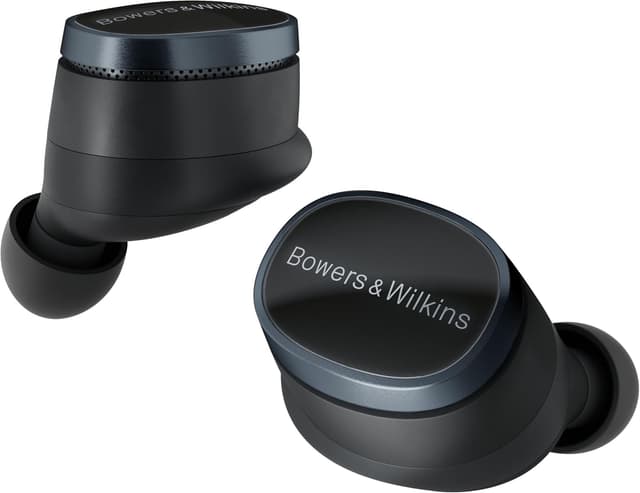
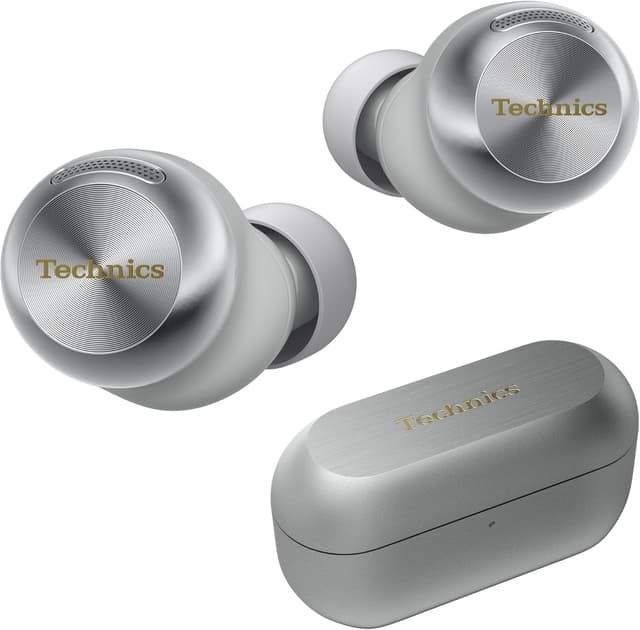
TopsFive comparison scores
Side by side
| Bowers & Wilkins Pi8 | Technics EAH-AZ100 | |
|---|---|---|
| Driver | 12mm carbon cone | 10mm magnetic fluid, aluminum diaphragm |
| Audio Chain | True 32-bit, dedicated DAC per earbud | — |
| Codecs | aptX Lossless, aptX Adaptive | LDAC, AAC, LC3 |
| Features | TrueSound mode, case retransmission | Acoustic Control Chamber, Harmonizer |
| EQ | — | 8-band in-app |
| Price | Check price → | Check price → |
How they differ in real use
Built from our earbuds studio scoring, each product's published specifications, and verified owner feedback — not hands-on testing.
Both the Bowers & Wilkins Pi8 and the Technics EAH-AZ100 made our Top 5 Earbuds for Studio, at #2 (best premium) and #3. 3.5mm input case enables lossless monitoring from any source: professional connectivity meets audiophile sound. Balanced, neutral signature perfect for checking how mixes translate to consumer devices.
We score earbuds for studio on Accuracy (40%), Detail Resolution (25%), Codec Support (15%), Distortion (10%) and Value (10%). On that basis the Bowers & Wilkins Pi8 totals 8.9 out of 10 and the Technics EAH-AZ100 8.7. The widest gap is Codec Support, where the Bowers & Wilkins Pi8 scores 9.5 against 9 for the Technics EAH-AZ100: lossless wireless options. Distortion also separates them: 9 for the Bowers & Wilkins Pi8 versus 8.5 for the Technics EAH-AZ100.
On paper, the specifications that actually differ: Driver: 12mm carbon cone on the Bowers & Wilkins Pi8 versus 10mm magnetic fluid, aluminum diaphragm on the Technics EAH-AZ100; Codecs: aptX Lossless, aptX Adaptive on the Bowers & Wilkins Pi8 versus LDAC, AAC, LC3 on the Technics EAH-AZ100; Features: TrueSound mode, case retransmission on the Bowers & Wilkins Pi8 versus Acoustic Control Chamber, Harmonizer on the Technics EAH-AZ100.
Check current pricing at the merchant links below. Owners praise the Bowers & Wilkins Pi8 for case connects to any audio source and true 32-bit processing; the most common complaint is highest price. Owners praise the Technics EAH-AZ100 for derived from $1,199 reference IEMs and magnetic fluid minimizes distortion; the most common complaint is not flat reference (needs EQ).
Bowers & Wilkins Pi8
- Case connects to any audio source
- True 32-bit processing
- Dedicated DAC per earbud
- TrueSound mode (disables EQ)
- Highest price
- Short battery (6.5h)
- Still Bluetooth latency limitations
Technics EAH-AZ100
- Derived from $1,199 reference IEMs
- Magnetic fluid minimizes distortion
- Harmonizer soundstage expansion
- Hi-Res certified with LDAC
- Not flat reference (needs EQ)
- ANC not best-in-class
- Comfort limited for some
Which should you buy?
The Bowers & Wilkins Pi8 is the better fit for connecting professional gear wirelessly and studio interface monitoring; it is the higher-scoring pick here, chiefly for Codec Support and Distortion. The Technics EAH-AZ100 is the better fit for mobile reference checks and noisy environment monitoring. The Bowers & Wilkins Pi8 is a poor fit for real-time tracking; the Technics EAH-AZ100 is a poor fit for critical mixing.
Choose the Bowers & Wilkins Pi8 if
- Connecting professional gear wirelessly
- Studio interface monitoring
- Mobile production
Skip it if
- Real-time tracking
- Budget studios
Choose the Technics EAH-AZ100 if
- Mobile reference checks
- Noisy environment monitoring
- Checking consumer translation
Skip it if
- Critical mixing
- Tracking sessions
Common questions
Is the Bowers & Wilkins Pi8 better than the Technics EAH-AZ100?
In our Earbuds for Studio ranking the Bowers & Wilkins Pi8 scores higher overall, 8.9 to 8.7, with the biggest advantage in Codec Support. The Technics EAH-AZ100 does not out-score it on any criterion we weigh.
What is the main difference between the Bowers & Wilkins Pi8 and the Technics EAH-AZ100?
The headline spec difference is Driver: 12mm carbon cone on the Bowers & Wilkins Pi8 versus 10mm magnetic fluid, aluminum diaphragm on the Technics EAH-AZ100. In use, the gap that matters most is Codec Support (9.5 vs 9 in our scoring): lossless wireless options.