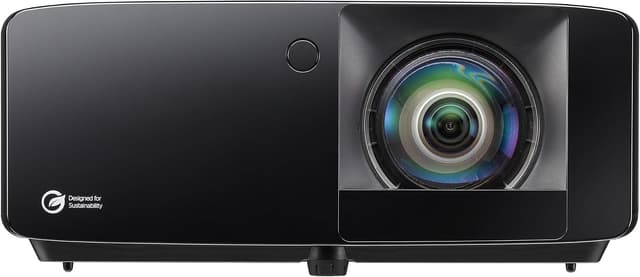
BenQ TK710STi vs Optoma GT2400HDR
The $1,899-vs-$1,199 golf-sim decision in one line: BenQ's 4K sharpness and zoom flexibility, or Optoma's extra 1,000 lumens and golf mode for $700 less.
We may earn a commission when you buy through our links.
Black Friday 2026: projector deals →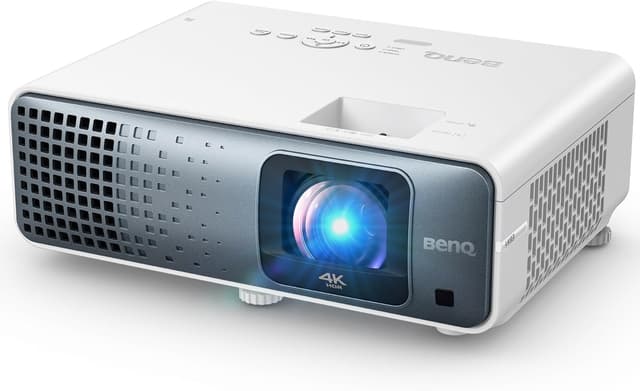
TopsFive comparison scores
Side by side
| BenQ TK710STi | Optoma GT2400HDR | |
|---|---|---|
| Resolution | 4K UHD (3840×2160) | 1080p Full HD (4K HDR input) |
| Rated Brightness | 3,200 ANSI lumens | 4,200 lumens |
| Throw Ratio | 0.69–0.83:1 (short throw) | 0.496:1 (fixed short throw) |
| Lowest Input Lag | 4.2 ms (1080p/240Hz); 16.7 ms (4K/60Hz) | 8.4 ms (1080p/120Hz) |
| Light Source | Laser (LED-free DLP) | DuraCore laser |
| Light Source Life | 20,000 hours | 30,000 hours (Eco) |
| Zoom & Adjustment | 1.2x optical zoom, 3D keystone | Fixed lens, digital keystone |
| 100" Image From | About 5 ft (at 0.69:1) | About 3.6 ft |
| Price | Check price → | Check price → |
How they differ in real use
These two solve the same problem (a short-throw image on an impact screen with gaming-grade responsiveness) from opposite directions. The BenQ TK710STi is the resolution play: true 4K UHD makes course textures, distant flags, and simulator UI text visibly crisper on a 10-foot-plus screen, and it's the only projector in this class with a 1.2x optical zoom, which buys you a foot or two of mounting forgiveness that the Optoma's fixed lens can't offer. Its 4.2 ms input lag at 1080p/240Hz is the fastest figure either brand publishes. The trade-off is light: BenQ rates it at 3,200 ANSI lumens, but ProjectorCentral's lab measured about 2,478 ANSI in the brightest mode (roughly 23% under spec), so it wants a light-controlled bay. The Optoma GT2400HDR is the brightness play: 4,200 rated lumens is the most in this class, its 0.496:1 throw fits bays as shallow as 10 feet (the BenQ's 0.69-0.83:1 lens needs 7-8 feet for the same screen), it adds a golf sim picture mode, and its IP6X-sealed 30,000-hour laser out-specs the BenQ's 20,000-hour source for dusty garages. It's also $700 cheaper. What you give up is resolution (1080p, though it accepts 4K HDR input) and any optical adjustment, so the mount position must be calculated exactly.
BenQ TK710STi
- True 4K UHD resolution resolves course textures, grain on greens, and distant fairways far more sharply than the 1080p alternatives
- 1.2x optical zoom plus 0.69-0.83:1 throw ratio gives real mounting flexibility: the only projector here that lets you fine-tune image size without moving the mount
- Very low input lag (4.2 ms at 1080p/240Hz, 16.7 ms at 4K/60Hz) for lag-free simulator response
- 20,000-hour laser light source means no lamp replacements over the life of a home sim
- ProjectorCentral's measurements put real output around 2,478 ANSI lumens in the brightest mode, about 23% below the 3,200 rating, and practical calibrated modes are dimmer still
- At around $1,899 it costs roughly $700 more than the brighter (though 1080p) Optoma GT2400HDR
- Needs about 7 ft of throw for a 10-ft-wide screen; tight bays under 11 ft deep may need the Optomas' 0.496:1 lens instead
Optoma GT2400HDR
- Brightest pick here at 4,200 rated lumens: the safest choice for garages and rooms with ambient light hitting the impact screen
- Lowest input lag of the group at 8.4 ms (1080p/120Hz), with a dedicated golf sim picture mode tuned for grass and sky tones
- 0.496:1 throw fills a 100-inch image from about 3.6 ft, fitting even very shallow bays with the projector safely out of swing range
- IP6X dust-sealed optics and a 30,000-hour laser suit dusty garage installs; sold and shipped by Amazon directly
- 1080p resolution, so course detail is visibly softer than the BenQ TK710STi's 4K image on a large screen
- Fixed lens with no optical zoom means mounting position must be calculated exactly; all image-size adjustment is physical
- New to market in 2025, so long-term owner feedback is still thin compared with the GT2100HDR and TH671ST
Which should you buy?
Choose the BenQ TK710STi if your bay is at least 11-12 feet deep, you control the ambient light, and your gaming PC can drive 4K: the sharper image and zoom flexibility make it the better long-term centerpiece for a dedicated sim room. Choose the Optoma GT2400HDR if your bay is shallow, bright, or dusty (a garage build, in short) or if the $700 saved matters more than 4K: its extra rated brightness does more for a washed-out impact screen than resolution ever will, and the golf sim mode gets colors right without calibration.
Choose the BenQ TK710STi if
- Sim bays 11-16 ft deep where 4K sharpness is the priority
- GSPro players who want the lowest possible input lag
- Rooms with good light control where measured brightness suffices
Skip it if
- Bays shallower than about 11 ft (throw distance won't fit)
- Bright garages that need maximum lumens per dollar
Choose the Optoma GT2400HDR if
- Garage bays with ambient light that need maximum brightness
- Shallow rooms 10-12 ft deep
- Buyers who want current-generation hardware with first-party Amazon stock
Skip it if
- Buyers set on 4K resolution
- Installs that need optical zoom to fine-tune image size
Common questions
Is the BenQ TK710STi's 4K really noticeable on a golf impact screen?
At typical sim-bay sizes, yes. On a 10-12 foot screen viewed from 10-12 feet, 4K resolves course detail and UI text noticeably better than 1080p. But it requires a graphics card powerful enough to run GSPro or E6 at 4K; if your PC renders at 1080p anyway, the Optoma's brightness advantage is the better spend.
Which fits a shallower golf sim bay?
The Optoma GT2400HDR. Its 0.496:1 throw ratio fills a 10-foot-wide screen from just under 5 feet, while the BenQ TK710STi's 0.69-0.83:1 lens needs roughly 7-8 feet for the same image. In bays under about 11 feet deep, the Optoma is often the only one of the two that physically works.
Why is the BenQ TK710STi more expensive if the Optoma is brighter?
You're paying for the 4K UHD chip, the optical zoom lens, and BenQ's gaming pedigree (4.2 ms input lag at 1080p/240Hz with Android TV included). Brightness is only one axis: the Optoma wins it at 4,200 rated lumens versus a measured ~2,478 ANSI for the BenQ (per ProjectorCentral), which is exactly why the right choice depends on your room's light control.