Bambu Lab X2D Combo vs Bambu Lab A1 Combo
Bambu Lab X2D Combo (#1, best overall) vs Bambu Lab A1 Combo (#5, best budget): in our Multi-Color 3D Printers Under $1,000 scoring the Bambu Lab X2D Combo totals 9.1/10 and the Bambu Lab A1 Combo 7.5/10.
We may earn a commission when you buy through our links. Prices and availability shown are accurate as of Oct 17, 2026 and are subject to change; the merchant's price at purchase applies.
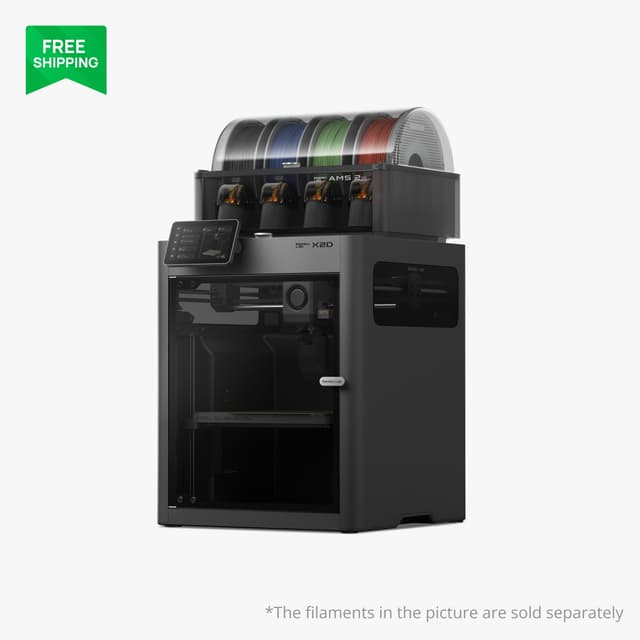
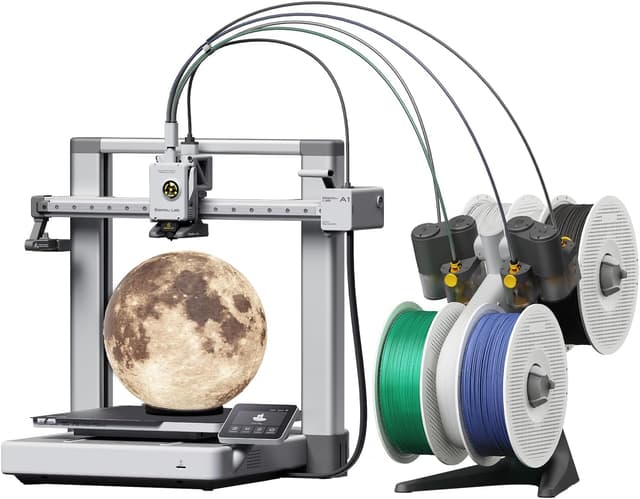
TopsFive comparison scores
Side by side
| Bambu Lab X2D Combo | Bambu Lab A1 Combo | |
|---|---|---|
| Multi-Color System | Dual nozzle + AMS 2 Pro (filament swapping on the main nozzle) | AMS lite (single-nozzle filament swapping) |
| Max Colors | 4 in the AMS 2 Pro + 1 external spool; more with extra AMS units | 4 |
| Toolheads / Nozzles | 1 toolhead, 2 nozzles | 1 toolhead, 1 nozzle |
| Filament Drying | Yes, built into the AMS 2 Pro | No |
| Build Volume | 256 × 256 × 260 mm (235.5 × 256 × 256 mm with both nozzles) | 256 × 256 × 256 mm |
| Max Speed | 1,000 mm/s | 500 mm/s |
| Max Nozzle Temp | 300°C (hardened steel) | 300°C (stainless steel) |
| Enclosure / Chamber | Fully enclosed; active chamber heating to 65°C | Open frame |
| Weight | 16.25 kg (printer) | 8.3 kg printer (without AMS lite) |
| Max Acceleration | 20,000 mm/s² | 10,000 mm/s² |
| Max Bed Temp | 120°C | 100°C |
| Max Hotend Flow | 40 mm³/s (65 mm³/s with the optional high-flow hotend) | — |
| Dimensions | 392 × 406 × 478 mm (printer) | 465 × 410 × 430 mm (printer) |
| Air Filtration | G3 pre-filter, HEPA H12, activated carbon | — |
| Slicer | Bambu Studio | Bambu Studio (Orca Slicer also supported) |
| Price | $899 → | Check price → |
How they differ in real use
Built from our multi color 3d printers scoring, each product's published specifications, and verified owner feedback — not hands-on testing.
Both the Bambu Lab X2D Combo and the Bambu Lab A1 Combo made our Top 5 Multi-Color 3D Printers Under $1,000, at #1 (best overall) and #5 (best budget). The strongest multi-color printer under $1,000: a second nozzle means a two-color or two-material print alternates nozzles instead of purging, and Domechy measured about 12 g of waste on a two-color print that cost the P2S about 68 g. The Combo's AMS 2 Pro dries spools and handles four colors, and the X2D adds the list's only actively heated chamber (65°C), a 1,000 mm/s toolhead and a 120°C bed, so nylon and polycarbonate are within reach. It ranks above the P2S Combo because it keeps the same Bambu Studio software and AMS ecosystem while wasting less filament and handling more materials, for about $120–150 more. Its limits: the AMS feeds only the main nozzle, so beyond two colors it purges like a single-nozzle printer (about 107 g against the P2S's 172 g on Domechy's four-color print), and the Bowden-fed second nozzle is slower and strings more. The easiest and lowest-cost way into multi-color printing: full-auto calibration, the AMS lite and Bambu Studio's paint tools let a first-time owner print a four-color model with almost no tuning, and Tom's Hardware's reviewer named AMS lite their favorite multicolor system for its simplicity and reliability. It ranks last because it is an open-frame bed slinger (10,000 mm/s² acceleration against 20,000 on every other printer here), it suits PLA, PETG and TPU rather than ABS or ASA, and AMS lite cannot chain beyond four colors, dry filament or feed TPU. Choose it over the Centauri Carbon 2 Combo if you will print mostly PLA and value the Bambu Lab ecosystem over an enclosure.
We score multi-color 3d printers under $1,000 on Multi-Color System (30%), Print Quality & Speed (20%), Material Capability (15%), Ease of Use & Software (20%) and Value (15%). On that basis the Bambu Lab X2D Combo totals 9.1 out of 10 and the Bambu Lab A1 Combo 7.5. The widest gap is Material Capability, where the Bambu Lab X2D Combo scores 10 against 4 for the Bambu Lab A1 Combo: which filaments it handles well, based on enclosure, chamber heat retention, maximum nozzle temperature and hardened-steel parts for ABS, ASA and fiber-filled filaments. Multi-Color System also separates them: 9 for the Bambu Lab X2D Combo versus 7 for the Bambu Lab A1 Combo. The Bambu Lab A1 Combo claws back ground on Value and Ease of Use & Software.
On paper, the specifications that actually differ: Multi-Color System: Dual nozzle + AMS 2 Pro (filament swapping on the main nozzle) on the Bambu Lab X2D Combo versus AMS lite (single-nozzle filament swapping) on the Bambu Lab A1 Combo; Max Colors: 4 in the AMS 2 Pro + 1 external spool; more with extra AMS units on the Bambu Lab X2D Combo versus 4 on the Bambu Lab A1 Combo; Toolheads / Nozzles: 1 toolhead, 2 nozzles on the Bambu Lab X2D Combo versus 1 toolhead, 1 nozzle on the Bambu Lab A1 Combo; Filament Drying: Yes, built into the AMS 2 Pro on the Bambu Lab X2D Combo versus No on the Bambu Lab A1 Combo; Build Volume: 256 × 256 × 260 mm (235.5 × 256 × 256 mm with both nozzles) on the Bambu Lab X2D Combo versus 256 × 256 × 256 mm on the Bambu Lab A1 Combo; Max Speed: 1,000 mm/s on the Bambu Lab X2D Combo versus 500 mm/s on the Bambu Lab A1 Combo.
The Bambu Lab X2D Combo lists at $899; the Bambu Lab A1 Combo's current price is on the merchant page. Owners praise the Bambu Lab X2D Combo for two nozzles: two-color and two-material prints swap nozzles instead of purging, cutting waste and print time against the single-nozzle P2S and the only actively heated chamber in this list (65°C), with a 120°C bed for nylon and polycarbonate; the most common complaint is the AMS 2 Pro feeds only the main nozzle; the second nozzle needs an external spool or a second AMS. Owners praise the Bambu Lab A1 Combo for the easiest setup here thanks to full-auto calibration and core-mounted spools in the AMS lite that accept more third-party spool sizes, including cardboard; the most common complaint is an open-frame bed slinger: not suited to ABS or ASA, and its 10,000 mm/s² acceleration is half that of the CoreXY printers here.
Bambu Lab X2D Combo
- Two nozzles: two-color and two-material prints swap nozzles instead of purging, cutting waste and print time against the single-nozzle P2S
- The only actively heated chamber in this list (65°C), with a 120°C bed for nylon and polycarbonate
- AMS 2 Pro with built-in filament drying, plus Bambu Studio and the MakerWorld library
- A 1,000 mm/s toolhead with HEPA H12 and activated-carbon filtration
- The AMS 2 Pro feeds only the main nozzle; the second nozzle needs an external spool or a second AMS
- The Bowden-fed auxiliary nozzle is slower (about 200 mm/s) and strings more than the main nozzle
- Beyond two colors it still purges on the main nozzle: Domechy measured about 107 g of waste on a four-color print, against about 172 g on the P2S
Bambu Lab A1 Combo
- The easiest setup here thanks to full-auto calibration
- Core-mounted spools in the AMS lite that accept more third-party spool sizes, including cardboard
- Bambu Studio's paint tools and the MakerWorld library of ready-to-print multi-color models
- The lowest price in this list
- An open-frame bed slinger: not suited to ABS or ASA, and its 10,000 mm/s² acceleration is half that of the CoreXY printers here
- AMS lite cannot be chained beyond four colors and has no filament drying
- AMS lite cannot feed TPU, so flexible filament needs a separate spool holder
Which should you buy?
The Bambu Lab X2D Combo is the better fit for two-color and two-material prints with minimal waste and soluble or breakaway supports; it is the higher-scoring pick here, chiefly for Material Capability and Multi-Color System. The Bambu Lab A1 Combo is the better fit for first-time and family multi-color printing in PLA and the lowest price of entry, and the stronger choice if Value and Ease of Use & Software matter more to you than the overall score. The Bambu Lab X2D Combo is a poor fit for four-color prints without purging (the Snapmaker U1's four toolheads suit them better); the Bambu Lab A1 Combo is a poor fit for printing ABS, ASA or other filaments that need an enclosure.
Choose the Bambu Lab X2D Combo if
- Two-color and two-material prints with minimal waste
- Soluble or breakaway supports
- Nylon, polycarbonate and other filaments that need a heated chamber
Skip it if
- Four-color prints without purging (the Snapmaker U1's four toolheads suit them better)
- Budgets under about $900
Choose the Bambu Lab A1 Combo if
- First-time and family multi-color printing in PLA
- The lowest price of entry
- The Bambu Lab and MakerWorld ecosystem
Skip it if
- Printing ABS, ASA or other filaments that need an enclosure
- More than four colors in one print
Common questions
Is the Bambu Lab X2D Combo better than the Bambu Lab A1 Combo?
In our Multi-Color 3D Printers Under $1,000 ranking the Bambu Lab X2D Combo scores higher overall, 9.1 to 7.5, with the biggest advantage in Material Capability. The Bambu Lab A1 Combo is stronger on Value and Ease of Use & Software, so it is the better pick if those matter most to you.
What is the main difference between the Bambu Lab X2D Combo and the Bambu Lab A1 Combo?
The headline spec difference is Multi-Color System: Dual nozzle + AMS 2 Pro (filament swapping on the main nozzle) on the Bambu Lab X2D Combo versus AMS lite (single-nozzle filament swapping) on the Bambu Lab A1 Combo. In use, the gap that matters most is Material Capability (10 vs 4 in our scoring): which filaments it handles well, based on enclosure, chamber heat retention, maximum nozzle temperature and hardened-steel parts for ABS, ASA and fiber-filled filaments.