ASUS ROG Strix XG259QNS vs Samsung Odyssey G4 (G40B)
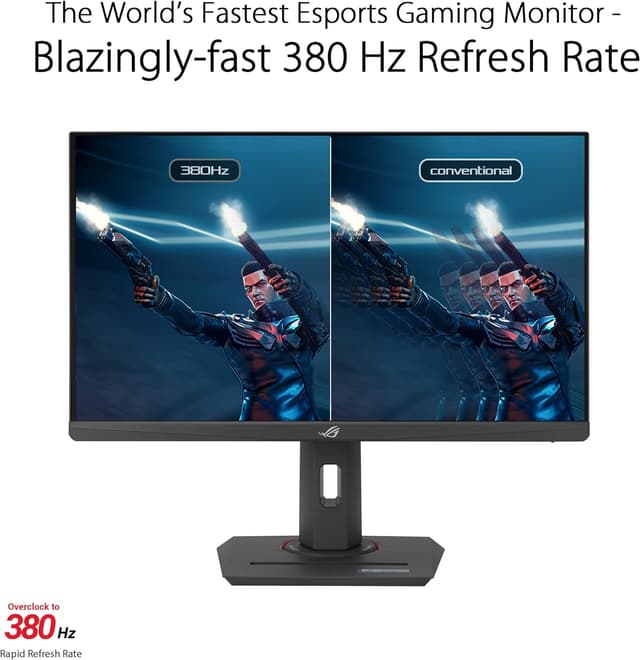
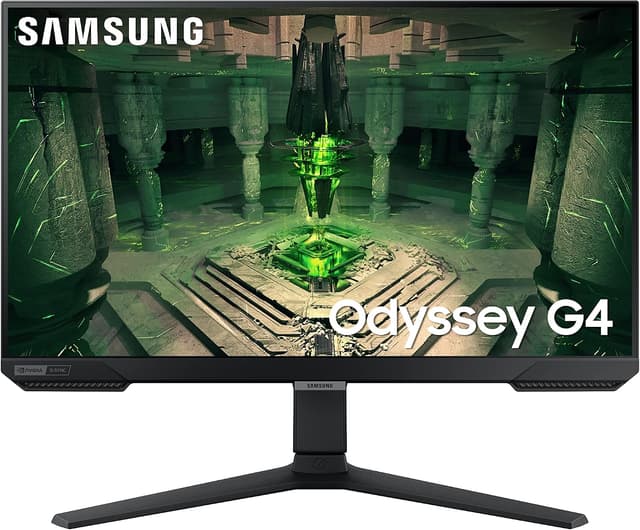
ASUS ROG Strix XG259QNS (#1, best overall) vs Samsung Odyssey G4 (G40B) (#4): in our Gaming Monitors for Competitive FPS Under $300 scoring the ASUS ROG Strix XG259QNS totals 9.2/10 and the Samsung Odyssey G4 (G40B) 8.3/10.
We may earn a commission when you buy through our links.
TopsFive comparison scores
Side by side
| ASUS ROG Strix XG259QNS | Samsung Odyssey G4 (G40B) | |
|---|---|---|
| Screen Size | 24.5" | 25" |
| Resolution | 1920x1080 | 1920x1080 |
| Refresh Rate | 380Hz (OC) | 240Hz |
| Panel | Fast IPS | IPS |
| Response Time | 0.3ms GtG (min) | 1ms GtG |
| Adaptive Sync | FreeSync Premium, G-Sync Compatible | FreeSync Premium, G-Sync Compatible |
| Stand | Height / tilt / swivel / pivot | Height / tilt / swivel / pivot |
| Price | Check price → | Check price → |
How they differ in real use
Built from our competitive fps monitors under 300 scoring, each product's published specifications, and verified owner feedback — not hands-on testing.
Both the ASUS ROG Strix XG259QNS and the Samsung Odyssey G4 (G40B) made our Top 5 Gaming Monitors for Competitive FPS Under $300, at #1 (best overall) and #4. For pure competitive FPS this is the one to beat: a Fast IPS panel overclocked to 380Hz with a rated 0.3ms minimum response, and ELMB Sync that runs backlight strobing and variable refresh together. Nothing else under $300 combines this much refresh headroom, this little motion blur, and this low latency in one esports-tuned package. A focused 25" 1080p 240Hz IPS competitive monitor with a 1ms GtG response, dual G-Sync Compatible and FreeSync Premium support, and a fully adjustable stand that rivals at this price usually skip. The smaller screen suits players who want the whole picture in their field of view, but 1080p and no 1440p option hold it below the QHD picks.
We score gaming monitors for competitive fps under $300 on Motion Clarity (30%), Refresh Rate (25%), Input Lag (15%), Panel & Resolution (15%) and Value (15%). On that basis the ASUS ROG Strix XG259QNS totals 9.2 out of 10 and the Samsung Odyssey G4 (G40B) 8.3. The widest gap is Motion Clarity, where the ASUS ROG Strix XG259QNS scores 9.6 against 8.2 for the Samsung Odyssey G4 (G40B): pixel response and motion blur reduction. Refresh Rate also separates them: 10 for the ASUS ROG Strix XG259QNS versus 8.6 for the Samsung Odyssey G4 (G40B). The Samsung Odyssey G4 (G40B) claws back ground on Value.
On paper, the specifications that actually differ: Screen Size: 24.5" on the ASUS ROG Strix XG259QNS versus 25" on the Samsung Odyssey G4 (G40B); Refresh Rate: 380Hz (OC) on the ASUS ROG Strix XG259QNS versus 240Hz on the Samsung Odyssey G4 (G40B); Panel: Fast IPS on the ASUS ROG Strix XG259QNS versus IPS on the Samsung Odyssey G4 (G40B); Response Time: 0.3ms GtG (min) on the ASUS ROG Strix XG259QNS versus 1ms GtG on the Samsung Odyssey G4 (G40B). They match on Resolution, Adaptive Sync and Stand.
Check current pricing at the merchant links below. Owners praise the ASUS ROG Strix XG259QNS for 380Hz overclocked refresh ceiling and rated 0.3ms minimum GtG response; the most common complaint is 1080p looks soft up close on a 24.5" panel. Owners praise the Samsung Odyssey G4 (G40B) for 240Hz IPS with 1ms GtG response and fully adjustable stand (height / tilt / swivel / pivot); the most common complaint is 1080p only, no 1440p sharpness.
ASUS ROG Strix XG259QNS
- 380Hz overclocked refresh ceiling
- Rated 0.3ms minimum GtG response
- ELMB Sync runs strobing and VRR together
- Fast IPS with ~110% sRGB and wide viewing angles
- 1080p looks soft up close on a 24.5" panel
- Sustaining 380fps needs a strong GPU and light settings
- DisplayHDR 400 has no local dimming
Samsung Odyssey G4 (G40B)
- 240Hz IPS with 1ms GtG response
- Fully adjustable stand (height / tilt / swivel / pivot)
- G-Sync Compatible and FreeSync Premium
- 25" keeps 1080p pixel density reasonable
- 1080p only, no 1440p sharpness
- HDR10 is entry-level with no local dimming
- No USB hub
Which should you buy?
The ASUS ROG Strix XG259QNS is the better fit for competitive FPS and esports players and anyone chasing maximum frame rate and motion clarity; it is the higher-scoring pick here, chiefly for Motion Clarity and Refresh Rate. The Samsung Odyssey G4 (G40B) is the better fit for competitive players who prefer a smaller 25" screen and anyone who wants an ergonomic stand at a budget price, and the stronger choice if Value matters more to you than the overall score. The ASUS ROG Strix XG259QNS is a poor fit for players who want 1440p sharpness; the Samsung Odyssey G4 (G40B) is a poor fit for buyers who want 1440p or 27"+.
Choose the ASUS ROG Strix XG259QNS if
- Competitive FPS and esports players
- Anyone chasing maximum frame rate and motion clarity
- CS2, Valorant, and Overwatch mains
Skip it if
- Players who want 1440p sharpness
- Owners of entry GPUs that cannot feed high frame rates
Choose the Samsung Odyssey G4 (G40B) if
- Competitive players who prefer a smaller 25" screen
- Anyone who wants an ergonomic stand at a budget price
- 1080p esports at high frame rates
Skip it if
- Buyers who want 1440p or 27"+
- HDR content viewers
Common questions
Is the ASUS ROG Strix XG259QNS better than the Samsung Odyssey G4 (G40B)?
In our Gaming Monitors for Competitive FPS Under $300 ranking the ASUS ROG Strix XG259QNS scores higher overall, 9.2 to 8.3, with the biggest advantage in Motion Clarity. The Samsung Odyssey G4 (G40B) is stronger on Value, so it is the better pick if that matters most to you.
What is the main difference between the ASUS ROG Strix XG259QNS and the Samsung Odyssey G4 (G40B)?
The headline spec difference is Screen Size: 24.5" on the ASUS ROG Strix XG259QNS versus 25" on the Samsung Odyssey G4 (G40B). In use, the gap that matters most is Motion Clarity (9.6 vs 8.2 in our scoring): pixel response and motion blur reduction.