Apple iPad Pro 13" (M5) vs Microsoft Surface Pro (2026)
Apple iPad Pro 13" (M5) (#3, best premium) vs Microsoft Surface Pro (2026) (#5): in our Battery Life Tablets scoring the Apple iPad Pro 13" (M5) totals 9/10 and the Microsoft Surface Pro (2026) 8.2/10, the Apple iPad Pro 13" (M5) leading on Efficiency and Charging Speed.
We may earn a commission when you buy through our links. Prices and availability shown are accurate as of Jan 29, 2026 and are subject to change; the merchant's price at purchase applies.
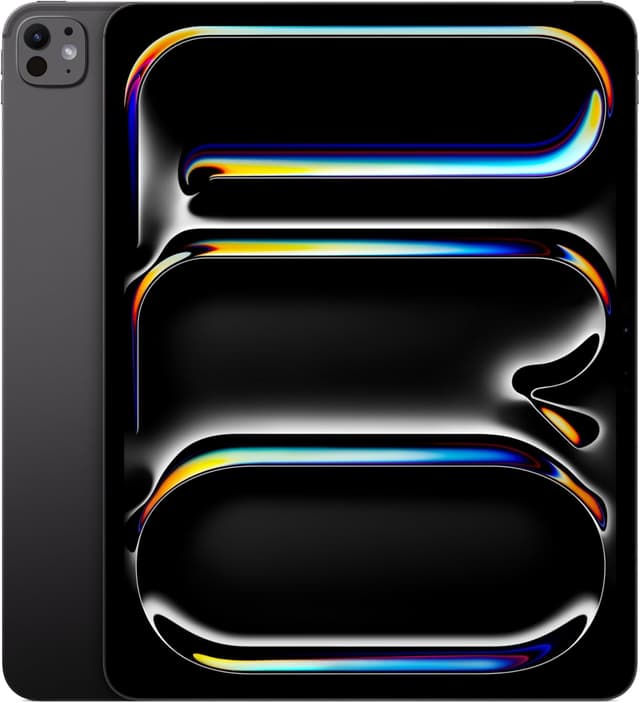
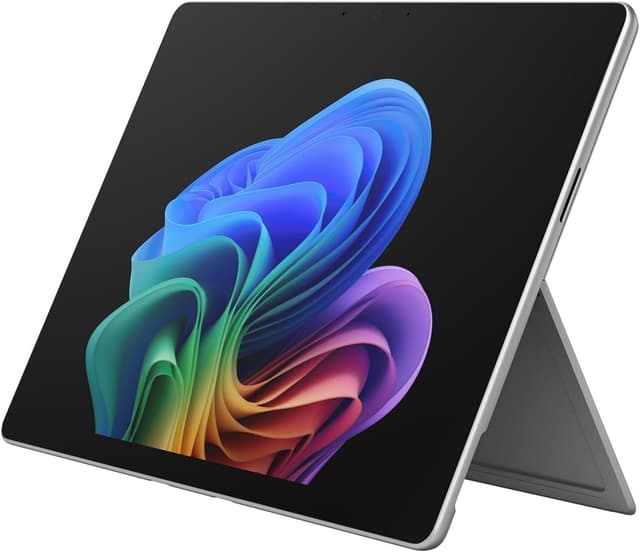
Side by side
| Apple iPad Pro 13" (M5) | Microsoft Surface Pro (2026) | |
|---|---|---|
| Price | $1439 | $1349.99 |
| Display | 13" Ultra Retina XDR, 2752×2064, 120Hz OLED | 13" PixelSense Flow, 2880×1920, 120Hz |
| Processor | M5 (10-core CPU, 10-core GPU) | Snapdragon X2 Plus (10-core) |
| RAM | 12GB (16GB with 1TB+) | 16GB |
| Storage | 256GB-2TB | 256GB SSD |
| Battery | 38.99Wh, 10-11 hours | Up to 15.5 hours (video playback) |
| Weight | 579g | 895g |
| Thickness | 5.1mm | — |
How they differ in real use
Built from our best display tablets scoring, each product's published specifications, and verified owner feedback — not hands-on testing.
Both the Apple iPad Pro 13" (M5) and the Microsoft Surface Pro (2026) made our Top 5 Battery Life Tablets, at #3 (best premium) and #5. Best battery in premium category at 10-11 hours despite M5 power. 38.99Wh battery with 50% charge in 30 minutes. Variable 10-120Hz refresh conserves power. Microsoft's 2026 Surface Pro (12th Edition) supersedes the Surface Pro 11 in this list. Its Snapdragon X2 Plus chip carries an official Microsoft rating of up to 15.5 hours of local video playback, ahead of the outgoing generation's roughly 14-hour rating, though the MSRP rose to $1,499 alongside it.
We score battery life tablets on Battery Life (40%), Efficiency (25%), Charging Speed (15%), Battery Capacity (10%) and Value (10%). On that basis the Apple iPad Pro 13" (M5) totals 9 out of 10 and the Microsoft Surface Pro (2026) 8.2. The widest gap is Efficiency, where the Apple iPad Pro 13" (M5) scores 10 against 8.6 for the Microsoft Surface Pro (2026): processor efficiency. Charging Speed also separates them: 9 for the Apple iPad Pro 13" (M5) versus 7 for the Microsoft Surface Pro (2026).
On paper, the specifications that actually differ: Display: 13" Ultra Retina XDR, 2752×2064, 120Hz OLED on the Apple iPad Pro 13" (M5) versus 13" PixelSense Flow, 2880×1920, 120Hz on the Microsoft Surface Pro (2026); Processor: M5 (10-core CPU, 10-core GPU) on the Apple iPad Pro 13" (M5) versus Snapdragon X2 Plus (10-core) on the Microsoft Surface Pro (2026); RAM: 12GB (16GB with 1TB+) on the Apple iPad Pro 13" (M5) versus 16GB on the Microsoft Surface Pro (2026); Storage: 256GB-2TB on the Apple iPad Pro 13" (M5) versus 256GB SSD on the Microsoft Surface Pro (2026); Battery: 38.99Wh, 10-11 hours on the Apple iPad Pro 13" (M5) versus Up to 15.5 hours (video playback) on the Microsoft Surface Pro (2026); Weight: 579g on the Apple iPad Pro 13" (M5) versus 895g on the Microsoft Surface Pro (2026).
Pricing as of September 23, 2026: $1,439 for the Apple iPad Pro 13" (M5) and $1,349.99 for the Microsoft Surface Pro (2026), a $89.01 difference in the Microsoft Surface Pro (2026)'s favor. Owners praise the Apple iPad Pro 13" (M5) for 1600 nits peak brightness and tandem OLED technology; the most common complaint is $1,299+ entry price. Owners praise the Microsoft Surface Pro (2026) for official rating of up to 15.5 hours local video playback on Snapdragon X2 Plus and 13" 120Hz PixelSense Flow touchscreen; the most common complaint is keyboard and Slim Pen sold separately on the base configuration.
Apple iPad Pro 13" (M5)
- 1600 nits peak brightness
- Tandem OLED technology
- M5 chip fastest
- ProMotion 120Hz
- $1,299+ entry price
- Slight warm color cast
- Overkill for basic use
Microsoft Surface Pro (2026)
- Official rating of up to 15.5 hours local video playback on Snapdragon X2 Plus
- 13" 120Hz PixelSense Flow touchscreen
- Full Windows 11 Copilot+ PC with 80 TOPS NPU
- Detachable 2-in-1 design
- Keyboard and Slim Pen sold separately on the base configuration
- MSRP rose to $1,499 for this generation
- Heavier than a dedicated Android/iPad tablet
Which should you buy?
The Apple iPad Pro 13" (M5) is the better fit for professional creatives and 4K video editing; it is the higher-scoring pick here, chiefly for Efficiency and Charging Speed. The Microsoft Surface Pro (2026) is the better fit for windows productivity on-the-go and travel professionals wanting long battery. If the $89.01 saving matters more than Efficiency, the Microsoft Surface Pro (2026) is the better value. The Apple iPad Pro 13" (M5) is a poor fit for budget buyers; the Microsoft Surface Pro (2026) is a poor fit for budget buyers.
Choose the Apple iPad Pro 13" (M5) if
- Professional creatives
- 4K video editing
- Display enthusiasts
Skip it if
- Budget buyers
- Basic tablet needs
Choose the Microsoft Surface Pro (2026) if
- Windows productivity on-the-go
- Travel professionals wanting long battery
- Surface ecosystem
Skip it if
- Budget buyers
- Gaming
Common questions
Is the Apple iPad Pro 13" (M5) better than the Microsoft Surface Pro (2026)?
In our Battery Life Tablets ranking the Apple iPad Pro 13" (M5) scores higher overall, 9 to 8.2, with the biggest advantage in Efficiency. The Microsoft Surface Pro (2026) does not out-score it on any criterion we weigh.
How much more does the Apple iPad Pro 13" (M5) cost than the Microsoft Surface Pro (2026)?
$89.01 more as of September 23, 2026: $1,439 for the Apple iPad Pro 13" (M5) against $1,349.99 for the Microsoft Surface Pro (2026). Prices move, so the merchant page shows the current figure. What the extra buys is mostly Efficiency: 10 versus 8.6 in our scoring.
What is the main difference between the Apple iPad Pro 13" (M5) and the Microsoft Surface Pro (2026)?
The headline spec difference is Display: 13" Ultra Retina XDR, 2752×2064, 120Hz OLED on the Apple iPad Pro 13" (M5) versus 13" PixelSense Flow, 2880×1920, 120Hz on the Microsoft Surface Pro (2026). In use, the gap that matters most is Efficiency (10 vs 8.6 in our scoring): processor efficiency.